You can screw into vinyl siding for lightweight, temporary items if you use corrosion-resistant fasteners, allow 1/32–1/16 inch of play for thermal movement, and properly seal any penetrations to prevent leaks. Avoid heavy or structural loads unless you find backing or screw into studs or install plywood blocks behind the siding. Support panels while fastening and don’t overtighten. Follow manufacturer limits and local codes, and keep going for practical tips on locating backing, fastener choices, and safer alternatives.
Short Answer: Is It Safe to Screw Into Vinyl Siding?
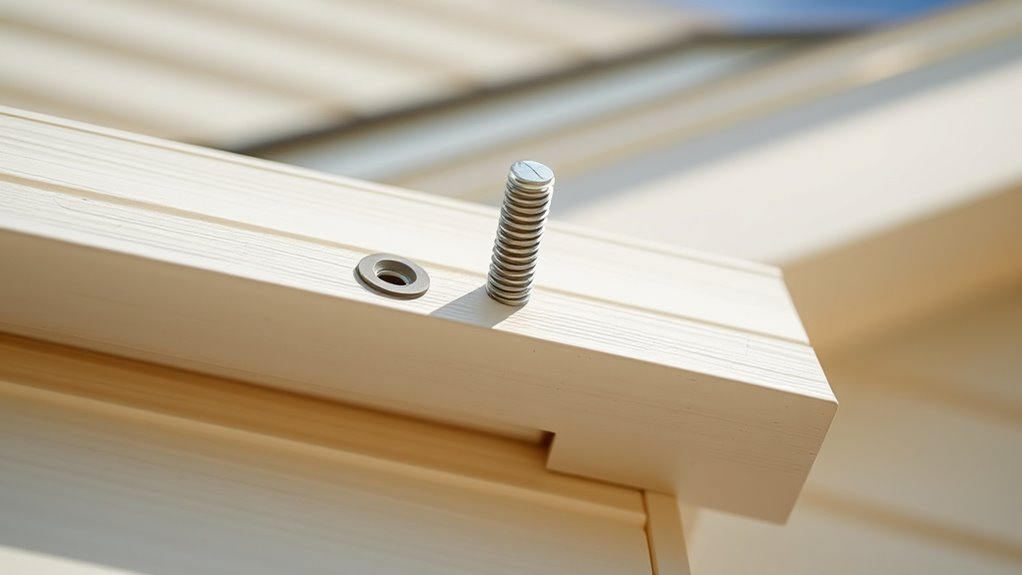
If you need to attach something to vinyl siding, you can—but you shouldn’t just drive screws through the panels without thinking. You’ll want to plan mounting points that respect vinyl maintenance needs, use proper fasteners, and allow panel movement.
Do this to avoid warping, leaks, and visible damage. Think about aesthetic considerations so attachments look intentional and don’t undermine curb appeal.
When You Should : and Shouldn’t : Screw Into Siding
When you’re deciding whether to screw into vinyl siding, consider the load, location, and permanence of the attachment.
You should screw for lightweight, temporary items using proper anchors and sealing to protect siding colors and avoid water entry.
Don’t screw for heavy fixtures, structural loads, or where vinyl patterns will be distorted; instead, fasten into underlying framing or use specialized mounting blocks.
How Vinyl Siding Is Installed : and Why That Matters
Because vinyl siding clips and panels interlock and hang from a starter strip instead of being nailed tight to the sheathing, how it’s installed affects where and how you can fasten things later. You need to respect expansion gaps and maintain weather resistance when attaching fixtures.
- Allow for panel movement
- Avoid overdriving fasteners
- Seal penetrations properly
- Use appropriate clips and backing
Where Studs and Backing Usually Sit Behind Vinyl Siding
Although vinyl siding itself doesn’t line up perfectly with the framing, you’ll usually find studs spaced on 16-inch centers behind the sheathing, with thicker backing—like plywood, OSB, or engineered blocks—installed where fixtures or heavy fastenings are expected. You should locate backing prior to mounting decorative panels or fixtures to guarantee secure anchoring.
| Location | Typical backing |
|---|---|
| Stud bay edge | Plywood |
| Electrical area | OSB |
| Light fixture | Engineered block |
| Shelf mount | Plywood |
| Decorative panels | Solid backing |
Choosing Fasteners for Vinyl Siding and Why They Work
Now that you know where backing and studs usually sit, you’ll need the right fasteners—coated or stainless screws and corrosion-resistant nails. Each has specific uses.
You’ll learn which types grip vinyl without cracking it and which coatings prevent rust over time.
Then we’ll cover the proper installation technique: allow for thermal movement, don’t overtighten, and fasten into solid backing.
Fastener Types Explained
When you pick fasteners for vinyl siding, focus on material, head style, and length so the siding can move and stay secure without damage.
Choose corrosion-resistant screws, wide plastic washers, and short nails that don’t split panels.
Consider removability for siding removal or vinyl painting prep.
- Stainless steel screws
- Galvanized roofing nails
- Plastic-head screws
- Trim head fasteners
Proper Installation Technique
Want the siding to last and still move with temperature changes? Choose corrosion-resistant, ring-shank or broad-head screws sized to allow 1/32–1/16 inch play.
You should fasten through the center of the nailing hem, avoid overtightening, and use neoprene washers where needed.
This supports vinyl siding maintenance, preserves expansion, and maintains aesthetic considerations by preventing buckling, gaps, or visible stress.
Prepping Siding: Cleaning, Supporting, and Marking
Before you start drilling, clean the siding surface thoroughly so dirt and grime won’t interfere with fastener seating.
Support the panel behind the spot you’ll fasten to prevent cracking or flexing as you work.
Then mark stud locations clearly so each screw goes into solid backing.
Clean Surface Thoroughly
How clean is the siding where you’ll be fastening the screws? You should remove dirt, mildew, and loose paint so screws seat properly and sealants adhere—especially on vinyl paint or faded siding colors.
Follow these steps:
- Wash with mild detergent and soft brush.
- Rinse thoroughly and let dry.
- Scrape loose flakes gently.
- Wipe with alcohol before fastening.
Mark Stud Locations
Now that the siding’s clean and dry, locate the studs you’ll fasten into so your screws grab solid wood rather than just the vinyl. Use a stud finder, tap method, or remove a trim piece if needed. Mark with pencil for consistent spacing. Consider how Vinyl painting or siding removal might affect marks and finish.
| Method | Tool | Tip |
|---|---|---|
| Stud finder | Electronic | Scan vertically |
| Tap | Hammer | Listen for hollow |
| Trim removal | Pry bar | Expose edge studs |
Step-by-Step: Drilling and Screwing Into Vinyl Siding Safely
When you’re ready to install fixtures on vinyl siding, take it slow and work methodically so you don’t crack or warp the panels. You’ll prep, drill, and fasten for secure exterior decor without damage.
When installing fixtures on vinyl siding, work slowly and methodically to avoid cracking or warping the panels.
- Mark stud, avoid seams.
- Use a pilot hole slightly larger than screw shank.
- Choose corrosion-resistant screws.
- Tighten until snug, not overdriven.
Leave Clearance: Allowing Siding Movement and Thermal Expansion
After you’ve prepped and fastened through the siding, leave a small gap around the screw heads and any mounting brackets so the panels can expand and contract with temperature changes.
You’ll space fasteners slightly loose, follow manufacturer clearance specs, and keep brackets floating.
This preserves siding aesthetics, prevents buckling, and helps maintain color matching over time as panels shift with seasonal movement.
Weatherproofing Screw Holes to Prevent Leaks
Because even tiny gaps around fasteners can let water find its way behind the siding, you should seal screw holes and mounting points with appropriate weatherproofing to prevent leaks and rot.
Use sealant compatible with vinyl color and account for siding thickness so joints stay flexible.
- Silicone or polyurethane sealant
- Butyl tape on rough cuts
- Backer rod for large gaps
- Regular inspection and touch-up
Mounting Lights, Mailboxes, and Shelves on Vinyl Siding
When you mount lights, mailboxes, or shelves on vinyl siding, pick fasteners and anchors that grip the underlying sheathing or studs, not just the siding panels.
Use backing plates or furring strips and seal penetrations to prevent cracking and water entry.
With the right hardware and technique you’ll keep fixtures secure and avoid damaging the siding.
Secure Fastening Methods
Want a secure mount that won’t damage your siding? Use proper anchors, backer boards, and sealing to preserve Vinyl maintenance and Aesthetic considerations.
Choose fasteners that reach studs or use toggle anchors, and seal penetrations.
- Find studs or use heavy-duty anchors.
- Backer board for weight distribution.
- Use corrosion-resistant screws.
- Seal and finish for weatherproofing and appearance.
Preventing Siding Damage
If you’re mounting lights, mailboxes, or shelves on vinyl siding, plan the attachment so the fastener carries the load to solid backing instead of the siding itself. Use spacers, backer blocks, or toggle bolts through sheathing into studs, protect finish from stress and avoid heat issues that alter vinyl color. Check siding insulation and seal penetrations.
| Item | Tip |
|---|---|
| Lights | Use backer |
| Mailbox | Mount to stud |
| Shelves | Use toggle |
Hanging Heavy Items: Using Structural Backing and Through-Mounts
Because vinyl siding isn’t load-bearing, you’ll need to mount heavy items through the siding into the wall framing or a backed area. Doing so keeps the siding intact while securing the weight to a structure that can actually carry it.
- Locate studs behind vinyl insulation and exterior cladding.
- Use long through-bolts into framing.
- Add plywood backing between cladding and sheathing.
- Seal penetrations to prevent moisture.
Repairing Cracked or Damaged Vinyl After a Mistake
When you crack or dent vinyl siding while drilling or hanging something, act quickly to assess the damage and choose the right fix—small cracks and chips often take a different repair approach than larger splits or broken panels. Clean, glue or use a patch; larger damage needs siding removal and panel replacement. Vinyl painting can hide minor blemishes but won’t fix structural breaks.
| Damage | Fix |
|---|---|
| Small crack | Adhesive/patch |
| Chip | Fill & paint |
| Split panel | Siding removal |
| Holes | Replace panel |
How Warranties and Building Codes Affect Drilling Decisions
Although you may be tempted to drill wherever looks convenient, warranties and local building codes directly shape where and how you can fasten into vinyl siding, so check them before you start. You’ll protect vinyl elegance and avoid voiding coverage or damaging siding paint.
Before drilling, review manufacturer rules and local codes—proper fastening preserves vinyl’s appearance and warranty coverage.
Consider:
- Manufacturer fastening limits
- Local code clearances
- Approved fastener types
- Inspection and documentation requirements
Alternatives to Penetrating Siding: Clips, Blocks, and Straps
If you’d rather avoid piercing vinyl, clips, blocks, and straps give you secure, code-friendly attachment options that preserve the siding’s weatherseal and finish. You can mount lights, planters, or seasonal exterior decoration using non-penetrating clips, adhesive-backed blocks, or strap systems that transfer load to trim or studs.
| Option | Best use | Notes |
|---|---|---|
| Clips | Lights | Removable |
| Blocks | Planters | Paintable |
| Straps | Heavy decor | Distributes load |
| Adhesive | Signs | Surface-only |
When to Call a Pro for Complex or Structural Mounts
If your planned mount could affect the wall’s structural integrity or carry heavy loads, call a pro to assess the framing and attachment points.
A professional will calculate load and anchor requirements so your fixture is secure and won’t pull through the siding.
They’ll also handle permits and make sure the work meets local codes.
Structural Integrity Assessment
When you’re planning to attach heavy or load-bearing items to vinyl siding—like large speakers, pergolas, or deck ledger boards—don’t assume the siding alone can carry the load. You’ll need to assess the underlying structure and call a pro if the mount requires penetrating sheathing, aligning with studs, or modifying framing.
Consider vinyl durability and aesthetic considerations.
- Inspect sheathing and studs.
- Check fastener paths.
- Evaluate framing changes.
- Hire a structural pro.
Load And Anchor Requirements
After you’ve checked sheathing, stud locations, and potential framing changes, decide whether the load and anchor requirements exceed what you can safely handle.
If mounting heavy items, overhangs, or dynamic loads, call a pro to specify anchors, flashing for weather resistance, and reinforcement.
Pros also balance structural needs with aesthetic considerations so mounts stay secure and look correct without damaging siding or voiding warranties.
Permits And Code Compliance
Because local codes, building permits, and homeowners’ association rules can dictate how you mount heavy or structural items to exterior walls, you should confirm requirements before drilling into vinyl siding or underlying framing.
If a project affects structure or utilities, call a pro.
Consider vinyl siding maintenance versus cosmetic improvements.
- Permit needs
- Structural anchors
- Inspection timing
- Licensed contractor requirement
Final Checklist: Measurements, Tools, and Safety Reminders
Before you start drilling, take one last deliberate pass through your measurements, tools, and safety gear so you don’t have to stop once work begins.
Do a final, deliberate check of measurements, tools, and safety gear before you start drilling.
Verify screw types, lengths, and spacing for vinyl siding to preserve weather resistance.
Check drill bits, level, tape, sealant, ladder stability, eye and hand protection, and a stud finder.
Keep instructions and emergency contacts handy.
Frequently Asked Questions
Can Screws Cause Electrical Shorts Behind Vinyl Siding?
Yes — you can cause electrical shorts behind vinyl siding if screws pierce wiring. You should prioritize electrical safety, avoid random fastening, and use proper techniques to prevent siding damage and hidden hazards that could create shocks or fires.
Can I Paint Over Patched Screw Holes to Match Siding?
Yes — you can paint over patched screw holes to match siding. Like sewing a small seam, guarantee siding durability by using compatible patching compound and primer so paint adhesion holds, blending texture and color for a seamless finish.
Do Screw Holes Affect Insulation R-Value in Walls?
Small screw holes rarely change wall insulation R-value noticeably, but if numerous or leaking, they can reduce siding durability and weather resistance; you should seal and patch holes promptly to maintain thermal performance and protect the assembly.
Will Animals or Insects Exploit Screw Holes?
Yes — animals and insects can exploit screw holes; you’ll risk wildlife intrusion and pest entry if gaps aren’t sealed. Use proper fasteners, trim hole size, and apply sealant or backer to block access and prevent problems.
Are There Seasonal Best Months to Drill Into Vinyl Siding?
About 70% of siding issues occur in winter; you should avoid cold months. You’ll get better results doing seasonal installation in spring or fall, when weather considerations—moderate temperatures and low humidity—reduce cracking and movement.
Conclusion
You can screw into vinyl siding, but do it carefully: only into studs or backing, use proper fasteners, and seal penetrations. Remember: about 65% of siding failures stem from improper fastening or flashing—don’t be one of those statistics. If your mount is heavy or structural, call a pro. Measure, locate studs, pick the right screws and washers, and use caulk where needed. When in doubt, use clips or blocks to protect the siding and your investment.