You can sometimes drive a short distance with a screw in your tire, but don’t treat it lightly. Park safely, check pressure, mark the spot, and avoid pulling the screw out. Drive slowly to a shop or use a spare/run-flat if available. Sidewall or large punctures need replacement; tread punctures may be patched. Watch for hissing, rapid deflation, or wobble. Keep pressure checked and get professional repair—more practical steps and safety details follow.
Quick Answer: Can You Drive With a Screw in Your Tire?
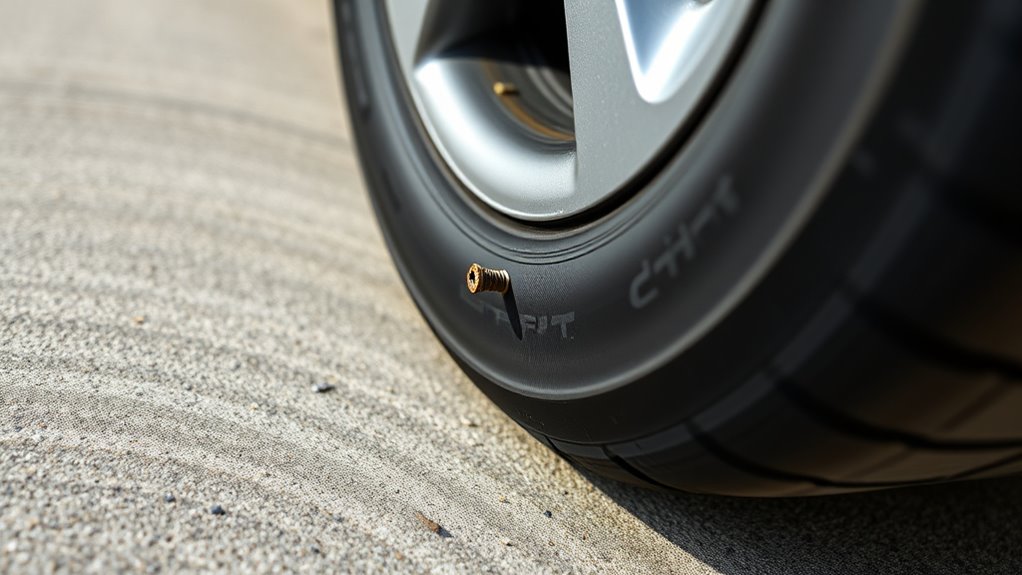
Don’t ignore changes in tire color or unusual vibration. Road debris increases puncture risk, so treat any screw as a potential hazard and inspect the tire promptly.
Immediate Steps After You Find a Screw
When you spot a screw in your tire, stop driving as soon as it’s safe and park on level ground to assess the damage.
Check tire pressure, note screw location, and avoid pulling it out.
Call roadside assistance or your tire manufacturer’s helpline for guidance.
Mark the spot, inspect surrounding road debris, and use a spare or professional repair if pressure drops or the screw penetrates the tread.
How to Spot a Screw Without Removing the Wheel Cover
Check the tire surface carefully for any shiny or protruding metal and feel for raised spots with your fingertips.
If you hear a steady hissing, you’ve likely got a puncture near the valve or tread area.
Also scan the wheel rim edges—screws can lodge where the tire meets the rim and be hidden by the cover.
Visual Tire Surface Checks
If you want to spot a screw without removing the wheel cover, start by giving the tire a close visual sweep while it’s cool and well-lit.
Scan tread grooves, shoulder, and around the tire valve for any foreign objects, embedded metal, or fresh puncture marks.
Check sidewall integrity for cuts, bulges, or embedded debris, and note any irregular wear patterns that might hide a screw.
Listen For Hissing
A slow hissing is one of the clearest clues that a screw has punctured your tire, so listen carefully with the car parked and the engine off.
Lean close to each wheel, rotate it slowly, and pause where you hear air.
Note any sudden change in tire color from dust or fluid and check nearby trim for rim corrosion signs without removing the wheel cover.
Inspect Wheel Rim Edges
When you crouch beside the wheel, sweep your eyes along the rim edges for any metal glint, fresh scratches, or trapped debris that could hide a screw head; you don’t need to remove the wheel cover to spot these telltale signs.
During a quick wheel rim inspection, check where the tire meets the rim for gaps or distortion—combine this with a basic tire bead inspection to confirm a secure seal.
Signs a Screw Is Causing an Active Leak
If you spot a screw, check for signs it’s causing an active leak so you know how urgently to act.
You’ll notice a rapid drop in tire pressure, hear hissing or air escaping, or see visible damage around the puncture.
Any of these signs means you should stop driving and address the tire right away.
Rapid Tire Pressure Drop
How fast is your tire losing air? If a screw causes rapid pressure drop, you’ll notice tire deformation—bulging sidewalls or a flattened contact patch—after hitting road debris.
You’ll feel instability, pulling, or vibration as the tire deflates quickly. Check pressure immediately; driving further risks rim damage and blowout.
Stop safely, inspect, and repair or replace the tire before continuing.
Hissing Or Air Escape
Hear a faint hiss? You’ll notice escaping air, and that steady sound means your tire pressure is dropping. Act fast—don’t drive far.
Signs to watch:
- Immediate softening when parked.
- Audible hissing while rolling.
- Repeated need to top off pressure.
Ignoring it can affect handling and even wheel alignment. Stop, inspect, and repair to avoid a sudden failure.
Visible Tire Damage
When a screw is causing an active leak, you’ll often see clear physical signs on the tread or sidewall: a puncture with a bit of metal protruding, a wet spot from escaping air, or tiny bubbles in soapy water when you check the area.
You’ll also notice changes in tire color from grime or fresh rubber shavings, and inspect for rim corrosion near the valve or bead that worsens leaks.
Slow Leak vs. Sudden Blowout: What to Expect
Although a screw in your tire can cause either a slow leak or a sudden blowout, the two scenarios feel and behave very differently and demand different responses. You’ll notice Tire durability issues with low-pressure creep from Road debris punctures. React calmly, but act fast.
- Slow leak: gradual, manageable anxiety.
- Blowout: instant panic, immediate control.
- Repair choice affects safety.
Where the Screw Sits: Tread, Shoulder, or Sidewall
Where the screw is lodged—whether it’s in the tread, the shoulder, or the sidewall—determines both how the tire will lose air and what repair options are safe.
If it’s in the tread, you can often patch it and continue driving cautiously.
Shoulder or sidewall damage usually means replacement.
While resolving this, skip tire rotation and schedule a brake inspection if driving felt off.
Why a Screw Is More Than a Puncture
Finding the screw in the tread, shoulder, or sidewall tells you how to handle the tire, but the damage goes beyond a simple hole. You should worry about embedded stress, compromised Tire material, and screw corrosion accelerating breakdown.
Consider these risks:
- Sudden pressure loss
- Internal delamination
- Rust wicking into rubber
Act fast to inspect and repair.
How Tire Construction Affects Screw Damage
Because tires are built in layers—tread, belts, plies, inner liner, and sidewalls—where a screw lands and how deep it goes determines whether you get a simple puncture or structural damage. You’ll notice belt depth, ply count, and tire metallurgy affect rupture risk, while screw metallurgy alters penetration. Check repairability promptly.
| Layer | Effect | Repair note |
|---|---|---|
| Tread | Absorbs | Often repairable |
| Belts | Stiffen | May delaminate |
| Sidewall | Flexible | Usually not repairable |
Types of Screws and How They Behave in Tires
Not all screws act the same in your tire—flat-headed, sharp-pointed, and coarse-threaded screws each cut and seal differently.
How deep the screw goes matters: shallow hits might hold air while deep penetration usually causes a leak or structural damage.
Threaded screws tend to stay lodged and worsen the puncture, while smooth shanks are more likely to pass through or be pushed out.
Screw Types And Shapes
When a screw punctures your tire, the type and shape of that screw largely determine how the damage behaves—some will seal temporarily, others cut or wobble and make leaks worse. You’ll notice effects vary with screw shape and metal composition.
Consider:
- Thin, long screws — panic, slow leak.
- Broad, coarse screws — anger, rapid deflation.
- Rusty fragments — dread, unpredictable failure.
Penetration Depth Effects
If a screw embeds shallowly in the tread, you’ll often get a slow, manageable leak.
But deeper penetration that reaches the tire’s inner liner or cords can cause rapid deflation or structural damage that can’t safely be repaired on the road.
You should check tire pressure immediately, remove road debris carefully only when safe, and seek professional repair or replacement to avoid sudden failure.
Threaded Versus Smooth Screws
After checking how deep a screw has gone, you’ll also want to note its shape: threaded screws and smooth (or sheet) screws behave very differently in tires.
Threaded screws grab and worsen leaks; smooth ones often slip, causing slow loss of tire pressure.
Consider:
- Panic — rapid deflation risk.
- Frustration — persistent air loss.
- Relief — removable road debris might be minor.
How a Screw Can Wreck a Tire’s Internal Belts
A single screw that punctures your tire can slice into the steel or fabric belts beneath the tread, compromising the structure that keeps the tire stable and true.
If belts delaminate or fray, your tread can separate, causing uneven wear that hides during routine tire rotation and worsens if wheel alignment’s off.
You’ll risk sudden failure and should replace the tire promptly.
TPMS and Wheel Sensor Risks From a Screw
When a screw punctures your tire, it can do more than let air out—it can damage the TPMS valve or wheel speed sensor mounted near the rim. You should inspect sensors promptly; damage can trigger false warnings and unsafe handling.
Consider Tire rotation and Wheel alignment after repairs to prevent uneven wear.
Driving Short Distances With a Screw in the Tread
If you spot a screw in your tread, check the tire pressure often so you catch any slow leak.
Keep speeds low and avoid highway driving to reduce the chance of a blowout.
Arrange a repair or replacement right away rather than putting off service.
Assess Tire Pressure Regularly
Because a screw can slowly leak air, you should check your tire pressure often when driving even short distances with a screw lodged in the tread.
You’ll monitor tire pressure and note screw placement to prevent surprises.
Feel alert and act fast if readings fall.
Limit Driving Speed
Though you can limp home with a screw in the tread, you should drive slower than usual to reduce stress on the puncture and lower the chance of a sudden blowout. Keep speeds under 35–40 mph and avoid rapid acceleration, hard braking, and sharp turns.
Drive only short distances, monitor vibration, and remember tire rotation and wheel balancing matter after repair to restore longevity and safety.
Plan Immediate Repair
Ready to get that screw taken care of? You shouldn’t delay—driving short distances to a shop is okay if you act fast. Consider:
- Safety first: avoid highways, watch for road debris.
- Protect appearance: temporary plugs can hurt tire aesthetics.
- Get professional repair or replacement immediately to prevent worsening damage and possible blowouts.
Why You Must Never Drive on a Screw in the Sidewall
If a screw punctures your tire’s sidewall, don’t keep driving — the sidewall can’t be safely repaired and the damage can worsen instantly, risking a sudden blowout that endangers you and others. You must stop, inspect tire pressure, and call for a replacement; sidewall punctures from road hazards compromise structure irreversibly.
| Risk | Action |
|---|---|
| Blowout | Replace tire |
| Structural failure | Don’t drive |
| Air loss | Tow vehicle |
| Increased sway | Use hazard lights |
| Further damage | Seek professional help |
How Speed and Load Change the Risk
When you drive faster or carry heavier loads, a screw in your tire turns from a manageable nuisance into a serious hazard because higher speed and weight multiply the forces on the puncture and accelerate air loss or structural failure.
You should mind tire inflation and avoid fresh road debris. Consider:
- Rapid blowout risk
- Sudden handling loss
- Increased repair complexity
How to Check Tire Pressure and Monitor Leaks on the Road
When you spot or suspect a screw in your tire, check the pressure regularly to see if it’s dropping.
Keep an eye for visible leaks, like hissing sounds, wet spots, or bubbling sealant around the puncture.
Carry and use a portable tire gauge so you can quantify any loss and decide whether it’s safe to keep driving.
Check Tire Pressure Regularly
Though a screw puncture mightn’t cause an immediate blowout, you should check your tire pressure regularly so you can spot slow leaks early and avoid getting stranded. Use a gauge, compare to recommended PSI, and note Tire color changes or odd wear that suggests poor Wheel alignment.
Keep a portable pump and monitor pressure before long trips.
Look For Visible Leaks
Regularly checking pressure is great, but you should also scan the tire for visible leaks before and during trips. Look for hissing, bubbling sealant, or wet spots around the tread and sidewall.
Inspect the bead near the rim after any Tire rotation or Wheel alignment service, since movement can reveal slow leaks.
Pull over safely if you find air escaping.
Use Portable Tire Gauge
If you want to catch leaks early and keep ride safety steady, carry a portable tire gauge and check each tire before long trips and whenever you notice pressure changes.
You’ll spot slow leaks from a screw, uneven tire tread wear, or punctures from road debris.
Use the gauge to:
- Verify pressure quickly
- Track gradual loss
- Decide if you should repair or inflate
When Temporary Fixes (Plugs, Sealants) Are OK
When the puncture is small, centered in the tread, and you need to get to a safe location or a repair shop, a temporary plug or tire sealant can be an acceptable short-term fix.
You should check tire color for unusual stains and inspect the rim for corrosion before driving.
Use plugs/sealant only to reach a shop, not as a permanent solution.
Plug vs. Patch vs. Plug-Plus-Patch: Which to Choose
If the screw’s hole is small and near the tread, you can use a plug for a quick, inexpensive repair. But remember, plugs don’t seal from the inside and can fail on larger or angled punctures.
A patch applied from the inside gives a more reliable, long-term seal by bonding to the inner liner. However, it requires tire removal.
For the best durability, you can choose a plug-plus-patch—this combines the plug’s temporary seal with an internal patch’s structural repair.
Plug Only Pros/Cons
Curious whether a simple plug will get you back on the road? You’ll appreciate quick, cheap fixes, but weigh Tire maintenance and Safety considerations: plugs can seal small tread punctures but won’t repair internal damage.
Decide fast, then act:
- Relief — immediate, inexpensive.
- Risk — possible slow leak or internal harm.
- Limit — not for sidewalls or large holes.
Patch Plus Plug Benefits
Because a plug seals the tread from the outside while a patch repairs the inner liner, combining them gives you the best of both approaches: the plug fills and stabilizes the hole, and the patch restores the tire’s internal air barrier and structural integrity. You’ll get faster Tire inflation recovery after Road debris damage and longer-lasting safety than either fix alone.
| Method | Speed | Durability |
|---|---|---|
| Plug | Fast | Medium |
| Patch | Slow | High |
| Plug+Patch | Medium | Very High |
DIY Plug Kits: What They Fix and What They Don’t
When a screw punctures your tread, DIY plug kits can get you back on the road quickly by sealing straight, small punctures from the outside without removing the tire. You’ll fix many emergencies yourself, but not sidewall or large angled wounds.
Consider tire recycling, Eco friendly disposal for used plugs and damaged tires.
Consider tire recycling and eco-friendly disposal for used plugs and damaged tires to reduce waste and protect the environment.
- Relief
- Frustration
- Empowerment
When a Pro Shop Should Handle the Repair
If the screw has caused sidewall damage, a large puncture, or internal cuts, you should let a pro handle it.
They’ll inspect the tire fully, remove it if needed, and recommend patching, plugging, or replacement.
Don’t try to fix complex damage yourself—safety and tire integrity matter.
When Professional Repair Is Required
Should you spot a screw that’s caused a large puncture, one that’s near the tire shoulder, or one that’s driven all the way through, you should have a professional handle the repair.
You’ll want a shop if:
- Tire inflation drops suddenly.
- The screw pierced near the sidewall from road debris.
- You feel vibrations or hear air escaping; pros inspect and fix safely.
Complex Damage Beyond Patch
Because some tire damage goes beyond a simple plug, you’ll want a pro to evaluate complex punctures that affect more than just the tread area. You should avoid DIY fixes when sidewall tears, large holes, or internal damage compromise tire durability after road debris strikes. A shop can assess structure and safety, replace if needed, and guarantee proper balancing and alignment.
| Damage type | Repair action |
|---|---|
| Sidewall tear | Replace |
| Large hole | Replace |
| Internal cord damage | Replace |
When You Must Replace the Tire
While small punctures can often be patched, you must replace the tire when the screw has damaged the sidewall, gone through the tread shoulder, or created a hole larger than about 1/4 inch—conditions that compromise the tire’s structural integrity and safety.
If a screw pierces the sidewall, tread shoulder, or makes a hole over ¼ inch, replace the tire immediately.
You’ll notice Tire noise or visible cuts from Road debris.
Decide fast:
- Safety fears
- Urgent expense
- Relief after replacement
How to Drive to a Repair Shop Without Worsening Damage
If you have to drive to a shop, go slowly and steer smoothly to avoid making the puncture worse.
Keep an eye on your tire pressure and stop if it drops suddenly or the car feels unstable.
Aim for the shortest, safest route and avoid sharp turns or sudden braking.
Drive Slowly And Steadily
When you have a screw in your tire, drive slowly and steadily to the nearest repair shop to avoid worsening the puncture—maintain a steady speed (around 20–30 mph depending on traffic and road conditions).
Avoid sudden braking or sharp turns, and steer smoothly to keep pressure on the tread rather than the sidewall.
- Stay calm; think safety.
- Watch for road hazards.
- Preserve tire inflation and avoid panic.
Keep Tire Pressure Monitored
After you’ve settled into a steady, slow pace, keep a close eye on the tire pressure so you don’t make a small puncture into a blowout. Check your gauge frequently; lower pressure means more flexing of the tire material and greater heat.
Avoid potholes and road debris, and stop immediately if pressure drops rapidly. Drive directly to a shop—don’t delay.
Using a Spare or Run-Flat After a Screw Puncture
Need a temporary fix fast? If a screw punctures your tire, use a spare or run-flat to get you home. Check tire inflation and perform a quick rim inspection before driving.
- Stay calm—spares restore control.
- Drive slowly—run-flats aren’t for distance.
- Head straight to a shop for a proper repair or replacement.
When to Call a Tow Instead of Driving?
If the spare or run-flat doesn’t hold pressure, the wheel’s damaged, or you can’t safely change the tire where you are, call a tow instead of driving. Don’t risk further harm to your wheel or suspension.
Tow to a shop for inspection, avoid DIY fixes that mask issues, and get professional advice on tire rotation and wheel alignment before resuming normal driving.
Typical Costs: Plug, Patch, and Replacement
You’ll usually pay the least for a tire plug—often under $20 if a shop does it quickly.
A patch repair will cost more, commonly $20–$50, depending on location and shop labor.
If the tire’s ruined or sidewall is damaged, a full replacement can run from $80 to several hundred dollars per tire.
Tire Plug Cost
Because a simple puncture doesn’t always mean a major expense, knowing the typical costs for a tire plug, a patch, or a full replacement helps you choose the right fix quickly.
You’ll pay about $10–$30 for a plug, keeping tire pressure stable after common road hazards. Consider:
- Relief: affordable quick fix
- Caution: not for sidewall
- Replace if unsafe
Patch Repair Price
A patch repair usually costs between $15 and $45 when done at a tire shop, and it’s a more durable fix than a simple plug for punctures in the tread area.
You’ll pay more if technicians must remove the tire and inspect for sidewall damage.
Keep an eye on tire pressure after repair, and remember frequent road hazards increase the chance you’ll need service again.
Full Replacement Expense
If a plug or patch can’t restore safe serviceable life, you’ll need to weigh full replacement costs against repair expenses and long-term safety. You may pay $30–$60 for a plug, $20–$50 for a patch, or $80–$300+ for a new tire.
Also factor in tire rotation and wheel alignment.
Consider:
- Safety first
- Cost over time
- Peace of mind
Insurance and Roadside Assistance: What’s Covered
When you find a screw in your tire, your insurance and roadside assistance policies determine whether you pay out of pocket or get help on the spot.
Check your coverage for towing, on-site puncture repairs, and tire disposal fees. Some plans cover replacements or temporary plugs; others exclude damage from roadside hazards.
Call your provider before authorizing work to avoid unexpected charges.
Long-Term Risks After a Temporary Repair
Because a temporary plug or patch only addresses the immediate leak, you can still face slow air loss, hidden structural damage, or a weakened bead that raises the chance of a blowout down the road.
A temporary plug masks the leak but risks slow air loss, hidden damage, and a weakened bead—raising blowout danger.
You’ll need to watch Tire pressure and Wheel alignment; otherwise risks grow:
- Sudden blowout anxiety
- Poor handling, missed turns
- Accelerated wear, unexpected failures
How to Inspect a Repaired Tire for Future Problems
To catch problems early, inspect a repaired tire every time you check pressure and after any rough road or impact.
Look for uneven wear or bulges in the tire tread, fresh punctures, or sidewall cracks.
Check the valve stem for leaks or damage and verify the repair plug or patch sits flush.
Listen for hissing and recheck pressure after a short drive.
Tire Choices and Tread Designs That Resist Punctures
If you want fewer flat tires, choose tires designed to resist punctures: look for reinforced sidewalls, tougher tread compounds, and patterns that deflect sharp objects away from the contact patch.
You’ll feel safer choosing options that balance grip and puncture resistance while considering Tire recycling at end of life and avoiding rim corrosion from overuse.
Preventive Steps to Reduce Screw Punctures
After choosing tires built to resist punctures, you can take simple habits and checks to further reduce the chance of a screw ending up in your rubber.
Inspect tires weekly for debris, maintain proper pressure, rotate and balance regularly, and replace worn tread promptly.
Keep driving paths clear, avoid construction zones when possible, and prioritize tire maintenance to protect performance and road safety.
Legal and Safety Liabilities of Driving on a Compromised Tire
While a single screw might seem minor, driving on a compromised tire can create legal exposure and serious safety risks you shouldn’t ignore. You risk liability if negligence causes damage or injury. Insurers may deny claims, and poor tire manufacturing or hidden road debris factors can complicate fault.
A single screw can create serious safety risks and legal liability—don’t ignore potential damage or denied insurance claims.
Consider emotional impacts:
- Fear of causing harm
- Guilt over negligence
- Stress from legal costs
Real-World Scenarios and Recommended Actions
How would you react if you found a screw lodged in your tire on the side of the road? You’ll assess Tire durability, check pressure, and weigh Road hazards before moving. Choose slow, cautious driving to a repair shop or a safe roadside fix if you must. Trust professionals for permanent repairs — don’t gamble on temporary measures.
| Emotion | Action |
|---|---|
| Fear | Slow to shop |
| Anger | Call help |
| Relief | Repair done |
| Regret | Ignore risk |
Quick Checklist to Follow When You Find a Screw
If you spot a screw in your tire, act quickly and methodically: check the tire pressure, don’t remove the screw, mark the spot, and decide whether you can drive slowly to a nearby shop or need roadside assistance.
Follow this checklist to stay safe and avoid Tire chemical exposure from sealants at the shop and reduce risks from Road hazards:
- Stay calm and assess.
- Limit driving speed.
- Call for help if unsure.
How to Document Damage for Insurance or Shop Claims
When you prepare to document damage for an insurance claim or a repair shop, take clear photos from multiple angles.
Photograph the puncture, surrounding tire material, tread depth, and any embedded road debris.
Photograph the puncture, surrounding rubber, tread depth, and any embedded debris for clear documentation.
Note date, time, location, and driving conditions.
Keep receipts, repair estimates, and a short written statement about how you discovered the screw to support your claim.
Resources: Repair Standards and Further Reading
After you’ve documented the damage and gathered receipts or estimates, you’ll want reliable sources to guide repair decisions and verify standards.
Check official tire manufacturer guidelines and industry bodies for patch/plug limits.
Learn about tire recycling and rubber recycling options to dispose responsibly.
- Find OEM repair rules.
- Read ASTM/ISO standards.
- Locate local recycling centers.
Frequently Asked Questions
Can a Screw Cause Vibration or Affect Wheel Alignment Over Time?
Yes — a screw can cause vibration and, over time, unbalance the tire, affect tire balance, and potentially lead to wheel damage or misalignment. You’ll want it removed and the tire inspected to prevent worsening issues.
Can Rusted Screws Introduce Corrosion Inside the Tire/Wheel Assembly?
Yes — a rusted screw can invite rust formation that creeps like ivy, causing internal corrosion of the wheel assembly, degrading metal and bead seals; you should remove and inspect promptly to prevent structural and air-loss issues.
Do Tire Warranties Cover Damage From Screws or Punctures?
Usually you won’t be covered for tire patching if your warranty lists punctures as warranty exclusions; you should check terms, keep receipts, and expect that road-hazard or special coverage might be required to cover screw damage.
Can Roadside Sealant Damage Tire Pressure Sensors or Balance Long-Term?
Think of a trickster—yes, roadside sealant can foul Tire pressure monitoring sensors and upset Wheel balancing over time; you’ll risk sensor corrosion, false readings, and uneven weights, so don’t rely on sealant as a permanent fix.
Are There Specific Professions or Tools That Increase Screw Puncture Risk?
Yes — you’re more at risk if you work around construction hazards or industrial equipment; landscapers, roofers, and delivery drivers often encounter debris, and using heavy tools or moving pallets raises the chance of screws penetrating tires.
Conclusion
So yes, you can sometimes drive with a screw in your tire—until you can’t. You’ll patch it, stare at the slow hiss like it’s a tiny betrayal, then drive carefully to a shop while picturing the screw filing a tiny will. Don’t be that person who treats a puncture like a fashion accessory: act fast, document the damage, and get a proper repair so the screw’s ambitions end where they belong—out of your tire.