Screws aren’t simply stronger than nails — it depends on the load. You’ll get far better pull-out (withdrawal) resistance with screws because their threads bite into wood, so they’re ideal for trim, cabinetry, and places you might remove them. Nails usually handle lateral (shear) loads better, bending ductilely in framing and shear-wall situations. Material, coating, and installation affect performance, so pick fasteners for the specific shear or tension role you need and keep reading to learn which to use where.
Quick Answer: When to Use Screws vs. Nails
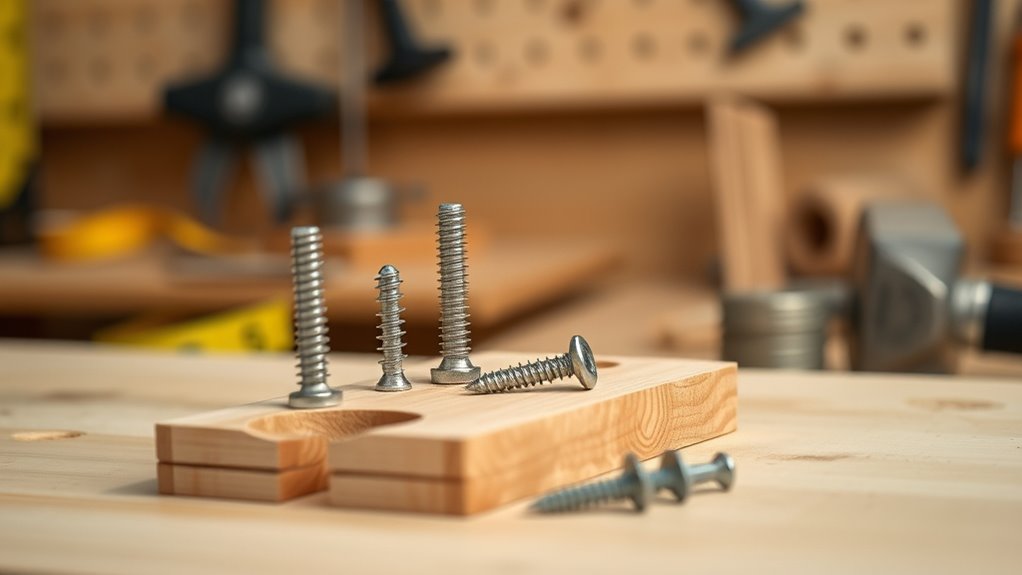
If you need a fast, strong hold that won’t pull out, use screws; they grip well for trim, cabinetry, and fastening where withdrawal matters. Choose fastener materials suited to the project and consider environmental factors like moisture and corrosion.
Nails suit framing or shear applications where flexibility and speed matter.
Match fastener type to load, exposure, and finish for lasting results.
Are Screws or Nails Stronger for Framing?
When you’re planning framing, think beyond withdrawal strength: framing demands shear capacity, ductility, and fast installation, so nails often outperform screws despite screws’ superior grip in withdrawal.
You should prefer nails for typical stick framing for faster drive and better shear performance, but consider fastener corrosion and material compatibility when exposed or using treated lumber to avoid long-term failures.
How Strength Is Measured: Shear, Withdrawal, Tensile
When you compare fasteners, you’ll look at shear strength to see how well they resist sideways forces.
You’ll also check withdrawal resistance to know how much pull-out force they can handle.
And tensile capacity to see how they perform under direct pulling loads.
Understanding those three measures lets you pick the right screw or nail for the job.
Shear Strength Comparison
Although both screws and nails hold materials together, they behave very differently under shear loads — forces trying to slide one piece past another.
You’ll find nails often tolerate shear through ductile bending, while screws resist shear with stronger cores but can fail at the shank or threads.
Consider fastener aesthetics and environmental impact when choosing: corrosion resistance, material recycling, and visible profiles influence long-term performance.
Withdrawal Resistance Basics
How do we judge how well a fastener resists being pulled straight out of wood or other materials? You test withdrawal resistance by measuring force needed to extract a fastener along its axis, distinct from shear or tensile tests.
Results depend on thread design, fastener chemistry, embedment depth, and substrate. Historical fastening methods inform test evolution, showing why screws outperform smooth nails in withdrawal.
Tensile Load Capacity
Why does tensile capacity matter, and how does it differ from shear and withdrawal? You measure tensile load capacity by pulling the fastener axially until it fails, which shows ultimate holding strength.
Consider fastener corrosion and material compatibility when choosing screws or nails to resist tensile forces.
- Peak load vs service load
- Test methods and units
- Thread engagement depth
- Base material strength
- Environmental effects
How Threads, Shank, and Head Affect Holding Power
When you look past length and material, the threads, shank, and head determine how well a fastener stays put. You’ll find thread design controls withdrawal resistance and bite into wood or composite.
Shank material affects flexibility and corrosion resistance, altering long-term grip.
Head shape spreads load and prevents pull-through, so pick combinations matching substrate and load for reliable holding power.
Shear Strength : When Nails Win
Although screws excel at pulling power, nails often outperform them in shear — the force trying to slide two joined pieces past each other. You’ll prefer nails where lateral loads dominate because smooth shanks flex and distribute shear.
When lateral loads dominate, choose nails — their smooth shanks flex and better absorb shear than screws.
Watch for fastener corrosion and material compatibility to avoid weakening joints. Consider:
- Dense timber vs softwood
- Repetitive impact
- Shear area contact
- Corrosion-prone environments
- Metal-to-metal interfaces
Withdrawal Strength : Why Screws Win
Because screws bite into material with threads that convert pull-out forces into distributed bearing along their length, they resist withdrawal far better than smooth-shank nails.
You’ll rely on screws when withdrawal strength matters; threads engage fibers, reducing Fastener malfunctions from loosening.
Still, you must consider material compatibility—using proper screw type for softwood, hardwood, or metal to guarantee sustained grip and avoid premature failure.
Tensile and Uplift : Which Resists Racking and Pull-Through
If you’re trying to stop a wall or deck from racking or fasteners from being pulled through under load, look at tensile and uplift capacity rather than just withdrawal strength.
You’ll choose screws or nails based on shear, edge distance, and connector design, balancing fastener aesthetics and environmental impact.
- Shear vs tensile ratings
- Uplift connector types
- Edge distance rules
- Corrosion coatings
- Load path clarity
How Wood and Engineered Lumber Affect Fastener Performance
How does the type of wood you’re fastening change the way screws and nails perform? You’ll see differences: solid lumber grips threads, engineered lumber spreads load. Account for wood expansion and moisture movement, and pick fasteners that resist fastener corrosion. Match length, diameter, and spacing to material; predrill with dense or laminated products to avoid splitting and ensure durable connections.
| Material | Grip | Notes |
|---|---|---|
| Softwood | Good | Less splitting |
| Hardwood | Strong | Predrill needed |
| LVL/Plywood | Moderate | Layered fibers |
| OSB | Variable | Swelling sensitive |
Corrosion and Durability: Coatings and Environments
When you choose fasteners, think beyond strength: coatings and the environment determine how long screws and nails will hold up.
You’ll pick galvanized, stainless, or coated fasteners for corrosion resistance and to minimize environmental impact.
Match coating to moisture, salt, and treated lumber to avoid failure.
- Galvanized zinc
- Stainless steel grades
- Polymer coatings
- Fastener life vs. cost
- Local climate ratings
Installation Factors: Pilot Holes, Torque, and Nailing Guns
When you drive screws, drilling the right pilot hole prevents splitting and guarantees the threads bite properly. You’ll also need to set torque correctly so screws seat flush without stripping.
And pick the right bit and driver for consistent results.
For nails, using a calibrated nailing gun gives repeatable depth and force, which affects holding power as much as the fastener type.
Pilot Hole Importance
Because pilot holes control how fast and where a fastener enters wood, you should treat them as a critical step—not an optional one.
You’ll reduce splitting, improve alignment, and preserve fastener aesthetics influenced by manufacturing processes.
Drill correct size and depth, clean debris, and check grain direction to guarantee hold and appearance.
- Prevent wood splitting
- Improve alignment
- Preserve finish
- Guarantee consistent depth
- Reduce pilot clogging
Torque And Tools
How tightly you drive a fastener matters as much as the pilot hole you drill—too little torque and a screw won’t bite, too much and you’ll strip the head or crush the wood.
You should match driver torque to material, use clutch settings or depth stops, and prefer proper nailing guns for speed.
Consider fastener aesthetics and environmental impact when choosing coatings and disposal.
Removability and Reusability: Repairs and Salvage
If you expect to take things apart later or reuse fasteners, screws usually give you the better option: they back out cleanly with a driver, hold a removed part together while you transfer it, and rarely damage the surrounding material if you turn them out slowly.
You’ll preserve fastener aesthetics, reduce environmental impact, and save time when salvaging hardware.
- Easier removal with minimal damage
- Reusable for repairs
- Cleaner appearance after reuse
- Less waste, lower environmental impact
- Safer temporary holds during disassembly
Choosing Screws or Nails: Framing, Deck, Trim, Shear Walls
When you pick fasteners, think about what the joint has to do: framing needs shear and load-bearing strength.
While trim and deck work often prioritize holding power and appearance.
For load-bearing framing and shear walls you’ll usually rely on nails or structural screws rated for shear, not just any screw.
For trim and decks you can choose based on corrosion resistance, withdrawal strength, and how the fastener looks.
Framing: Load-Bearing Strength
Because framing carries the structure’s weight, you’ll want fasteners that resist both shear and tensile loads reliably. So the choice between screws and nails matters more than it seems.
You’ll weigh withdrawal resistance, shear capacity, fastener corrosion, and material compatibility while considering code requirements and engineered connectors.
- Shear vs tension trade-offs
- Load duration factors
- Connector and bracket use
- Corrosion protection
- Inspection and maintenance
Trim & Deck: Fastener Choice
Framing choices you make for load-bearing walls inform the approach you’ll take for trim and deck fasteners. But the priorities shift: trim needs clean holding power and appearance, while decks demand corrosion resistance and long-term shear performance under wet, variable loads.
You’ll pick trim screws or finishing nails for fastener aesthetics and minimal split, and coated or stainless deck screws for material compatibility and durability.
Quick Decision Checklist: Pick the Right Fastener
If you’re deciding fast and you need a dependable rule of thumb, start by matching the load and material to the fastener. You’ll consider tensile needs, shear, and withdrawal, plus Fastener corrosion and Environmental impact for longevity.
Choose screws for pullout, nails for shear, and coatings for exposure.
- Load type
- Material hardness
- Exposure conditions
- Coating choice
- Installation speed
Frequently Asked Questions
Can Screws and Nails Be Mixed in the Same Structural Connection?
Yes — you can mix screws and nails in the same structural connection, but you’ll guarantee material compatibility and consider environmental impact; you’ll prevent galvanic corrosion, match fastener coatings, and account for differing load behaviors and long‑term durability.
How Do Fastener Costs Compare Over a Building’s Lifespan?
Like choosing between a trusty steed and a race car, you’ll find fastener durability drives long-term cost efficiency: screws often cost more upfront but save on repairs and replacements, while nails’re cheaper now but can raise lifetime maintenance.
Are There Building Code Limits on Screw Use Instead of Nails?
Yes — codes can limit screw substitution for nails in certain connections; you’ll need approved fastener types and follow installation techniques, and consider fastener corrosion rates, manufacturer listings, and inspector acceptance to meet structural and corrosion requirements.
Do Temperature Extremes Affect Screw Versus Nail Performance?
Yes—you’ll see temperature extremes affect screws and nails differently: thermal expansion can loosen fasteners, and corrosion resistance matters more in cycles; choose compatible metals and coatings, and expect screws’ threads to hold better against freeze–thaw movement.
Which Fastener Is Better for Vibration-Prone Applications?
You should pick screws for vibration-prone applications because they offer superior fastener durability and thread engagement; just guarantee material compatibility and use lock washers, thread-locking adhesive, or prevailing torque nuts to prevent loosening over time.
Conclusion
When deciding between screws and nails, trust the right tool for the job: use nails where shear and flexibility matter, screws where withdrawal and precision count. You’ll save time and headaches by matching fastener types to framing, decking, trim, or shear walls. Remember installation technique matters as much as hardware—pilot holes, proper torque, and correct nails for guns. In short, don’t put all your eggs in one basket; mix smartly and you’ll get lasting, serviceable joints.