No — not all screws are self-tapping. You’ll find machine screws, wood screws, and sheet‑metal screws with different thread designs; only self‑tapping screws cut or form threads as you drive them into material. Some require pilot holes, others don’t; self‑drilling screws even have built‑in drill tips. Using the wrong type can strip threads or break the fastener, so pick by material, pilot‑hole needs, and head style — keep going to learn how to choose and use them correctly.
Quick Answer: How to Tell a Self-Tapping Screw
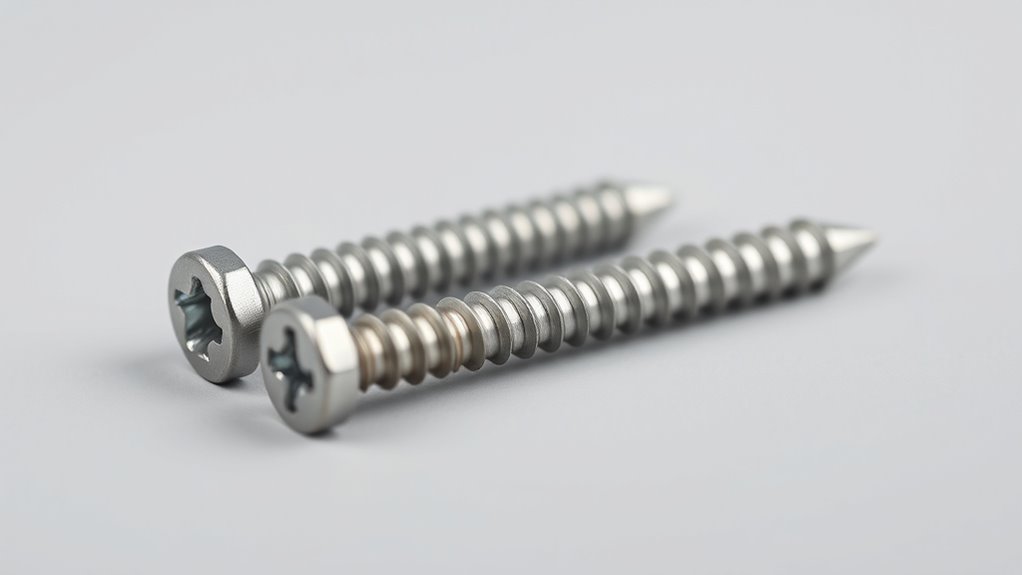
How can you tell a self-tapping screw at a glance? You’ll spot sharper, deeper thread patterns and a pointed or notched tip designed for cutting into screw materials like thin metal or plastic.
Check threads that extend to the tip and a flute or cutting edge. If the screw’s geometry suggests it will form its own mating hole, it’s likely self-tapping.
What “Self-Tapping” Actually Means
What does “self-tapping” actually mean in practice? It means a screw forms or cuts its own mating thread as you drive it into a substrate, eliminating separate tapping steps.
You’ll choose screw materials suited to the workpiece and consider thread standards to guarantee fit, strength, and corrosion resistance.
The process relies on geometry, hardness, and proper pilot hole guidance rather than pre-cut threads.
Key Visual Features That Identify Self-Tapping Screws
Knowing how self-tapping screws make their own threads helps you spot the ones designed to do it. You’ll look for sharp, deep threads, a pointed or flange tip, and sometimes a split or flute.
Labels often reference historical applications and specific manufacturing processes, so check packaging or specs. These visual cues tell you the screw’s meant material and cutting capability.
How Self-Tapping Screws Cut or Form Threads
You’ll notice self-tapping screws either cut threads by shaving material with sharp grooves or form threads by displacing material with blunt flutes.
Which action you get depends on the screw’s tip and thread geometry, and whether you pre-drill a pilot hole—and how big it is.
Understanding those differences helps you pick the right screw for the material and the load.
Cutting Versus Forming Threads
When you install a self-tapping screw, it either cuts its own thread by removing material or forms a thread by displacing material, and that fundamental difference determines which screw type you should use for a given material and application. You’ll choose by matching thread patterns and material compatibility: cutting for hard/brittle, forming for ductile.
| Type | Action | Best for |
|---|---|---|
| Cutting | Removes material | Metal, hard plastics |
| Forming | Displaces material | Soft metals, thermoplastics |
Pilot Holes And Geometry
How do pilot holes and screw geometry work together to let a self-tapping screw cut or form threads? You choose pilot hole diameter and depth to control chip removal and minimize splitting.
Screw flute, point, and thread pitch then determine whether threads are cut or formed. Proper pilot sizing maximizes thread engagement and considers material compatibility—so hard, brittle, or soft substrates get the right hole and screw.
Self-Tapping vs Self-Drilling vs Machine Screws
You’ll first see how self-tapping screws cut or form threads as you drive them into softer materials.
Then you’ll compare self-drilling screws, which include a drill-like tip so you don’t need a pilot hole, with machine screws that require pre-tapped holes or nuts.
This contrast will help you pick the right fastener for the job.
Self-Tapping Screw Basics
Curious which screw you should pick for a project? You’ll use self-tapping screws to form threads in softer materials; consider screw materials and thread patterns for grip and corrosion resistance. They need pilot holes sometimes and differ from machine screws by cutting their own threads.
| Type | Use | Tip |
|---|---|---|
| Self-tapping | Plastic/wood | Pilot hole |
| Machine | Metal fasten | Pre-threaded |
| Specialty | Thin sheet | Fine threads |
Self-Drilling Screw Differences
Wondering which screw will save you time and hassle on your next job? You’ll choose based on thread formation and material compatibility. Consider:
- Self-tapping: creates threads in softer substrates.
- Self-drilling: drills and taps in one step for metal.
- Machine screws: require pre-threaded holes or nuts.
- Application: pick by substrate hardness, speed needs, and corrosion resistance.
Machine Screw Characteristics
When you’re choosing between self-tapping, self-drilling, and machine screws, focus on how each forms or uses threads and what materials they suit best. You’ll pick by thread patterns and material compatibility: self-tapping cuts threads in softer substrates, self-drilling drills then taps, and machine screws need pre-tapped holes for metal or plastic fastenings.
| Type | Use |
|---|---|
| Self-tapping | Soft substrates |
| Machine | Pre-tapped holes |
Best Materials and Common Uses for Self-Tapping Screws
Because the right material affects performance, you’ll want to match self-tapping screws to the job. Consider surface finishes and thread patterns when choosing stainless, zinc-plated, brass, or coated fasteners for corrosion resistance and grip.
Match self-tapping screws to the job—consider material, finish, and thread for corrosion resistance and optimal grip.
Pick by substrate:
- Metal
- Plastic
- Wood
- Sheet
Common Screw Types That Are Not Self-Tapping
Not all screws cut their own threads; you’ll often use machine screws that need pre-tapped holes, wood screws designed to form or follow threads in wood rather than metal, and sheet metal bolts that require matching nuts or pre-threaded material.
You’ll see these types in machinery, woodworking, and HVAC or metalwork applications.
Keep an eye on whether a screw is labeled self-tapping before assuming it will create its own thread.
Machine Screws
Curious how machine screws differ from self-tapping ones? You rely on fasteners with precise thread design and material compatibility for metal assemblies. They need pre-tapped holes or nuts, so you avoid cutting threads yourself.
Consider these uses:
- Securing machinery parts
- Joining metal panels
- Electronics assembly
- Fastening with nuts or threaded inserts
They’re not for creating their own threads.
Wood Screws
If machine screws need pre-tapped holes or nuts, wood screws work differently and still aren’t self-tapping in the way sheet-metal screws are. You drive them to follow wood grain, cutting threads into softer fibers. They offer better Nail compatibility than bolts but won’t form threads in hard materials.
| Feature | Note |
|---|---|
| Grip | Follows wood grain |
| Use | Fasten lumber |
Sheet Metal Bolts
Wondering how sheet metal bolts differ from self-tapping screws? You use bolts when you need reliable thread engagement in pre-drilled holes and consistent clamping.
They rely on nuts or tapped holes, so material compatibility matters. Consider:
- Pre-drilling size
- Bolt and nut pairing
- Torque control
- Reuse potential
Choose bolts when fastener removal or stronger joints are required.
Choosing Self-Tapping vs Pre-Tapped Fasteners
When you’re deciding between self-tapping and pre-tapped fasteners, think about the material, load requirements, and how much installation control you need.
You’ll prefer self-tapping for thin or soft substrates and faster installs.
Choose pre-tapped when precision, repeated removal, or hard materials demand exact thread pitch and stronger engagement.
Also match screw head types to access and torque needs.
Pilot Holes, Driver Bits, and Torque for Self-Tapping Screws
Moving from material and fit concerns to installation technique, pilot holes, driver bits, and torque determine whether a self-tapping screw bites cleanly or strips the substrate. You control thread formation and account for material compatibility by matching drill size, bit type, and torque.
Consider:
- Pilot hole diameter
- Bit engagement
- Torque setting
- Feed speed
Mistakes That Strip or Break Self-Tapping Screws : and Fixes
Although self-tapping screws save time, it’s easy to strip heads or snap shanks if you rush or use the wrong setup. You should use correct driver bits, steady torque, and pilot holes to prevent stripping.
Avoid overtightening, remove corroded screws (screw corrosion weakens metal), and apply thread lubrication for stubborn threads.
If a screw breaks, extract with an easy-out or drill slowly.
Quick Checklist: Will This Screw Work for Your Project?
Before you buy or grab a screw, run through a quick checklist so you don’t end up with the wrong fastener mid-project. Check fit: diameter, length, thread type. Match material to load and surface finishes. Consider driver access and screw head styles. Verify pilot hole needs and corrosion resistance.
Before grabbing a screw, run a quick checklist: fit, material, head access, pilot hole, and corrosion resistance.
- Size
- Material
- Head/access
- Finish
Frequently Asked Questions
Can Self-Tapping Screws Be Reused Safely After Removal?
You can sometimes reuse self-tapping screws, but reusability concerns mean you’ll check threads, drive head and hole damage. Safety considerations require replacing stripped, corroded, or weakened screws to guarantee reliable fastening and avoid failure.
Are There Corrosion-Resistant Coatings for Self-Tapping Screws?
Ye olde yes — you can get corrosion-resistant self-tapping screws. You’ll choose coatings like zinc, galvanizing, stainless plating, or polymer layers that boost corrosion protection and coating durability, so they last in harsh environments.
Do Self-Tapping Screws Require Specific Storage Conditions?
Yes — you should store self-tapping screws in dry, cool areas with low humidity; use sealed containers, desiccants, and protective coatings to aid rust prevention, and rotate stock to avoid long-term corrosion risks.
Can Power Tools Damage Self-Tapping Screw Threads?
Yes — using excessive speed or wrong bits can damage self-tapping screw threads; you’ll strip thread strength and harm material compatibility, so match bit size, torque, and speed to the screw and substrate to avoid weakening threads and connections.
Are Self-Tapping Screws Compatible With Softer Plastics?
Yes — you can use them, but cautiously: plastic compatibility varies, and thread strength matters; you’ll avoid cracking softer plastics by choosing shallow, coarse-thread self-tapping screws and pre-drilling or using reduced torque to protect the material.
Conclusion
So, no — not all screws are self-tapping, but it’s funny how often you’ll grab one and assume it is until it jams. You’ll know a self-tapping by its sharp point, tapered threads, or flute-like tip, and you’ll save time when it cuts its own path into softer materials. Still, match screw type to material, use the right pilot hole and driver, and you’ll avoid stripped threads, broken bits, and that inevitable “oops” on the workbench.