Can Lag Screws Be Used in Concrete? Proper Installation Guide
You can use lag screws in concrete, but you’ll need proper anchors or epoxy-set threaded inserts—never drive a lag directly into bare concrete. Drill the correct-size hole with a masonry bit, clean and dry it, then set the anchor per torque and embedment specs before fitting the lag and washer to spread the load. Match anchor type to load, spacing, and environment to avoid cracking or corrosion. Keep going to learn specific anchor choices and installation tips.
Can You Use Lag Screws in Concrete? Quick Answer
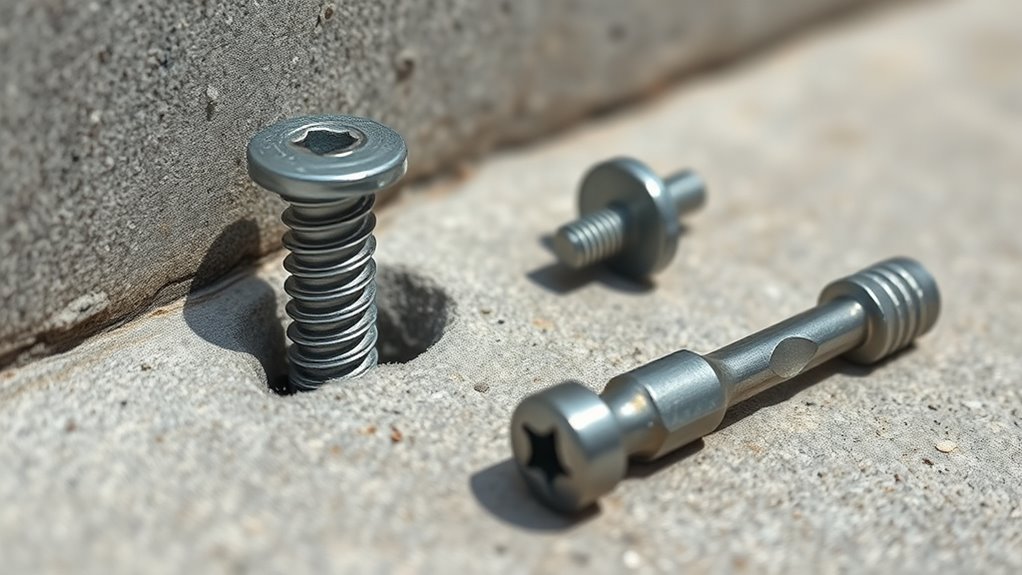
Yes—you can use lag screws in concrete, but not directly into bare concrete. You’ll need proper anchors (like sleeve or wedge anchors) or epoxy-set threaded inserts to hold the lag screw securely.
You’ll drill, set the anchor per torque specs, and attach fixtures.
Consider surface finishes and aesthetic considerations when choosing anchor type and cover plates so exposed fasteners match the project’s look.
When to Use Lag Screws vs Concrete Anchors
When you need to fasten something heavy to concrete, choose the right system based on load, permanence, and installation constraints.
Use lag screws with pre-installed threaded inserts or epoxy where you need removability and minimal impact on concrete color or decorative finishes.
Pick concrete anchors for maximum shear/tension, faster install, and when inserts or adhesives aren’t practical; match anchor type to load and surface appearance.
How Concrete Differs From Wood for Lag Fastening
If you’ve been weighing lag screws against concrete anchors, remember that concrete behaves very differently from wood when you fasten into it.
You’ll notice concrete flexibility is limited compared with timber’s Wood expansion and contraction. That means you must account for brittle fracture, reduced holding from surface cracks, and different load transfer.
Use appropriate drilling, cleaning, and fastener choices to avoid failure.
Direct-Embed Lag Screws : What They Are and Limits
Direct-embed lag screws are turned directly into predrilled holes in concrete so you can fasten without anchors.
You’ll learn how their load capacity compares to anchored systems and what limits—like concrete strength and embedment depth—affect performance.
I’ll also cover practical tips for installation and safe removal.
Direct-Embed Definition
A direct-embed lag screw is a threaded fastener you sink straight into uncured or drilled concrete so its shank and threads carry load without a separate anchoring sleeve. You’ll learn basics tied to concrete chemistry and lag screw history to understand why embedting works and when to choose it.
| Feature | Note |
|---|---|
| Material | Hardened steel |
| Setting | Wet or drilled concrete |
| Use | Direct bearing |
Load And Limitations
How much load a direct‑embed lag screw can carry depends on concrete strength, embedment depth, screw diameter, and the direction of force.
You’ll need to take into account pullout, shear, and concrete breakout when designing connections.
You should also consider surface treatment for corrosion resistance and environmental impact on durability.
Calculate capacities conservatively, factor in safety margins, and avoid overstressing the concrete.
Installation And Removal
When you move from calculating capacities to putting lag screws into concrete, proper installation and clean removal are what determine whether your design performs as expected.
You drill correct hole sizes, use anchors or direct-embed methods, torque to spec, and seal around fasteners for Aesthetic finishes.
Remove with steady backing-out, repair chips, and refinish so Decorative accents and structure stay intact.
Expansion vs Adhesive Anchor Systems for Lag Screws
When choosing lag screw anchors in concrete, you’ll weigh expansion anchors—which grip by mechanical wedging—against adhesive anchors that bond into the drilled hole.
Expansion systems give quick installation and predictable loads in sound concrete, while adhesives offer higher capacities and work better in cracked or hollow substrates.
You’ll pick based on load demands, base material condition, installation access, and curing/time constraints.
Expansion Anchor Basics
Curious which anchor type will give you the best hold for lag screws?
Expansion anchors grip by wedging into the drilled hole; they react to torque and vibration, so you’ll need proper surface preparation and clean holes—think dust-free like good concrete mixing practices suggest.
You’ll drill to size, insert the anchor, and tighten the lag screw. They work best in solid, undamaged concrete.
Adhesive Anchor Benefits
Although expansion anchors work by wedging and rely on hole cleanliness and concrete integrity, adhesive anchors give you strong, consistent bond strength in cracked or irregular concrete because the resin fills voids and transfers loads across a larger area.
You’ll appreciate adhesive benefits like higher load capacity, reduced stress concentrations, and improved Anchor durability; they let you trust connections where mechanical expansion might fail.
Choosing Between Systems
Because your project’s performance and safety hinge on anchor choice, you’ll want to weigh expansion and adhesive systems against specific job conditions rather than defaulting to one type.
You’ll prefer expansion anchors for quick installs, high vibration, or where surface coating might impair bonding.
Choose adhesive anchor systems when you need chemical bonding, superior load distribution, or corrosion protection in cracked concrete and irregular holes.
Common Anchor Types for Lag Screws in Concrete
What anchor should you pick for lag screws in concrete depends on the load, installation access, and whether you need removability.
You’ll consider wedge anchors for heavy static loads, sleeve anchors for moderate loads with some adjustability, and drop-in anchors for flush installations.
Account for concrete curing time and choose corrosion-resistant finishes to prevent anchor corrosion in exposed or damp conditions.
Plastic vs Metal Anchors for Lag Screws: Pros and Cons
When choosing anchors for lag screws in concrete, you’ll find plastic anchors are easy to install and resist corrosion, making them a good choice for light-duty, low-moisture applications.
Metal anchors offer far greater shear and pull-out strength, so you’ll use them where load and safety matter most.
Consider installation complexity and long-term durability when picking between quick plastic options and the stronger, more durable metal choices.
Plastic Anchor Advantages
If you’re weighing plastic against metal anchors for lag screws, plastic anchors stand out for their simplicity and cost-effectiveness. You’ll appreciate the advantages of plastic: adequate plastic durability for light to medium loads, plastic flexibility that eases insertion, and plastic corrosion resistance outdoors.
Lower plastic cost and straightforward plastic installation boost plastic compatibility across many plastic applications, though consider plastic environmental impact when choosing.
Metal Anchor Strength
Because metal anchors bite into concrete with greater shear and pullout resistance, you’ll often choose them when strength and long-term reliability matter.
They resist deformation better than plastic, reducing metal fatigue under cyclic loads.
You’ll also value corrosion resistance options like galvanized or stainless steel for harsh environments.
Metal anchors cost more but give predictable load capacity and better performance for heavy fixtures.
Installation And Durability
Choosing metal anchors for strength makes sense, but installation and long-term durability bring different trade-offs you’ll want to weigh. You should consider concrete chemistry effects and reinforcement placement when choosing plastic or metal anchors. Metal resists shear; plastic reduces corrosion contact. Proper drilling, set depth, and sealant extend life.
| Anchor | Benefit | Limitation |
|---|---|---|
| Metal | High strength | Corrosion risk |
| Plastic | Corrosion isolation | Lower strength |
| Hybrid | Balanced | Cost |
| Installation | Critical | Skill-dependent |
Choosing the Right Anchor Size for Lag Screws
How do you pick the right anchor size for a lag screw in concrete? You’ll match anchor diameter and embedment to load, substrate, and fixture, balancing strength with aesthetic considerations and eco friendly alternatives where possible.
- Verify load ratings
- Check concrete condition
- Match fixture hole
- Consider corrosion resistance
- Allow clearance for tools
Choosing Lag Screw Length for Concrete Installations
When you size lag screw length for concrete, aim for enough embedment to develop the anchor’s rated capacity while keeping the screw short enough to avoid hitting rebar or passing through the member; check thickness, topping, and finish. Consider Concrete aesthetics and Surface treatments when selecting countersink depth.
| Factor | Recommendation |
|---|---|
| Thickness | Embed per spec |
| Rebar | Avoid contact |
| Finish | Preserve aesthetics |
| Treatments | Protect surface |
Drill Bit Types: SDS, Hammer, and Masonry Bits
If you’re drilling into concrete, picking the right bit—SDS, hammer, or masonry—makes the job faster and prevents damage to the anchor or substrate.
You should match bit type to drill power, depth, and concrete condition; consider concrete sealing and surface preparation before anchoring.
- SDS: best for heavy, repetitive holes
- Hammer: good for medium-duty
- Masonry: for occasional jobs
Carbide tips are recommended.
Clean and vacuum holes.
Choosing the Correct Hole Diameter for Anchors
When choosing a hole diameter, match the drill bit to the anchor manufacturer’s specified size so the anchor seats correctly and holds full capacity.
You’ll also need to account for required embedment depth—too shallow and the anchor won’t reach its rated performance, too deep and you risk poor engagement.
Always check the anchor instructions and measure carefully before drilling.
Drill Bit vs Anchor
Because the hole diameter controls how an anchor seats and expands, you need to match your drill bit precisely to the anchor’s specification rather than guessing by eye.
Use proper bits to protect concrete coloring and surface sealing. Consider:
- Match manufacturer diameter
- Check bit wear
- Clean the hole
- Avoid oversized holes
- Verify with a depth gauge
Allow For Embedment
Although choosing the right drill bit diameter seems simple, you’ve got to account for the anchor’s required embedment depth and shank clearance to guarantee full load transfer into the concrete.
Measure embedment per manufacturer specs, add clearance for dust and insertion, and avoid oversized holes that weaken holding power.
Consider surface bonding and aesthetic finishing—use proper countersinking or plugs so anchors sit flush and look neat.
Drill Depth and Effective Embedment Explained
If you want a lag screw to hold reliably, you need to drill to the right depth so the screw’s effective embedment—the portion of the screw that actually grips concrete—matches the load it must carry.
Consider factors like concrete curing and moisture control:
- Match embedment to load ratings
- Check base material thickness
- Allow for full thread engagement
- Account for edge distance
- Use correct drill bit size
Step-by-Step: Drilling Holes in Concrete Safely
Start by choosing the right hammer drill and masonry bit so you’ll get clean, correctly sized holes.
Mark and position each hole precisely before you start drilling to guarantee proper alignment.
As you drill, control dust and debris with a vacuum or dust shroud to keep the work area safe and the hole visible.
Choose The Right Drill
When you’re drilling into concrete, pick a drill that gives you power and control: a hammer drill or rotary hammer is usually best because they combine impact with rotation to cut through masonry efficiently, while a standard drill will overheat and struggle.
You’ll also consider concrete preparation and Lag screw materials.
Choose bits, speed, depth stop, PPE, and dust control:
- SDS or carbide-tipped bit
- Variable speed
- Depth stop set
- Eye/ear protection
- Vacuum or dust shroud
Mark And Position Holes
Before you drill, lay out the hole pattern and transfer exact marks to the concrete so your lag screws sit true and line up with the fixture. Use a pencil or tape for surface preparation, verify spacing, and account for aesthetic considerations. Double-check depth and alignment before drilling.
| Position | Spacing | Depth |
|---|---|---|
| Corner | 4″ | 1.5″ |
| Center | 6″ | 2″ |
Control Dust And Debris
Although drilling concrete kicks up a lot of fine dust, you can keep the work area clean and breathing safe by trapping and removing debris as you go. Use PPE, a vacuum adapter, and drop cloths for surface preparation and aesthetic considerations.
- Wear N95 mask and eye protection
- Attach dust shroud to drill
- Vacuum while drilling
- Sweep remaining grit
- Dispose debris properly
Cleaning Drilled Holes for Best Anchor Grip
If you want lag screws to hold reliably, clean the drilled hole thoroughly so the anchor contacts solid concrete instead of dust and debris. You should brush, blow, and vacuum the hole, ensuring proper surface preparation and aiding corrosion prevention by drying and inspecting metal. Repeat until no dust remains for maximum grip.
| Step | Tool | Result |
|---|---|---|
| Brush | Wire brush | Clears dust |
| Blow | Air blower | Removes particles |
| Vacuum | Shop vac | Ready hole |
Installing Plastic Anchors With Lag Screws
With the hole cleaned and free of dust, you can set a plastic anchor to give the lag screw something solid to bite into in softer concrete or hollow block. Make certain concrete sealing and surface preparation are done first.
With the hole clean and sealed, set a plastic anchor so the lag screw has solid bite in softer concrete.
Follow these steps:
- Choose correct anchor size
- Tap anchor flush
- Align fixture
- Insert lag screw
- Tighten without overdriving
Installing Metal Sleeve and Wedge Anchors With Lag Screws
When you choose between metal sleeve and wedge anchors, pick the type that matches your load, edge distance, and concrete condition.
Follow the manufacturer’s drill size, embedment depth, and cleaning steps. Then insert the anchor and tighten the lag screw to the specified torque.
Proper sequencing—accurate layout, clean hole, correct torque—ensures the anchor performs as rated.
Selecting Correct Anchor Type
Before you drill, decide which anchor type matches your load, installation access, and concrete condition—metal sleeve, wedge anchor, or a lag-screw anchor with a concrete insert. Each performs differently under tension, shear, and dynamic loads.
Consider concrete chemistry and anchor corrosion when choosing.
- Load direction
- Embedment depth
- Edge distance
- Vibration/dynamic forces
- Environmental exposure
Proper Installation Steps
After you’ve chosen the right anchor type and marked your layout, start by confirming drill bit size, anchor length, and that the concrete is clean and sound. Accurate prep makes installation predictable and safe.
Drill to depth, clear dust, insert metal sleeve or wedge anchor, and seat it. Then tighten the lag screw to the specified torque.
Protect visible areas for concrete coloring and decorative finishes during work.
Using Epoxy (Adhesive) Anchors With Lag Screws
If you need a high-strength, vibration-resistant connection in cracked or unreinforced concrete, using epoxy adhesive anchors with lag screws gives you that reliability by bonding the screw to the hole walls instead of relying solely on friction.
You’ll get improved concrete bonding and reduced anchor corrosion risk when you:
- clean and dry the hole
- inject epoxy fully
- insert screw slowly
- cure per instructions
- inspect periodically
Torque Guidelines and Avoiding Overtightening
When you tighten lag screws into concrete—whether set in plain drilled holes or bonded with epoxy—apply controlled torque rather than just “as tight as you can.”
Overtightening can strip threads, crush the surrounding concrete, or shear the anchor.
Use a calibrated torque wrench, follow manufacturer specs, and check torque in stages to protect concrete aesthetics and minimize environmental impact from repairs or replacements.
Preventing Undercutting and Pullout Failures
To prevent undercutting and pullout, you should start with correct hole preparation—clean, to the right diameter and depth for the anchor.
Make sure the screw achieves proper embedment so loads are transferred into sound concrete, not just surface threads.
Use load-bearing washers where recommended to spread compressive forces and reduce local crushing.
Correct Hole Preparation
How do you make sure a lag screw bites into concrete instead of tearing out? Prepare clean, correct-diameter holes, and avoid undercutting edges. Maintain concrete sealing and surface roughness to improve friction. Use these steps:
- Drill per bolt diameter
- Blow and brush debris out
- Check for cracks or voids
- Avoid reaming edges
- Use proper drill speed and pressure
Proper Screw Embedment
If you want a lag screw to hold in concrete instead of pulling out, set the embedment depth and seating so the threads fully engage solid material without splitting or undercutting the hole edges.
You’ll check concrete aesthetics and surface preparation to avoid weakness near the face, tap holes progressively, and stop at specified depth so pullout resistance and clean appearance both meet design and safety requirements.
Use Of Load-Bearing Washers
Having set proper embedment and seating, you now need to control load distribution at the concrete face; using a load-bearing washer prevents the head of a lag screw from undercutting the hole edge and reduces the chance of pullout.
You should:
- Choose washer diameter to spread load
- Match washer thickness to screw size
- Use corrosion-resistant materials
- Consider decorative finishes for visible fixtures
- Balance strength with aesthetic considerations
Simple Load Checks: Shear and Tensile for Lag Anchors
When you evaluate lag anchors in concrete, you’ll usually start with two basic checks: shear (sideways) capacity and tensile (pullout) capacity.
You calculate expected shear and tensile forces from the applied loads, confirm the anchor’s rated capacities, and check load distribution to avoid overstressing any single anchor.
Also consider corrosion prevention for long-term strength, coatings, or stainless options.
Edge Distance and Spacing Rules for Anchors
You need to respect minimum edge distances to prevent concrete breakout and guarantee the anchor develops its rated strength.
You should also follow spacing requirements so adjacent anchors don’t interact and reduce capacity.
If anchors are too close to each other or to edges, you’ll see reduced strength and unpredictable failure modes.
Minimum Edge Distance
- maintain manufacturer-specified distances
- consider concrete cracking when placing anchors
- allow drainage to limit anchor corrosion
- use proper embedment depth
- inspect edges before installation
Anchor Spacing Requirements
Although spacing rules might seem straightforward, they’re critical to prevent concrete cracking and guarantee anchors reach their rated capacity. You’ll keep minimum edge distance and center-to-center spacing per manufacturer, consider surface finishing to avoid unsightly repairs, and factor aesthetic considerations when layout matters. Follow patterns in plan drawings and maintain clean drilling for reliable, durable anchors.
| Element | Guideline |
|---|---|
| Edge | Min distance |
| Center | Min spacing |
Effects Of Close Proximity
When anchors sit too close to each other or to a concrete edge, the surrounding concrete can’t develop full bearing or shear capacity. You’ll see reduced load performance and greater risk of cracking or pullout.
You should follow spacing and edge distance rules, consider concrete color as a finish cue, and avoid disturbing waterproof coatings.
- Minimum edge distance
- Minimum spacing
- Stagger patterns
- Load sharing
- Crack control
Anchoring Into Cracked, Hollow, or Low-Strength Concrete
If you’re fastening into cracked, hollow, or low-strength concrete, you need different strategies than for solid, uncracked concrete because those conditions reduce holding capacity and change failure modes.
Assess the substrate; use epoxy or grout-filled anchors for cracked or hollow zones.
Focus on surface preparation and corrosion prevention.
Increase embedment, stagger loads, and consider spreading load with plates or adhesive anchors rated for poor concrete.
Best Practices for Anchoring Ledger Boards to Concrete
Because a ledger board transfers deck loads directly into concrete, you should pick anchors and placement that maximize pullout and shear capacity while preventing water and freeze-thaw damage.
Because ledger boards transfer deck loads into concrete, choose anchors/placement for max capacity and water-resistant protection.
Use stainless anchors, sealants, and spacing per code; consider environmental impact and historical uses of materials.
- Choose through-bolts or wedge anchors
- Maintain edge distances
- Use flashing and sealant
- Torque to spec
- Inspect periodically
Mounting Heavy Fixtures and Shelving to Concrete
When you’re mounting heavy fixtures or shelving to concrete, pick an anchor type rated for the fixture and substrate.
Calculate the load capacity including live, dead, and safety factors so you know how many anchors and what sizes you need.
Follow installation best practices—correct drill size, embedment depth, and torque—to guarantee a secure, long-lasting hold.
Choosing Anchor Type
Before you pick a lag screw, decide what the anchor needs to do: hold static weight, resist vibration, or carry dynamic loads, because each situation calls for a different anchor type and installation method.
Consider surface finish and aesthetic considerations alongside performance.
Choose anchors that match substrate, load type, corrosion resistance, and installation access.
- Wedge anchors
- Sleeve anchors
- Hammer-set anchors
- Epoxy anchors
- Concrete screws
Load Capacity Calculations
If you’re mounting heavy fixtures or shelving to concrete, calculate load capacity by checking both the anchor’s rated pullout/shear values and the concrete’s capacity at your embedment depth and edge distances.
You’ll factor in concrete chemistry, age, and strength class plus proximity to reinforcement bars, which reduce effective capacity.
Sum loads, include safety factors, and consult manufacturer tables or an engineer for marginal conditions.
Installation Best Practices
Having confirmed your load calculations and checked concrete capacity, you’ll want a clear, step-by-step plan for anchoring heavy fixtures and shelving to concrete.
Follow precise drilling, cleaning, and seating of lag screws, and include concrete mixing notes for repairs.
Perform load testing after installation.
- Mark mounting points
- Drill correct diameter
- Clear debris fully
- Torque to spec
- Inspect periodically
Temporary vs Permanent Lag-Anchor Connections
When you decide between temporary and permanent lag-anchor connections, think about how long the load will be applied and whether you’ll need to remove the fastener later. Consider concrete curing time and structural reinforcement needs: temporary anchors let you adjust or remove loads; permanent anchors secure long-term fixtures.
| Use | Duration | Removal |
|---|---|---|
| Temporary | Short | Easy |
| Permanent | Long | Difficult |
Corrosion Resistance: Coatings and Stainless Options
Because concrete environments vary in moisture and chemical exposure, choosing the right corrosion protection for lag screws matters for longevity and safety. You’ll focus on corrosion prevention and coating options to match conditions.
Consider these choices:
- Hot-dip galvanized lag screws
- Zinc-plated for indoor use
- Epoxy or polymer coatings
- Stainless steel grades (304, 316)
- Sacrificial anodes where applicable
How Temperature and Weather Affect Anchors
Coatings and material choices help guard against corrosion, but temperature and weather impose their own stresses on anchors that you’ll need to plan for.
Consider temperature effects like freeze–thaw cycles that expand cracks and loosen embeds.
Account for weather considerations such as UV, moisture, and salt spray that accelerate corrosion or swelling.
Choose compatible materials and inspect more often after extreme conditions.
Tools Checklist for Installing Lag Screws in Concrete
Before you start drilling, gather a concise set of tools so the job goes smoothly. You’ll want gear that respects historical context of older masonry and preserves aesthetic considerations when visible. Bring quality items and inspect them first:
- Hammer drill with masonry bit
- Impact driver and hex socket
- Vacuum or brush for dust
- Proper lag screws and anchors
- Safety goggles and gloves
Common DIY Mistakes With Lag Screws in Concrete
You’ve got the tools ready, but even with the right gear people still make avoidable errors when installing lag screws in concrete. You might skip proper pilot holes, use wrong anchors, or ignore historical applications that show older masonry quirks.
Don’t overtighten, neglect edge distance, or forget aesthetic considerations like flush finishes. Measure, choose anchors, and install methodically for secure, neat results.
How to Remove a Stuck or Broken Lag Screw
When a lag screw refuses to budge or snaps off, stay calm and work methodically. You’ll probe causes like concrete expansion or anchor corrosion, then extract carefully.
- Remove nearby material to access the shaft.
- Use penetrating oil for corrosion spots.
- Drill a center pilot hole in broken studs.
- Use an extractor or reverse drill bit.
- Repair hole and re-anchor to counter concrete expansion.
When to Call a Structural Engineer or Pro Installer
If a lag screw problem affects a load-bearing element, involves significant concrete cracking, or you can’t safely access the fastener, call a structural engineer or a pro installer — they’ll assess load paths, prescribe repairs, and prevent unsafe DIY fixes.
You should also consult pros when historical context complicates retrofit choices or when projects must meet local safety regulations; they’ll document compliance and recommend durable solutions.
Cost Comparison: Lag Screws With Anchors vs Expansion Bolts
Although both lag screws with concrete anchors and expansion bolts secure fixtures effectively, they differ noticeably in material cost, labor time, and long-term value—so you’ll want to weigh upfront price against installation complexity and expected performance.
Consider historical trends and manufacturing processes when choosing:
- Material cost per unit
- Required labor hours
- Tooling and installation complexity
- Long-term maintenance needs
- Load capacity versus price
Code and Permitting for Structural Concrete Attachments
Choosing between lag screws with anchors and expansion bolts often raises questions about how those choices fit within building codes and permit requirements. So you’ll want to know the regulatory landscape before you buy or install.
Check local structural codes, load tables, and permit triggers; document compliance for inspections.
Consider concrete aesthetics and environmental impact when specifying finishes, coatings, or corrodible materials to satisfy code and community standards.
Maintenance Tips to Keep Concrete Anchors Secure
When you inspect concrete anchors regularly, you’ll catch corrosion, loosening, or concrete cracking before they become safety hazards. Make a simple checklist—visual check, torque test, and surrounding concrete assessment—and schedule inspections after extreme weather or heavy loads.
- Check for surface discoloration and rust
- Verify torque and hardware tightness
- Assess surrounding concrete for hairline cracks
- Protect anchors from moisture and salts
- Preserve decorative finishes when cleaning
Quick Troubleshooting: Loose or Failing Lag Anchors
If a lag anchor feels loose or shows visible movement, act quickly to prevent structural or safety issues. You’ll inspect cracks, check embedment depth, and assess loads; historical applications and aesthetic considerations may affect repair choices. Reinforce with larger anchors, epoxy, or replace affected concrete. Keep records and test adjacent anchors.
| Issue | Action | Timeframe |
|---|---|---|
| Movement | Tighten/replace | Immediate |
| Crack | Patch/epoxy | 24–72h |
| Corrosion | Replace | As needed |
Frequently Asked Questions
Can Lag Screws Be Reused After Removal From Concrete Anchors?
You can sometimes reuse lag screws removed from concrete anchors, but you shouldn’t if corrosion resistance is compromised or threads are damaged, since reduced load capacity can cause failure; inspect carefully and replace when in doubt.
How Do Vibrations or Dynamic Loads Affect Lag Anchor Lifespan?
Vibrant vibrations bring brittle breakdown: you’ll see Vibration effects accelerate loosening and fatigue, and Dynamic load impact increases stress cycles, so you’ll need tougher anchors, regular inspections, and maintenance to prevent failure and prolong service life.
Can Lag Screws Be Installed in Concrete Block Cores Without Grout?
You shouldn’t; you’ll get poor holding if you install lag screws in hollow concrete block cores without grout. Use proper concrete drilling, choose suitable anchor types like wedge or sleeve anchors, or grout cores first for reliable strength.
What Are Insurance Implications of DIY Concrete Anchoring Work?
You risk voiding policies and facing denied insurance claims if DIY concrete anchoring causes damage or injury; check your liability coverage, document proper procedures, and notify your insurer before major structural work to avoid surprises.
Do Chemical Anchor Adhesives Have Shelf-Life or Storage Limits?
Right off the bat, yes—they have shelf-life limits. You’ll treat chemical anchor adhesives like perishable goods: Anchor types and Storage guidelines matter, keeping temperatures, humidity, and sealed cartridges controlled to preserve strength and guarantee reliable cures.
Conclusion
You can use lag screws in concrete, but only with the right anchor system, the right drill size, and the right installation technique. Don’t guess, drill clean, set anchors fully, and recheck tightness. Choose expansion anchors for shear, adhesive anchors for heavy loads, and consult code for structural ties. Inspect periodically, replace corroded parts, and fix looseness immediately. Follow proper steps, respect the limits, and protect your work to keep attachments safe and lasting.

