Are Nails or Screws Better for Fencing
You’ll usually want screws for fencing because they hold better, resist withdrawal, and make repairs easier, while nails are cheaper and faster for nonstructural or temporary work. Choose stainless or hot-dip galvanized fasteners in coastal or wet areas to avoid rust, and pre-drill in dense or composite boards to prevent splitting. For gates and hardware, always prefer screws or bolts for strength. Keep going to see practical spacing, material, and longevity tips.
Quick Decision Guide: Nails vs Screws
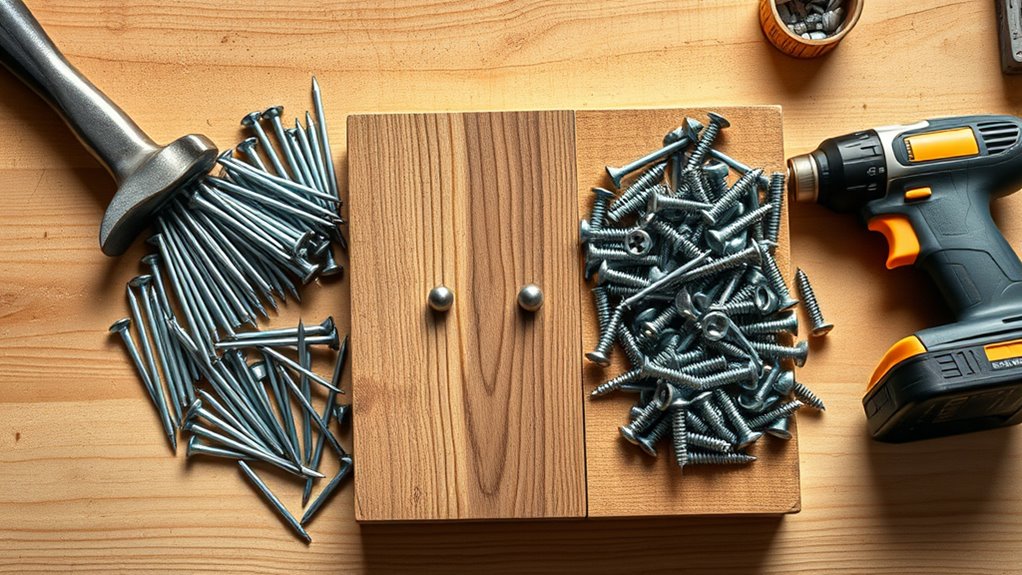
If you want a fast, budget-friendly install, nails usually win.
If you want strength, longevity, and easier repairs, pick screws.
You’ll choose nails for Nail aesthetics on picket or board fences where appearance and speed matter.
Choose screws for Screw versatility—holding power, less loosening, and straightforward replacements.
Balance cost, climate, and maintenance when deciding which fits your project.
Short Answer: Which Fastener Usually Wins
While personal priorities matter, screws usually win for most fencing jobs because they hold better, resist loosening, and make repairs easier.
You’ll prefer screws for long-term reliability, cleaner Fastener aesthetics, and fewer maintenance visits. Nails might save time upfront, but they loosen.
Also weigh environmental impact: choose coated or recycled screws to balance durability with eco concerns and reduce replacement waste.
Match Fastener to Fence Lifespan (5/10/20+ Years)
Think about how long you want the fence to last before picking fasteners: quick, low-cost nails can work for 5 years.
Coated screws or stainless options suit a 10-year target.
And marine-grade stainless or hot-dipped galvanized screws are best for 20+ years.
You’ll trade upfront cost and installation time for long-term corrosion resistance and fewer repairs.
Match the fastener material and finish to your lifespan goal to avoid premature failure.
Short-Term Fastener Choices
How long do you expect your fence to last? If you plan a short-term install (5 years or less), nails can save time and money; they’re quick, cheap, and fine if you’ll repaint or touch up often.
Use corrosion-resistant nails, coat heads with clear nail polish after fence painting to seal edges, and avoid heavier-duty screws meant for longer lifespans.
Mid-Term Durability Options
Because you’ll likely want a fence that lasts several years without constant upkeep, match fastener type and coating to your target lifespan—about 5, 10, or 20+ years.
You’ll balance Fastener aesthetics with performance and consider Installation challenges like pilot holes and driving torque.
- 5 years: economical nails
- 10 years: coated screws
- 20+ years: stainless screws
Hidden fasteners
Paint-friendly finishes
Long-Term Corrosion Resistance
When you pick fasteners for a fence you want their corrosion resistance to outlast the wood and finish, so match materials and coatings to your target lifespan (5, 10, or 20+ years).
Choose galvanized nails for short runs, stainless screws for 20+ years, and hot-dip coatings for mid-term.
After fence staining, seal exposed heads—consider clear nail polish on nails to slow rust.
Key Decision Criteria: Strength, Cost, Maintenance
Deciding between nails and screws comes down to three practical factors you can measure: strength, upfront and lifetime cost, and how much maintenance each fastener will demand.
You’ll weigh fastener aesthetics and installation speed against durability, replacement frequency, and total expense.
Consider:
- Load capacity
- Material cost
- Corrosion upkeep
- Repair time
- Visual finish
Why Withdrawal Resistance Matters for Nails and Screws
If your fence has to resist wind, leaning panels, or the constant push of people and animals, withdrawal resistance is what keeps fasteners from pulling out of the wood over time.
You’ll prefer screws when screw extraction forces matter because they bite deeper and hold longer; nails risk loosening, especially with nail corrosion.
Check fastener diameter, thread type, and wood density for reliable hold.
How Weather Affects Fastener Performance
When you choose fasteners for a fence, consider how moisture and salt can corrode nails or screws and shorten their life.
Also think about temperature changes that make wood and metal expand or contract, which can loosen connections over time.
Finally, account for wind-driven stress—repeated loading can fatigue fasteners and the system they hold together.
Corrosion Resistance Under Moisture
How will moisture shape the lifespan of your fence fasteners? You’ll find corrosion accelerates with wet wood; coatings matter. Nail polish won’t protect long; choose galvanized or stainless. Fence staining helps shed water and slows rust.
Consider maintenance and replacement schedules to avoid failure.
- Choose stainless or hot-dip galvanized
- Avoid plain steel nails
- Recoat exposed fasteners
- Improve drainage
- Inspect annually
Temperature Expansion Effects
Because metals and wood expand and contract at different rates with temperature swings, your fence fasteners face cyclic stresses that can loosen joints or split boards over time.
You should choose fasteners and installation methods that preserve structural integrity and aesthetic appeal: allow slight movement, use appropriate fastener length and coating, and pre-drill where needed so thermal cycling won’t deform or stain visible boards.
Wind And Structural Stress
If strong gusts hit your fence, they put concentrated loads on every fastener and magnify any weakness in the frame or boards.
You should choose fasteners that resist pull-out, flex fatigue, and corrosion so decorative finishes and aesthetic options stay intact.
Consider:
- Screws with locking threads
- Ring-shank nails for grip
- Corrosion-resistant coatings
- Proper spacing and bracing
- Regular inspections
Wood Movement and Why Screws Often Win
When wood dries, it shrinks across the grain and expands when it absorbs moisture. That movement creates stresses around fasteners you mightn’t notice until boards sag, split, or pull loose.
You’ll find screws hold better because their threads resist withdrawal and let you adjust boards for paint color changes or decorative accents. Screws reduce splitting and make repairs simpler.
When Nails Are Acceptable for Short-Term Fences
Screws usually give you better long-term performance, but nails can still make sense for short-term fences where cost, speed, and future removal matter more than longevity.
You’ll pick nails for temporary projects, events, or rentals when Nail alternatives aren’t needed and Fence aesthetics are secondary.
- Fast installation
- Lower upfront cost
- Easy removal
- Minimal tools required
- Short seasonal use
Common Nail Types for Fences and When to Use Them
Although it might seem like all nails are the same at a glance, different types serve distinct roles in fencing, and knowing which to pick saves you time and prevents problems down the line. You’ll choose galvanized for outdoor durability, ring-shank for grip, and stainless for aesthetics when doing nail art or after fence staining.
| Nail Type | Best Use |
|---|---|
| Galvanized | Outdoor posts |
| Ring-shank | Loose boards |
| Stainless | Visible panels |
Common Screw Types for Fences and Their Benefits
Now let’s look at the common screw types you’ll see for fencing—deck screws, stainless screws, coated exterior screws, and structural lag screws—and what each one does best.
You’ll learn which screws resist corrosion, grab wood tightly, or provide heavy-duty holding power. That way you can pick the right screw for your fence’s material and exposure.
Common Screw Types
A common screw type you’ll meet when building or repairing a fence is the wood screw, designed with coarse threads that bite into timber for strong holding power and easy removal when you need to replace a picket or post.
You’ll also choose deck, stainless, self-drilling, and drywall screws based on strength, corrosion resistance, fastener aesthetics, and historical fencing style.
- Wood screw
- Deck screw
- Stainless steel
- Self-drilling
- Drywall/trim
Benefits By Screw Type
When you pick the right screw for each fence component, you’ll get better holding power, longer life, and fewer repairs down the road. The following breakdown explains what each common screw type actually gives you so you can match its benefits to your materials and conditions.
Use stainless for rot resistance, coated for paint adhesion during fence painting, decking screws for grip, and self-tapping for metal. Seal heads like nail polish.
Coatings and Finishes to Prevent Rust
Because metal fasteners sit exposed to moisture and salt, choosing the right coating is one of the best things you can do to prevent rust and extend fence life. You’ll want coatings that bond well, resist chips, and aid rust prevention.
Because exposed fasteners face moisture and salt, choose chip-resistant, well-bonded coatings to prevent rust and prolong life
Consider options and maintenance:
- Galvanized zinc
- Hot-dip galvanized
- Powder coating
- Paint finish
- Stainless-steel plating
Material Compatibility: Wood, Metal, Vinyl Fences
Although the right fastener depends on the fence material, knowing each substrate’s demands will help you pick nails or screws that hold up and won’t damage the structure.
For wood, prioritize nail selection for split resistance or choose screws for holding power.
For metal, use self-drilling screws and watch Fastener corrosion with compatible coatings.
For vinyl, use screws in reinforced rails to prevent cracking.
Fastener Sizes (Nails & Screws) for Common Boards
If you’re fastening common fence boards, match nail or screw length to board thickness so fasteners bite deep enough without poking through the other side.
Pick 1¼” for 3/4″ boards, 1½”–1¾” for 1″–1¼”, and 2″ for thicker pickets.
Consider screwdriver design for driving ease and even use nail polish to seal exposed heads.
- 3/4″ boards: 1¼”
- 1″ boards: 1½”
- 1¼” boards: 1¾”
- Thick pickets: 2″
- Trim/overlap: add ¼”
How Gauge and Head Type Affect Holding Power
When you’re choosing fasteners for a fence, gauge matters because thicker nails or screws resist bending and pullout better in dense or load-bearing boards.
The head type also changes holding power — larger, washer-style or ring-shank nails and screw heads with bigger bearing surfaces grip the wood more securely.
We’ll compare common gauges and head styles so you can match fastener strength to your fence materials.
Gauge Thickness Impact
How thick should fasteners be for a fence that lasts? You’ll choose thicker gauges for higher shear strength and resistance to nail corrosion. Thicker screws resist screw extraction.
Balance diameter with wood species to avoid splitting. Consider coating and pilot holes for dense wood.
- Thicker gauge = more shear strength
- Avoid undersized fasteners
- Use pilot holes in hardwood
- Protect against corrosion
- Match gauge to load
Head Type Influence
Gauge sets the basic shear and pull-out capacity, but the head shape determines how that strength gets transferred into the wood. You’ll pick smooth or ring-shank nails for grip and countersunk, pan, or washered screw heads to spread load.
Consider split-resistant heads for soft timber. Even Nail art choices and Screw packaging labels can hint at desired holding performance, so read specs.
Nailing Technique for Durable Fastening
Although nails install faster than screws, you still need the right nailing technique to keep fence boards secure over years of wind and weather.
You’ll drive ring-shank or galvanized nails straight, dimple heads slightly, and avoid over- or under-driving.
Use nail polish on exposed heads to seal, and keep a trusted screwdriver brand on hand for other tasks.
- Choose corrosion-resistant nails
- Set consistent depth
- Space nails properly
- Use a guide or clamp
- Inspect and touch up
Screwing Technique to Avoid Splitting
When you drive screws into fence boards, take steps to prevent splitting so your fence stays strong and looks clean. Pre-drill pilot holes slightly smaller than the screw, countersink, and choose proper screwdriver types to avoid cam-out. Seal exposed screw heads with nail polish. Align boards, work slowly near ends, and clamp pieces to keep edges intact.
| Step | Action | Result |
|---|---|---|
| 1 | Pre-drill | Less split |
| 2 | Countersink | Flush head |
| 3 | Right driver | No cam-out |
| 4 | Seal head | Rust proof |
| 5 | Clamp | Stable work |
Tools Checklist for Quick Nailing
Having the right tools on hand makes quick nailing far more efficient and prevents mistakes like splitting or stripped heads you may have just been avoiding with screws.
The right tools make quick, clean nailing easier—preventing splits and stripped heads you’d otherwise avoid with screws.
Keep essentials accessible, protect finishes, and distinguish fasteners from your screws collection.
- Hammer with comfortable grip
- Nail set for countersinking
- Magnetic nail holder
- Safety goggles
- Small nail polish for marking tips
Tools Checklist for Efficient Screwing
Because screws demand more precision than nails, you’ll want a compact kit that keeps everything organized and within reach: a power drill with variable torque settings, a set of screwdriver bits (including Phillips, square, and star), a magnetic bit holder, and a cordless impact driver for tougher posts.
Add a depth-setting collar, quality screws in finishes for fastener aesthetics, and samples for fence color coordination.
Speed and Labor Cost Comparison
Once you’ve got the right kit, the next question is how fast you can actually build a fence and what that speed costs. You’ll choose nails for speed or screws for precision; factor Fastener aesthetics and environmental impact into labor decisions.
Time equals dollars, and skilled crews cut hours.
Time is money—experienced crews shave hours off the job, turning faster work into real savings.
- Nails: quicker installation
- Screws: slower, neater
- Training affects pace
- Tool efficiency matters
- Waste influences cost
Maintenance Needs for Nailed Fences
With nailed fences you’ll find repairs are usually quick because you can hammer in or replace nails fast.
You should watch for corrosion and rust on galvanized or plain nails, since that weakens the hold over time.
Check periodically for loose fasteners so you can tighten or replace them before panels sag or fall.
Fast Repairability Needs
If you need quick fixes, nailed fences usually let you work faster than screwed ones because nails are easier to remove and replace with basic tools. You can swap boards, touch up decorative finishes, or do fence painting quickly between tasks.
Keep simple supplies handy and prioritize speed when weather or schedules demand.
- Hammer
- Replacement boards
- Extra nails
- Paintbrush
- Sandpaper
Corrosion And Rust
Because nails are often thinner and made from less corrosion-resistant metals than typical screws, they’ll usually show rust sooner and can stain your fence boards and fastenings.
So you’ll need to monitor them more closely. You’ll clean or replace rusty nails, use protective coatings (even clear nail polish in a pinch), and prefer corrosion-resistant options.
Keep basic tools like popular screwdriver brands handy for quick swaps.
Loose Fastener Monitoring
When you nail a fence, the thinner shanks and softer heads make nails more likely to loosen over time, so check your posts and pickets regularly for wiggling or popped heads.
You’ll inspect for movement, maintain Fastener aesthetics, and balance Installation accessibility with durability.
Replace or clinch nails promptly to prevent damage.
- Check posts
- Test pickets
- Note popped heads
- Re-seat loose nails
- Track repairs
Maintenance Needs for Screwed Fences
Although screws generally hold boards tighter than nails, they still need occasional checks to stay secure and rust-free. You’ll inspect heads, tighten loose screws, and swap corroded fasteners to protect fence aesthetics and consider nail alternatives for special looks. Keep a maintenance log and use coated or stainless screws to reduce future work.
| Task | Frequency |
|---|---|
| Inspect | Quarterly |
| Replace | As needed |
| Tighten | Annually |
Repairing Loose Pickets: Nails vs Screws
Regular checks will catch many loose pickets before they wobble, but sooner or later you’ll need to repair a few.
Regular inspections spot loose pickets early, but eventually you’ll have to fix a few.
You’ll decide between nails and screws: nails can loosen and suffer nail corrosion, while screws hold better and offer screw color options for aesthetics.
Pick screws for longevity; use galvanized nails only if budget demands it.
- Inspect joints
- Remove rusted fasteners
- Match colors
- Predrill for screws
- Tighten or replace
Gate Hardware: Why Screws Are Usually Better
Because gate hardware takes a lot of stress from swinging and shifting, you’ll usually get better long-term performance by using screws instead of nails.
You’ll secure hinges, latches, and plates more reliably, resist loosening, and preserve alignment.
Screws offer a fast aesthetic finish and allow fast installation with proper pilot holes.
Choose corrosion-resistant screws sized for the hardware and timber for durability.
Wind Load: Fastener Recommendations for Structural Sections
When wind loads strain a fence’s structural sections, you should pick fasteners that resist shear, withdrawal, and cyclic movement—typically heavy-duty galvanized or stainless steel screws or bolts rather than common nails.
Choose heavy-duty galvanized or stainless screws/bolts—not common nails—to resist shear, withdrawal, and cyclic wind movement.
You’ll balance strength with fastener aesthetics and installation speed, choosing corrosion-resistant screws or bolts for tension points and hidden fasteners where looks matter.
- use screws/bolts at posts
- prefer thru-bolts for rails
- seal connections
- avoid common nails
- inspect periodically
How Post Movement Affects Fastener Performance
If posts shift or settle you’ll put repeating stress on fasteners, and that cyclical movement can loosen nails, strip screw threads, or fatigue bolts over time.
Choose fasteners and connection methods that accommodate slight movement—like long-threaded, corrosion-resistant screws, slotted holes, or washers and locknuts—to maintain clamp force and prevent joint failure.
You’ll reduce nail corrosion risk and avoid screws extraction by designing for movement.
Budget Breakdown: Upfront vs Lifetime Cost
Although your initial outlay for nails is usually lower, you’ll pay differently over the fence’s life.
You should weigh replacement frequency, labor, material quality, Fastener aesthetics, and Environmental impact when choosing.
- Upfront cost of nails vs screws
- Expected maintenance intervals
- Labor time and difficulty
- Long-term replacement expenses
- Disposal and recycling considerations
When to Choose Ring-Shank or Spiral Nails
When deciding between ring-shank and spiral nails, think about grip strength first—spiral nails resist pullout better in many timbers while ring-shank nails bite into softwoods.
Consider the wood type you’re working with, since dense hardwoods and treated lumber may favor one profile over the other for long-term holding.
Also factor in installation and future removal: spiral nails need more torque to set and can be harder to pull than ring-shank nails, which may matter if you plan to replace boards.
Grip Strength Comparison
Because fence posts and pickets face constant movement and weather, choosing the right nail profile matters for long-term hold. You’ll pick ring-shank for vibration resistance and spiral for shear strength; consider nail corrosion vs. screw expansion in choices. Use fasteners rated for outdoor use and proper length.
- Ring-shank resists pull-out
- Spiral grips wood fibers
- Corrosion-treated advised
- Avoid overdriving
- Match fastener to load
Wood Type Suitability
If your fence uses softwoods like pine or cedar, pick spiral nails to bite into the grain without splitting.
But for dense hardwoods such as oak or locust, ring‑shank nails give better withdrawal resistance by deforming and locking into compressed fibers.
You’ll also weigh color options and aesthetic considerations: choose coated finishes that match stain or paint to hide fasteners and complement grain.
Installation And Removal
How do you decide between ring‑shank and spiral nails for installation and future removal? You’ll favor ring‑shank when you want easier pull‑out later; pick spiral for superior holding in seasonal wood movement.
Treat nails like fasteners, not nail polish; don’t twist them. Use screwdriver tips for prying or extraction tools carefully.
- Ring‑shank: easier removal
- Spiral: stronger hold
- Seasonal wood matters
- Extraction method counts
- Tool choice is key
Choosing Stainless Steel vs Galvanized Fasteners
When you’re deciding between stainless steel and galvanized fasteners, focus on the environment they’ll face and the lifetime you expect from your fence.
Stainless lasts longer and won’t stain your fence paint; it’s pricier but reduces maintenance.
Galvanized is cost-effective for short to mid-term use.
You can touch up minor rust spots with nail polish in a pinch, though proper coatings are better.
Corrosion Hotspots: Coastal and High-Humidity Tips
Coastal and high-humidity areas speed up corrosion, so your choice between stainless and galvanized becomes more than a budget call—it’s a weatherproofing decision.
You should favor higher-grade stainless in marine environments, seal joins, and avoid incompatible metals that accelerate rust.
Consider fastener recycling when replacing corroded pieces to reduce waste.
- Use 316 stainless where possible
- Seal cut edges
- Avoid mixed metals
- Inspect annually
- Recycle removed fasteners
Fastener Spacing for Picket Fences
Because pickets bear both wind and impact, you’ll want fasteners placed to balance strength and appearance: typically two screws or nails per picket—one near the top and one near the bottom—ensure secure attachment without splitting the wood.
Space pickets evenly, stagger fasteners on rails to reduce stress, choose coated screws to prevent nail corrosion, and consider fastener aesthetics to keep your fence tidy and durable.
Fastener Spacing for Privacy and Horizontal Boards
If you’re installing privacy or horizontal boards, place fasteners so each board’s weight and wind load transfer evenly to the rails. You’ll fasten near ends and midspan, keeping spacing consistent for strength and aesthetic appeal while considering Color options for finishes.
Use matching fasteners to enhance look and durability.
Use matching fasteners to preserve a unified look and boost long-term durability for your boards and finishes.
- End clips at 6–8″
- Midspan every 12″
- Match finish
- Seal heads
- Space consistently
Composite and Pressure-Treated Wood: Fastener Changes
When you switch to composite siding or decking for your fence, you’ll need fasteners rated specifically for composites since ordinary nails can split or pull out.
For pressure-treated wood, pick corrosion-resistant screws or nails (hot-dipped galvanized or stainless) because the chemicals accelerate rust.
Choosing the right fastener for each material keeps your fence secure and long-lasting.
Fastener Compatibility With Composites
Although composite boards and modern pressure-treated lumber look similar at a glance, they demand different fasteners and installation techniques. You should choose anchors and screws designed for each material.
You’ll select correct nail size or screw head type, predrill composites, and use fasteners rated for the substrate. Consider:
- Use stainless or coated screws
- Pre-drill composite holes
- Match screw head to trim
- Avoid ring-shank nails
- Follow manufacturer spacing
Corrosion Resistance For Pressure-Treated
Because pressure-treated lumber and many composites contain chemicals that speed metal corrosion, you’ll need fasteners rated to resist those reactions rather than standard nails or screws.
Choose hot-dipped galvanized, stainless steel, or coated screws/nails. You can’t substitute hobby solutions like nail polish for protection—use proper hardware.
After installation, apply compatible fence staining and maintain coatings to extend fastener and fence lifespan.
Specialist Fasteners: Hidden Clips, Brackets, Adhesives
If you want a clean, durable fence without exposed fasteners, specialist options like hidden clips, purpose-made brackets, and structural adhesives give you choices beyond traditional nails and screws. You’ll get neat sightlines, improved longevity, and easier board replacement.
Hidden clips and adhesive bonding suit modern styles; brackets add strength where posts meet rails.
- Concealed finish
- Reduced rot risk
- Faster replacement
- Strong joints
- Cleaner look
Common Installation Mistakes That Shorten Fence Life
If you pick the wrong fasteners, your fence can fail long before its time—cheap nails can back out and untreated screws can corrode.
You also shorten lifespan when you skip proper wood prep like drying, sealing, or removing rot before assembly.
Fix those two issues and you’ll prevent most early failures.
Poor Fastener Selection
When you pick the wrong fasteners for your fence, you’ll shortchange its strength and lifespan. You’ll face corrosion, split wood, and difficult fastener removal, plus poor aesthetic considerations.
Choose coated screws or stainless nails rated for exterior use, matching length and head style to boards.
- Corrosion risk
- Board splitting
- Loose connections
- Difficult repairs
- Visible rust stains
Improper Wood Preparation
Because wood holds moisture and moves with the seasons, failing to prepare it properly will cut your fence’s life short. You should seal, dry, and prime boards before fastening so wood staining won’t trap moisture or encourage rot.
Skipping sanding or sealing undermines structural integrity and harms fence aesthetics. Prep prevents cupping, splitting, and premature fastener failure, preserving appearance and longevity.
Upgrading an Old Nailed Fence to Screws: Step-by-Step
Although upgrading an old nailed fence can feel like a big job, swapping to screws will give you stronger joints and easier future repairs. You’ll remove damaged nails, choose corrosion-resistant screws that match color options and aesthetic considerations, pre-drill, and fasten securely. Finish with sealant.
Upgrade your old nailed fence to corrosion-resistant screws for stronger joints, easier repairs, and a clean, long-lasting finish.
- Inspect boards
- Remove nails
- Pick screws
- Pre-drill holes
- Seal and touch up
DIY vs Pro Installation: When Screws Make Sense
If you’re comfortable with basic carpentry and have time to commit, installing screws yourself can save money and let you control every detail of the job. You’ll choose fastener aesthetics, matching screw heads to fence color options and choosing stainless or coated screws.
Hire a pro if you need speed, guaranteed alignment, or large-scale work. DIY suits smaller, careful projects where you value precision and appearance.
Environmental and Safety Notes for Fastener Disposal
When you remove old nails or screws, sort and dispose of them properly to keep metal and coatings out of general trash and recycling streams.
Leftover fasteners can leach metals or coatings into soil and water, so follow local hazardous-waste or scrap-metal guidelines to reduce environmental contamination risks.
Wear gloves and eye protection while extracting and handling fasteners to avoid punctures and flying debris.
Proper Fastener Disposal
Because old nails and screws can pose hazards to people, wildlife, and the environment, you should dispose of them deliberately rather than tossing them in the trash.
Use fastener recycling options and follow disposal safety steps: collect, separate by metal, secure in a puncture-proof container, take to a recycler or household hazardous waste site, or reuse where safe.
- Collect securely
- Sort metals
- Contain tightly
- Recycle locally
- Avoid curbside loose
Environmental Contamination Risks
Though small, discarded nails and screws can leach metals like iron, zinc, and coatings containing lead or cadmium into soil and waterways. This can contaminate plant life and aquatic ecosystems.
You should prevent chemical runoff by collecting and recycling fasteners. Failing that, removed pieces can alter pH and bioavailability of toxins.
Consider wildlife impact—ingestion or habitat contamination harms animals—so dispose responsibly.
Safety When Removing Fasteners
If you’re removing nails or screws, prioritize personal protection and containment so metal fragments and coatings don’t spread into soil or water. Wear gloves, eye protection, and a mask.
Bag debris.
Separate rusted fasteners for recycling.
Note Fastener aesthetics for reuse decisions.
Plan for DIY challenges like stuck or coated fasteners to avoid spills.
- Gloves
- Eye protection
- Bag debris
- Recycle separately
- Plan tools
Real-World Case Studies: Nail-Built vs Screw-Built Fences
When you compare real-world nail-built and screw-built fences, the differences show up in durability, maintenance needs, and overall cost over time.
You’ll notice nail corrosion causing loosened boards in coastal tests, while screw expansion held panels tighter but occasionally split older posts.
Case studies show screws reduce reattachment frequency and long-term labor costs, though upfront hardware expense is higher.
Quick Actionable Checklist for Your Next Fence Project
Before you start, decide whether you need a fast build or maximum longevity so your material and fastener choices match the goal.
Use screws where you want long-term stability and nails for quicker assembly, and pick corrosion-resistant fasteners either way.
Finally, plan spacing and fastening patterns now to save time during construction and reduce future repairs.
Fast Build Tips
Because a fast, sturdy fence depends on planning and the right techniques, this quick-action checklist gets you from layout to finish with minimal stops—measure and mark accurately, pick the faster hardware for each connection, preassemble panels where possible, use a powered driver or impact for consistent fastenings, and sequence tasks (posts, rails, panels, caps) to keep crews and tools moving.
- Use a magnetic bit holder for speed
- Keep a spare screwdriver grip for manual tweaks
- Pre-cut and label boards before assembly
- Carry nail polish to mark finished posts
- Stage materials by bay to minimize walking
Long-Term Durability
If you want your fence to last decades with minimal upkeep, use durable materials, corrosion-resistant fasteners, and proper drainage to prevent rot and rust.
You should pick stainless or hot-dip galvanized screws, seal end grains, and set posts on gravel.
Match paint color to UV-resistant coatings, trim vegetation away, and consider fence height for wind load.
Inspect and retighten annually.
Frequently Asked Questions
Can I Mix Nails and Screws in the Same Fence Reliably?
Yes — you can mix nails and screws reliably if you match materials and coatings. You’ll avoid fastener corrosion by using compatible finishes, follow proper installation techniques, and place screws where holding power matters and nails for alignment.
Do Fastener Choices Affect Resale Value or Curb Appeal?
Studies show 72% of buyers notice exterior details, so yes, fastener aesthetics can sway curb appeal and resale. You’ll balance installation ease versus appearance: neater, coated fasteners boost perceived quality even if they take more work.
Are There Fastener Options for Extreme Wildfire-Prone Areas?
Yes — you can use wildfire resistant fasteners like stainless steel or coated corrosion resistant options, and non-combustible anchors; you’ll choose materials rated for heat, corrosion, and local codes to reduce ember ignition risk.
How Do Fasteners Perform With Reclaimed or Irregular Lumber?
You’ll need longer, coarse-thread screws for reclaimed wood and irregular lumber because they bite better into inconsistent grain; pre-drilling and countersinking prevent splitting, and stainless or coated fasteners resist corrosion in older, weathered boards.
Can Pest Treatments or Preservatives React With Fastener Coatings?
Like a cautious dance partner, you’ll find pest treatments can cause chemical reactions with fastener coatings, so you’ll check coating compatibility carefully; incompatible mixes can corrode metals, stain wood, or degrade protective finishes over time.
Conclusion
Think of your fence like a small boat: nails are quick oars that get you moving fast, screws are sturdy anchors that hold in storms. If you want speed and a budget lift, grab nails; if you expect rough weather and long voyages, choose screws. Match your fastener to how long you’ll sail, who’s doing the work, and how often you’ll maintain it. Pick wisely and your fence will weather the tides.
