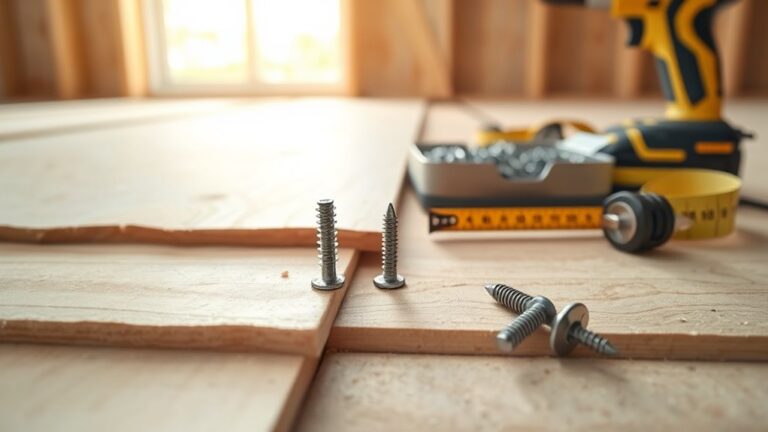
Can I Use Regular Screws on Drywall? What You Need to Know
You can use regular screws for small drywall fixes and cosmetic repairs, but they aren’t ideal for anything heavy or long-term because drywall paper and gypsum don’t grip well and screws usually hold only 5–20 lb unless they hit a stud. For shelves, TVs, or heavy mirrors you’ll want drywall screws into studs or proper anchors like toggles or molly bolts. Pick the right length, avoid rust, and countersink; keep going and you’ll learn which fastener fits each job.
Can a Regular Screw Hold Drywall? Quick Rules and Exceptions
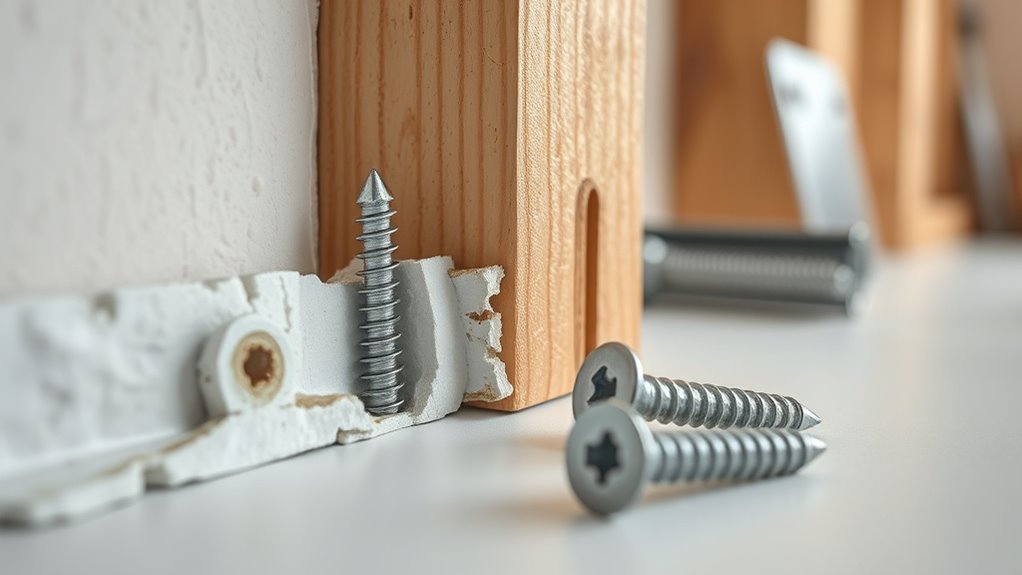
If you’re wondering whether a regular screw will hold drywall, the short answer is: sometimes — but you’ve got to match the screw to the job.
You’ll use drywall-specific screws for framing, but regular screws can work for light fixes. Consider drywall finishing and aesthetic concerns: countersink, avoid rust, and pick lengths that avoid bulging or visible heads for a clean, durable result.
How Much Weight Can a Bare Screw Hold in Drywall?
A single bare screw in drywall typically only holds a few pounds before it pulls out, so you shouldn’t rely on it for heavy loads.
The exact limit depends on screw size, drywall thickness, and whether you’re near a stud or using anchors.
We’ll look at typical pound-ratings and the key factors that affect holding strength.
Bare Screw Load Limits
Curious how much weight a bare screw can hold in drywall? You shouldn’t expect much—typically 5–20 pounds in plain gypsum without anchors.
For drywall repair, choose appropriate fastener materials and sizes; steel screws alone bite the paper but don’t provide reliable load capacity.
Use anchors or find framing for heavier loads to avoid pullout, sagging, or repeat repairs.
Factors Affecting Strength
Because drywall is a thin, brittle substrate, the load a bare screw will hold depends on several key factors you can control or check before fastening.
You’ll consider screw length, diameter, and thread type; anchoring into studs versus gypsum; decorative finishes that add weight or hide anchors; installation angle; and environmental risks like screw corrosion.
Each factor directly alters safe load capacity.
How to Find and Use Studs Behind Drywall
When you need to hang something sturdy on drywall, finding the studs first gives you the strongest, most reliable anchor points.
Studs are the vertical framing members spaced typically 16 inches on center, running from floor to ceiling behind the drywall.
Use a stud finder, tap and listen, or probe near outlets to locate studs.
Drive screws into studs for secure mounts and minimize drywall repair.
Anchors vs Toggles vs Molly Bolts : Which Should You Use?
When you’re deciding between plastic anchors, toggle bolts, and molly bolts, think about how each type works and what loads they can handle.
Toggles usually offer the highest load capacity, molly bolts sit in the middle, and simple plastic anchors are best for light fixtures.
Installation effort rises with strength, so match the anchor to the weight and how much work you want to do.
Anchor Types Compared
Choosing the right drywall fastener comes down to the load, the wall condition, and how permanent you want the fix to be. You’ll pick anchors for light fixtures, toggles for hollow walls, and molly bolts for semi-permanent mounts.
Consider decorative screw finishes and corrosion resistance for visible or humid areas.
- Plastic anchor: easy, light loads
- Toggle: high holding in hollow
- Molly: reusable, stable
- Self-drilling: quick install
- Sleeve: thin-wall support
Load Capacity Differences
You’ve already matched anchors to wall type and permanence; now think about how much weight each option actually holds. You’ll pick toggles for heavy loads, molly bolts for medium, and plastic anchors for light fixtures, considering material compatibility and aesthetic considerations.
| Type | Approx. Capacity |
|---|---|
| Plastic anchor | 10–25 lb |
| Molly bolt | 25–75 lb |
| Toggle bolt | 100+ lb |
Installation Complexity
Although the best fastener depends on the load and wall type, your choice will often come down to how much time, tools, and skill you’re willing to use.
Consider surface preparation and tool compatibility: toggles take more prep but highest strength, anchors are quick, molly bolts need a bit more skill.
- Toggle: high strength, more prep
- Anchor: fast, minimal tools
- Molly: medium skill
- Stud screw: simplest
- Hollow-wall anchor: versatile
Quick Installation Tips to Avoid Sagging or Pulled Screws
When you drive screws into drywall, use the right technique and hardware so fixtures don’t sag or pull out. Start by locating studs, pre-drilling pilot holes for dense materials, and picking anchors rated for the load.
Tighten screws flush, avoid overdriving, and stagger fasteners on heavy items.
Finish with proper drywall finishing and a neat paint touch-up to conceal repairs and prevent moisture issues.
Best Fasteners for Common Projects: Shelves, Pictures, and TV Mounts
If you’re hanging lightweight pictures, midweight shelves, or a heavy TV, pick fasteners that match both the load and the wall type so your items stay secure.
Use anchors rated for drywall weight, toggle bolts for heavy loads, and screws into studs when possible.
Match anchors to drywall ratings, use toggle bolts for heavy loads, and screw into studs whenever possible.
Consider decorating tips and paint compatibility when choosing finishes.
- Plastic anchors
- Self-drilling anchors
- Toggle bolts
- Wood screws into studs
- Molly bolts
Frequently Asked Questions
Can Drywall Screws Corrode in Humid Rooms Like Bathrooms?
Yes — they can corrode in humid bathrooms unless you use coated or stainless screws. You’ll want corrosion-resistant fasteners to protect paint compatibility and prevent staining, and to avoid affecting wall texture over time.
Are Self-Drilling Screws Safe for Older Plaster Walls?
Ever wondered if drilling into aged plaster feels like tapping a fragile vase? You’re mostly safe using self-drilling screws with Safety guidelines: pre-drill pilot holes, avoid edges, use proper anchors; Installation tips: slow speed, steady pressure, check backing.
Do Screw Length and Thread Type Affect Fire Resistance?
Yes — screw length and thread type affect fire resistance: you’ll want fire resistant screws with proper thread engagement so drywall safety isn’t compromised, ensuring secure attachment, minimized gaps, and maintained fire-rated assembly integrity during a fire.
Can Regular Screws Cause Mold Growth Behind Drywall?
Like tiny anchors rusting in a ship’s hull, regular screws can trap damp and invite growth; you’ll see moisture absorption at fastener sites, so choose coated screws and guarantee mold prevention by keeping drywall dry and sealed.
Are There Code Requirements for Screw Spacing in Rentals?
Yes — you’ll follow local building codes requiring specific screw spacing for rentals; check jurisdiction rules. Use proper screw material and installation techniques, meeting fastening schedules, fire and structural requirements to guarantee safety and compliance.
Conclusion
You can sometimes use regular screws in drywall for light jobs, but you shouldn’t expect them to hold much, you shouldn’t rely on them for heavy loads, and you shouldn’t skip proper anchors when weight matters. Locate studs for the strongest hold, pick anchors or toggles for medium and heavy items, and install fasteners properly to avoid sagging or pulled screws. Choose the right fastener, mount with care, and check weight ratings before you trust the wall.