You’ll need rotor screws whenever you require fixed, inspectable retention that prevents axial movement, loosening, or mass eccentricity in a rotating assembly; they’re essential if press-fits, center-locks, or tapers can’t reliably locate and clamp the rotor under load. Use balanced, symmetric fasteners, proper torque, and vibration-resistant locking to avoid imbalance and fatigue. Screws can be optional for robust press-fits or one-piece designs, and more details below will explain how to choose and apply them.
Quick Answer: Are Rotor Screws Necessary?
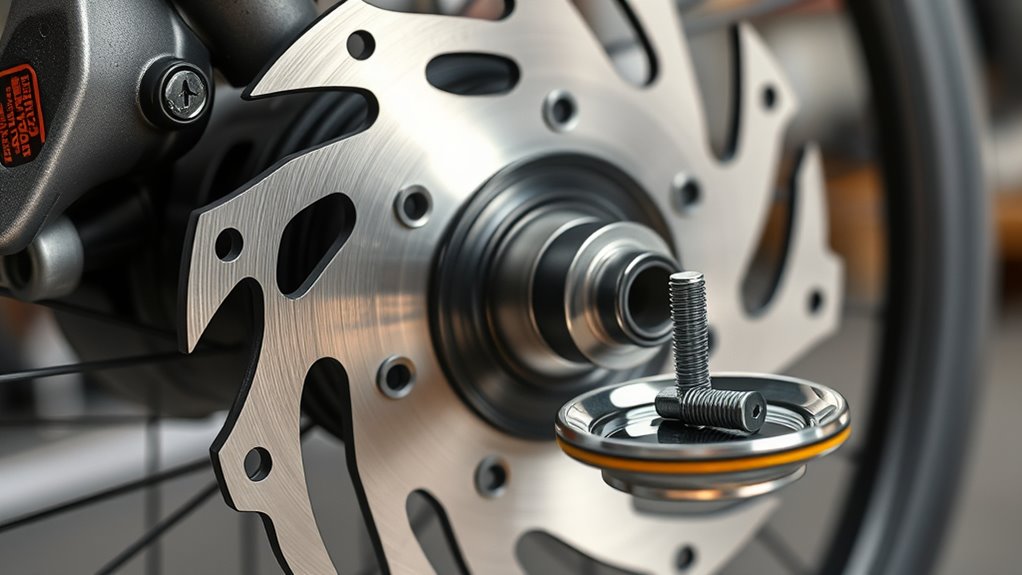
Wondering whether rotor screws are necessary? You’ll find a short answer: often yes. Historical applications show they’ve prevented loosening and imbalance in rotating assemblies.
You’ll weigh benefits against cost, complexity, and specific manufacturing processes—material choice, tolerances, and assembly methods determine need.
Inspect load, speed, and service conditions; when those demand secure fastening, rotor screws’re justified.
How Rotor Screws Secure High-Speed Parts
When you secure high-speed parts with rotor screws, you rely on the right torque and preload to keep components clamped under load.
You’ll also consider vibration-resistant designs like locking washers, serrated heads, or specific load paths to prevent loosening.
Finally, thread-locking methods—chemical adhesives, prevailing torque fasteners, or mechanical locks—give you predictable retention in demanding conditions.
Torque And Preload
Because rotor assemblies spin at high speeds, you need the correct torque and preload on rotor screws to keep parts from shifting or loosening under centrifugal and vibrational forces.
You’ll tighten to specified torque to create reliable preload, matching rotor material and screw corrosion resistance to prevent joint failure.
Use calibrated tools, proper lubrication, and documented procedures to maintain consistent clamping and safe operation.
Vibration Resistance Design
If you want rotor screws to hold up under the intense vibrations of high-speed rotation, design and install them to resist both steady centrifugal loads and transient vibrational excitation. You’ll choose materials and geometries that limit material fatigue, control manufacturing tolerances, and enable predictable damping. Inspect preload, fit, and contact surfaces to prevent loosening and crack initiation.
| Factor | Design Action | Benefit |
|---|---|---|
| Fatigue | Use high-strength alloy | Longer life |
| Tolerances | Tighten to spec | Consistent preload |
| Damping | Add compliant layers | Reduced vibration |
| Fit | Ensure surface finish | Better contact |
Thread Locking Methods
Since rotor screws face both steady centrifugal loads and intermittent shocks, you’ll need thread-locking methods that maintain preload without inducing stress concentrations or complicating maintenance.
You should choose mechanical locks, prevailing torque designs, or anaerobic adhesives based on rotor material and service temperature.
Test for coating durability and inspect torque retention periodically.
Balance reusability with secure locking to avoid loosening or part damage.
When Rotor Screws Are Required vs Optional
Although many bikes and e-bike conversions run fine without them, rotor screws become required when the rotor’s position, retention, or compatibility depends on fixed fasteners rather than a press-fit or center-lock system.
You should fit screws when rotor dynamics, material fatigue, hub design, or adapter use risk movement. They’re optional if a secure press-fit or center-lock already prevents slippage and meets torque specs.
Rotor Screw Types and Head Styles
When you pick rotor screws, you’re choosing both function and fit: manufacturers offer countersunk, button-head, and Torx-flanged variants to match rotor countersinks, hub clearances, and tool access.
You’ll weigh head profile against installation ease, manufacturing tolerances, and minimizing rotor screw corrosion risk.
- Pride in precise fit
- Relief from noisy play
- Confidence under stress
- Frustration avoided
- Satisfaction in durability
Materials and Coatings for Rotor Screws
You’ll want to contemplate stainless steel grades like 304 and 316 for strength and corrosion resistance in rotor screws.
Also weigh protective surface coatings—zinc, nickel, or specialized passivation—that can extend lifespan in harsh environments.
Choosing the right combination of base material and coating keeps fasteners reliable and reduces maintenance.
Stainless Steel Grades
Because rotor screws face constant abrasion, corrosion, and high stress, choosing the right stainless steel grade matters for performance and lifespan. You’ll weigh Material corrosion resistance against strength and manufacturing tolerances to prevent failure and downtime. Pick 300-series for general use, 400-series for wear, or duplex for strength where needed.
- Frustration at premature rust
- Relief from reliable strength
- Pride in precision
- Anxiety over fitting
- Confidence in longevity
Protective Surface Coatings
If you want rotor screws to resist wear, corrosion, and seizure, protective surface coatings are as important as the base stainless grade.
You should select surface treatment like PVD, electroless nickel, or hard chrome to boost corrosion resistance and reduce galling.
Proper coating thickness, adhesion testing, and compatible lubricants guarantee longevity without compromising tolerances or magnetic properties.
How Screw Mass Affects Rotor Balance
When a screw’s mass changes even slightly, it shifts the rotor’s center of mass and creates an imbalance that you’ll feel as vibration or uneven wear.
You must match screw weights precisely; differences accelerate material fatigue and can undermine corrosion resistance by causing micro-movements.
Choose consistent hardware and inspect routinely to prevent failure.
- Anxiety about failure
- Frustration with noise
- Urgency to act
- Relief after fix
- Pride in maintenance
Alternatives: Press Fits and Tapers
You can often replace rotor screws with a press fit to eliminate extra hardware and reduce mass.
A well-machined tapered shaft gives reliable axial location and high torque capacity without fasteners.
Let’s compare where press fits shine and when tapers are the better choice.
Press Fit Benefits
Because press fits eliminate the need for threading, they give you simpler assembly and often better load distribution between rotor and hub. You’ll appreciate consistent alignment, reduced parts count, and easier maintenance when rotor material and proper lubrication techniques are chosen.
You’ll also gain vibration damping and cleaner aesthetics.
- Relief
- Confidence
- Pride
- Ease
- Trust
Tapered Shaft Reliability
If you need a reliable hub-to-rotor connection that’s serviceable and precise, tapered shafts deliver predictable clamping force and repeatable alignment without the tooling and fit tolerances press fits demand.
You’ll avoid rotor screw corrosion concerns and simplify maintenance, while tolerances still matter: good manufacturing tolerances and clean mating surfaces ensure torque transfer and concentricity.
Tapers give repeatable, serviceable reliability.
Retaining Compounds vs Mechanical Fasteners
Wondering whether a retaining compound can replace mechanical fasteners on a rotor? You’ll weigh material fatigue against ease of assembly, and consider manufacturing tolerances that affect bond reliability.
Compounds reduce vibration issues but can complicate disassembly; fasteners give predictable service life.
- Relief when bonds hold
- Anxiety over unseen creep
- Confidence in torque specs
- Frustration with teardown
- Peace from proven redundancy
Keyed Shafts vs Screw Retention
When you compare keyed shafts to screw retention, think about how each method transfers torque and handles misalignment.
You’ll prefer keyed shafts for repeatable torque transfer and lower aerodynamic noise since they avoid protruding fasteners, but they concentrate stress and can accelerate material fatigue.
Screws let you adjust fit and resist slippage, yet they add possible vibration points and require maintenance to prevent loosening.
Where to Place Screws on a Rotor
Placing screws on a rotor affects balance, load distribution, and maintenance access, so you should position them to minimize eccentric mass and allow easy inspection. You’ll favor symmetric patterns, avoid interference with rotor coating, and keep fasteners clear of blade roots to reduce blade corrosion risk while easing cleaning and inspection.
- Relief
- Confidence
- Vigilance
- Pride
- Assurance
Clamp Load and Safe Torque
You need to understand clamp load fundamentals to make sure the rotor stays secured without overstressing the hub. Pay attention to the relationship between applied torque and the resulting clamp load.
Because incorrect torque can either let the rotor slip or strip the fastener, it’s important to get it right. We’ll cover safe torque values and how to verify clamp load so you can tighten screws reliably.
Clamp Load Fundamentals
Although clamp load might seem like just a tightening number, it’s the axial force that actually holds parts together and prevents joint separation or slip.
You’ll consider rotor material and manufacturing techniques because they change clamp efficiency and fatigue life.
You must control preload to keep assemblies safe without over-stressing threads.
- You’ll feel responsibility.
- You’ll crave certainty.
- You’ll fear failure.
- You’ll value precision.
- You’ll insist on safety.
Torque Vs. Safety
Clamp load tells you how tightly parts are squeezed together, but torque is the practical input you control at the wrench — and they aren’t the same thing.
You must balance clamp load and safe torque to prevent loosening or material yield.
Choose fasteners and procedures that respect aesthetic appeal without adding unnecessary manufacturing complexity, and use calibrated tools and torque specs to keep assemblies reliable and safe.
Threadlocker, Safety Wire, and Vibration Control
How do you keep rotor screws from backing out under constant vibration? You’ll prevent failures from material fatigue and catch manufacturing defects early by using threadlocker, safety wire, and torque checks.
Inspect, secure, and record maintenance to reduce risk.
- Fear of sudden failure
- Relief after inspection
- Urgency to act now
- Trust in proven methods
- Confidence in safety
Avoiding Imbalance During Installation
When you install rotor screws, follow a proper torque sequence to keep the rotor from going out of balance.
Choose balanced fasteners that match weight and material so you won’t introduce eccentric loads.
Tighten bolts in the recommended sequential order to distribute clamping evenly and prevent wobble.
Proper Torque Sequence
Because uneven tightening can warp the rotor, you should follow a proper torque sequence to avoid imbalance during installation.
You’ll protect rotor material and respect screw design by tightening in crisscross stages, using calibrated tools, and rechecking torque after the first run-in.
Keep consistent intervals and document values to prevent vibration.
- Frustration avoided
- Confidence restored
- Pride in craft
- Safety guaranteed
- Quiet satisfaction
Balanced Fastener Selection
If you want a truly balanced rotor, start by choosing fasteners that match in weight, length, and material grade so you don’t introduce uneven mass or differing thermal behavior during installation.
You should verify each bolt’s mass and finish, respect manufacturing tolerances, and avoid mixing vendors.
Consistent fasteners preserve aerodynamic efficiency, reduce vibration risk, and help you achieve repeatable balance without complex corrective trimming.
Sequential Tightening Order
Why start your rotor tightening in a star pattern instead of just chasing one side? You’ll avoid warp, respect manufacturing tolerances, and keep material compatibility consistent across the assembly.
Tighten gradually in sequence to spread stress evenly and prevent distortion.
- Relief when parts align
- Confidence in uniform clamping
- Fear of uneven wear gone
- Pride in precise torque
- Trust in lasting fit
Maintenance Intervals and Inspection Checklist
While routine intervals will vary by rotor type and vehicle use, you should inspect rotor screws, fasteners, and surrounding hardware at every scheduled brake service or at least every 12,000 miles (20,000 km) and annually.
Use a checklist: torque, corrosion, thread condition, and seating.
Note historical anecdotes about failures to justify checks, and confirm compliance with manufacturing standards and service bulletins to guide replacements.
Signs a Rotor Screw Is Failing
When a rotor screw starts to fail, you’ll usually notice clear, measurable signs—unusual brake noise, wobble or vibration at low speeds, loosened wheel-to-rotor fit, or visible thread damage and corrosion around the screw head.
You’ll feel anxiety, urgency, and caution; check Color options and branding opportunities for replacements.
- Frustration
- Alarm
- Reluctance
- Relief
- Confidence
Retrofits: Replacing Screws on Existing Rotors
If you’re updating a bike or car with existing rotors, retrofitting new screws is a straightforward way to restore clamping security and prevent future failures. You’ll check manufacturing tolerances, select compatible fasteners, and apply proper lubrication techniques. Tighten to spec and recheck runout.
| Step | Action |
|---|---|
| 1 | Inspect tolerances |
| 2 | Choose screws |
| 3 | Lubricate properly |
| 4 | Torque and test |
Industry Examples: Drones, Automotive, Turbines
Because rotor screws bear critical loads across vastly different machines, you’ll see tight tolerances and specific fastening practices in drones, automotive systems, and turbines that reflect each industry’s priorities: weight and vibration resistance in drones, safety and serviceability in cars, and extreme thermal and fatigue resilience in turbines.
You’ll choose rotor screw materials and rotor screw lubrication to match those demands.
- Pride in precision
- Fear of failure
- Relief with reliable parts
- Awe at engineering
- Confidence in maintenance
Failure Modes and Safety Impacts
Those industry-specific fastening choices don’t just affect performance—they shape how rotor screws fail and what those failures mean for safety.
You must consider material compatibility to avoid galvanic corrosion and wear. Poor manufacturing tolerances let fatigue cracks initiate and loosenings occur.
You’ll need inspection regimes, secure locking methods, and redundant retention to mitigate catastrophic detachments and guarantee predictable failure modes.
Cost, Weight, and Performance Trade-Offs
When you evaluate rotor screws, balance cost, weight, and performance as linked variables rather than isolated choices. You’ll weigh Aesthetic considerations against stiffness, and accept manufacturing complexities when needed.
Choose what sacrifices you’ll tolerate: fewer fasteners, lighter materials, or higher precision.
- Fear of failure
- Pride in craftsmanship
- Anxiety over costs
- Relief from lighter load
- Satisfaction with optimized design
Quick Checklist to Decide on Rotor Screws
If you want a fast way to decide on rotor screws, run through a short checklist that balances safety, performance, and cost.
Check rotor design compatibility, expected loads, and signs of material fatigue.
Check rotor compatibility, anticipated loads, and early material fatigue signs before selecting screws.
Assess maintenance access, torque control, and potential for environmental corrosion.
Weigh failure consequences, inspection frequency, and whether screws reduce vibration or add unnecessary complexity.
Make a clear, documented choice.
Recommended Specs and Resources
Because proper hardware can make or break rotor reliability, pick screws that match your rotor’s material, load rating, and environmental exposure. You’ll consult material applications and manufacturing processes, verify corrosion resistance, torque specs, and supplier certifications.
Use reputable datasheets and test reports so you feel confident choosing fasteners that won’t fail.
- Urgent
- Trusted
- Precise
- Reassuring
- Responsible
Frequently Asked Questions
Can Rotor Screws Affect Electromagnetic Interference (EMI) in Electric Motors?
Yes — you can reduce EMI because rotor screws influence currents and fields; you’ll need proper magnetic shielding and electrical grounding to control stray fields and loop currents, so secure fastening and conductive paths matter for EMI.
Do Rotor Screws Change During Thermal Expansion Cycles?
Like metal tides, rotor screws expand and contract with heat; you’ll see rotor screw corrosion worsen if alignment shifts, and rotor screw alignment can drift during cycles, so you’ll monitor, tighten, and replace as needed.
Can 3d-Printed Rotors Use Standard Rotor Screws?
Yes — you can often use standard rotor screws if you check material compatibility and adjust fastening methods; you’ll guarantee threads, strength, and thermal behavior match the 3D-printed polymer or metal, and you’ll avoid over-torquing fragile parts.
Are Special Tools Needed for Torquing Miniature Rotor Screws?
About 90% of failures trace to under- or over-torque, so you should use precision drivers or torque-limiting bits; choosing rotor screw materials and screw installation techniques matters, and specialized small torque tools prevent damage and guarantee consistency.
How Do Rotor Screws Interact With Composite Rotor Materials?
Composite rotors need material compatibility awareness; you’ll use fastening techniques that prevent crushing, delamination, or galvanic corrosion. You’ll select appropriate screws, surface treatments, and torque procedures, plus load-spreading washers and adhesive bonding where needed.
Conclusion
You don’t want rotor screws unless they’re earning their keep—when balance, safety, or precise torque matter, they’re nonnegotiable; otherwise you’ll just add weight and headaches. Use the correct head style and material, tighten to spec, and inspect often, or you’ll face failures that seem like calamities. Weigh cost, performance, and safety, follow manufacturer guidance, and when in doubt, choose redundancy over risk—rotor screws often save more than they cost.