Are Screws or Nails Better for Hanging Pictures
You’ll usually want screws over nails for picture hanging because they hold more weight and last longer, especially when driven into studs or used with proper anchors in drywall. Use nails only for very light frames on solid plaster or when you want an easier, less permanent option. Match fastener type to wall material, frame weight, and hardware; test the mount before you walk away — keep going and you’ll learn which anchors, screw sizes, and techniques work best.
Who This Guide Is For (And What It Solves)
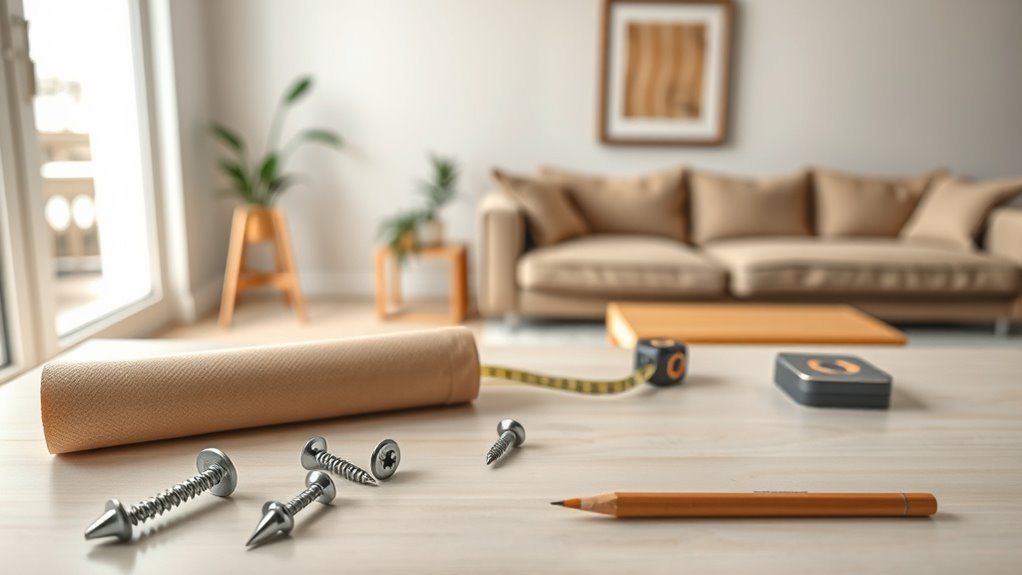
Whether you’re hanging a small frame or a heavy gallery wall, this guide helps you choose between screws and nails and shows what tools and anchors you’ll need.
You’ll get clear decorating tips for different wall art styles, practical safety advice, and quick ways to match hardware to frames and walls.
It’s for DIYers, renters, and anyone wanting secure, tidy displays.
Quick Decision: Pick Screws or Nails (By Wall Type & Weight)
First check what your wall is made of—drywall, plaster, brick, or concrete—and tailor the fastener to that surface.
Use the picture’s weight to choose screw size or nail gauge.
Add a proper anchor whenever the load exceeds what the bare fastener can hold.
That way you’ll pick the right combination quickly and avoid surprises.
Wall Material First
Because wall material dictates how much weight it can safely hold, you should pick screws or nails based on the surface and the picture’s weight.
For drywall, use anchors with screws.
For plaster, prefer screws near studs.
Brick or concrete needs masonry screws.
Consider wall texture and paint type—thin eggshell may chip, textured or glossy surfaces affect adhesion—so choose fasteners that match the substrate.
Weight Determines Fastener
When you’re choosing between screws and nails, let the picture’s weight and your wall type decide:
Light prints on drywall can usually go up with nails or small picture hooks.
Medium-weight frames need screws with anchors or toggles.
And heavy pieces should be secured with screws into studs or masonry anchors.
Balance fastener durability with smart wall mounting techniques.
Anchor When Needed
If your wall can’t hold the weight on its own, use anchors—pick the type based on wall material and the frame’s heft so you don’t guess and risk a fall.
You’ll choose wall anchors for drywall or hollow blocks and toggle or molly for heavier pieces.
Prioritize screw anchors over nails when mounting heavy frames, since nail durability and pullout resistance are usually inferior.
How Wall Material Changes Your Choice
Curious which works best for your walls? You’ll pick screws for drywall with anchors, nails for solid plaster or wood, balancing wall color and aesthetic appeal so fasteners stay hidden.
Imagine textures:
- Smooth drywall — anchors + screws
- Plaster — small screws or masonry anchors
- Brick/Concrete — masonry screws or anchors
- Wood studs — screws for heavy frames
Match material to weight.
Find Studs: 4 Quick Methods
Because studs give you the strongest anchor points, you’ll want to find them before drilling or hammering.
Because studs provide the strongest anchors, locate them before you drill or hammer into walls.
Here are four quick methods to locate studs reliably.
Tap and listen for solid versus hollow sound.
Use a magnetic stud finder to detect nails.
Try an electronic stud detector for stud detection and wiring clues.
Measure 16 or 24 inches from corners.
Mark and verify for wall reinforcement.
Why Stud‑Mounted Screws Are Strongest
When you drive a screw into a stud, the fastener bites into solid wood behind the drywall, giving much greater shear and pullout resistance than anchors in hollow wallboard.
You get superior stud durability and reliable holding power, plus installation ease if you predrill.
Picture the difference:
- Solid wood grip
- Minimal wall damage
- Stable load transfer
- Repeatable removal and reuse
How Artwork Weight Guides Fastener Choice
If your artwork weighs under 10 pounds, you can usually rely on a single wall anchor or picture hook.
For 10–25 pounds, use two anchors or a screw into a stud.
Heavier pieces need multiple screws or professional hanging hardware.
Consider artwork placement and aesthetic considerations—choose fasteners that balance strength with a clean look, keeping frames level and walls undamaged.
How Picture Hardware Affects Fastener Choice
Although the weight and backing of your picture matter, the hardware on the frame often dictates which fastener will work best. You’ll choose for stability, appearance, and fastener longevity.
Picture hardware cues:
- D-ring — sits flush, hides head.
- Wire — spreads load, needs secure anchor.
- Sawtooth — shallow bite, easy leveling.
- Keyhole — clean look, hardware aesthetics prioritized.
When to Pick Nails for Light or Temporary Hangs
If you need a quick, temporary mount for a lightweight frame, nails are a good choice because they’re fast to install. They leave minimal wall damage and are easy to pull out when you’re ready to move the picture.
That makes cleanup and small repairs simple and fast.
Quick Temporary Mounts
When you need a fast, low-impact solution for lightweight frames or temporary displays, choose a nail. You’ll enjoy quick placement for decorative accents and eco friendly options like reclaimed wood frames.
Imagine this:
- Tap a nail into drywall
- Hang a small print
- Swap art weekly
- Remove and patch easily
Nails save time and clutter.
Minimal Wall Damage
For light or temporary hangs, pick a nail to keep wall damage minimal—you’ll make a small, shallow hole that’s easy to patch or barely visible after removal. You’ll also preserve delicate wall texture better than bulky anchors.
Choose fine-gauge nails for lightweight frames, consider placement to minimize aesthetic impact, and avoid textured or brittle surfaces where even small nails might crack or show.
Easy Removal And Repair
Because you’ll probably want to change things often or move out someday, choose nails for light or temporary hangs so you can remove them quickly and leave tiny, easy-to-repair holes.
You get easy removal and quick repairs with minimal fuss.
Visualize the process:
- Small nail
- Gentle pull
- Tiny hole
- Quick patch
When to Pick Screws for Heavy or Permanent Hangs
If you’re planning to hang heavy artwork or anything you expect to keep up long-term, choose screws because they give far stronger, more reliable support than nails. You’ll benefit from fastener durability and better load distribution.
Check wall compatibility—screws work in studs, masonry, and solid backing. Use the right length and head type, and tighten securely to prevent sagging or loosening over time.
How Anchors Change the Game for Drywall
When you can’t hit a stud, anchors turn drywall into a reliable mounting surface by spreading load or biting into the wall.
Learn the common types (plastic expansion, self-drilling, molly, and toggle) and their real weight limits so you match anchor to picture.
I’ll also walk you through quick installation tips and tricks to keep things level and secure.
Anchor Types Explained
Although drywall looks solid, it can’t hold much weight without the right hardware, so anchors change the game by spreading load and gripping behind the board.
You’ll pick anchors by purpose:
- Plastic expansion — light frames.
- Toggle bolts — hollow-wall heavy-duty.
- Molly bolts — medium, secure grip.
- Decorative fasteners and magnetic options — style or quick swaps, low load.
Weight Capacity Limits
1 key thing to know is that anchors transform drywall from a weak surface into a reliable support system by transferring load away from the fragile paper-and-gypsum layer to a wider area or the hollow cavity behind it.
You’ll increase load capacity dramatically when choosing anchors matched to fastener strength and expected weight. Check rated capacities, consider safety margins, and match anchor type to your picture’s weight.
Installation Tips & Tricks
Because drywall won’t bite down on a plain nail, using the right anchor turns a flimsy sheet into a dependable mounting point. You’ll pick anchors by weight, drill precisely, and match hardware to wall color and hanging height.
Visualize steps:
- Mark spot at eye-level.
- Pre-drill clean hole.
- Insert anchor flush.
- Drive screw, hang securely.
Which Anchors to Use for Drywall (By Weight)
When you’re hanging something on drywall, pick an anchor that matches the weight so your picture stays put and your wall doesn’t get damaged.
For light frames (under 20 lbs), use plastic expansion anchors or self-drilling drywall anchors.
Medium loads (20–50 lbs) need threaded drywall anchors or molly bolts.
For heavier items, use toggle bolts or find a stud.
Consider weight considerations and anchor rating.
Best Screws for Hanging Pictures (Sizes & Head Types)
Although the right anchor matters, choosing the correct screw size and head type is just as important for keeping your picture secure and sitting straight.
You’ll want to take into account screw durability and balance versus nail aesthetics when choosing screws:
- #8 coarse for light frames
- #10 for medium frames
- #12 for heavy frames
- Pan or flat heads for flush hanging and stability
Best Nails for Hanging Pictures (Types & Gauges)
When picking nails for picture hanging, you’ll want to know the common types (finishing, brad, and masonry) and which suits your wall and frame weight.
Pay attention to gauge because thicker nails hold more weight, and consider coatings like galvanized or stainless steel to resist corrosion.
I’ll explain how type, gauge, and finish work together so you can choose the right nail for the job.
Nail Types Explained
Because the right nail can mean the difference between a secure hang and a fallen frame, you’ll want to know what each type and gauge does before you start.
You’ll weigh Nail durability against Screw versatility. Common options:
- Finishing nails — subtle heads
- Brad nails — light frames
- Roofing nails — wide hold
- Framing nails — heavy loads
Choose by wall and frame.
Gauge And Strength
If you want your picture to stay put, pick the right nail gauge for the weight and wall material.
Thin gauges (like 18–16) work for lightweight frames and plaster.
Heavier gauges (10–8) handle larger, heavier pieces and structural drywall when driven into a stud.
Do a quick gauge comparison and simple strength testing: heavier gauges resist bending and pullout, so match gauge to load.
Coating And Corrosion
Although you might focus on gauge and length, don’t overlook nail coating—what’s on the surface determines how well fasteners resist rust and last in different environments.
You’ll choose coatings for paint finish compatibility and rust prevention. Visualize options:
- Bright steel — basic, indoors.
- Galvanized — zinc barrier.
- Brass-plated — decorative, mild protection.
- Stainless — superior corrosion resistance for humid areas.
Step-By-Step: Install a Screw + Anchor for a Heavy Frame
Now that you’ve chosen the right anchor for the wall type and marked the hanging spot, it’s time to install the screw and anchor so your heavy frame sits secure and level. Use a drill, insert anchor flush, drive screw leaving a bit exposed, and hang. Consider alternative fastener options and wall decoration tips.
| Tool | Action | Tip |
|---|---|---|
| Drill | Pilot hole | Steady |
| Anchor | Insert | Flush |
| Screw | Drive | Slight gap |
| Level | Check | Adjust |
| Frame | Hang | Test stability |
Step-By-Step: Install a Nail for a Lightweight Frame
Pick a small, sharp nail rated for picture hanging so it won’t bend or pull out.
Mark the spot where the top of the frame will sit.
Hammer the nail in at a slight upward angle.
Hang the frame on the nail.
Step back and level the frame, adjusting the nail or frame wire if needed.
Choose The Right Nail
Wondering which nail will hold your lightweight frame securely? You’ll pick one that matches wall type and frame weight, considers decorative fasteners and eco friendly materials, and minimizes wall damage.
Visualize options:
- Small finishing nail
- Picture hanging nail
- Brass decorative fastener
- Biodegradable coated nail
Choose the sturdiest, then install straight and flush for best support.
Mark The Hanging Spot
Before you hammer anything, measure and mark exactly where the nail should go so your frame hangs level and centered. Use a pencil, consider painting techniques that affect edges, and match hanging art styles to wall placement. Refer to this quick guide:
| Position | Height | Note |
|---|---|---|
| Center | 60″ | Standard |
| Eye level | 57″ | Portraits |
| Grouping | Varies | Align tops |
| Accent | Lower | Small frames |
Hammer And Level Frame
Once you’ve marked the spot, grab a small finishing nail or picture hook and a hammer. Position the nail at a slight upward angle so the frame hangs securely.
Tap it in gently until about half the shank is embedded, then stop and check that the head sits flush enough to catch the wire or D-ring.
- steady grip
- controlled Hammer technique
- gentle taps
- confirm Level accuracy
Hanging Multiple Frames & Gallery Walls Without Damage
If you’re hanging multiple frames or building a gallery wall, plan the layout and wall anchors carefully to avoid unnecessary holes and guarantee each piece stays secure.
Measure, map, and use templates before drilling.
Measure and mark carefully — create templates first so every hole and frame lands exactly where you want.
Combine decorative hooks for lightweight pieces and sturdier screws with anchors for heavier frames.
Consider ceiling mounts for hanging clusters or mobiles, and group fasteners to distribute weight evenly across studs or anchors.
Quick Tests to Check Your Mount Is Secure
After you’ve mapped and secured each hook or screw, give the mount a quick physical check to make sure it’ll hold up over time.
Test steps to visualize security:
- Tug gently on decorative hardware.
- Lift slightly on the frame.
- Shake the wall mounting point.
- Inspect for wiggle or cracking.
If anything moves, tighten or reposition immediately.
When to Call a Pro or Use Specialty Rigging
When your artwork is heavy, valuable, oddly shaped, or needs to hang over a fireplace or stairwell, call a pro or use specialty rigging to avoid costly mistakes and safety hazards.
You can still learn DIY tips and safety precautions from experts, but hire a rigger for complex anchors, structural assessments, or high placements.
Don’t risk damage or injury—get professional installation.
Frequently Asked Questions
Can I Reuse Holes From Previous Screws or Nails?
You can often reuse holes if they’re sound, but you’ll check for looseness and damage first. Reusable holes affect fastener durability, so reinforce with plugs or anchors when needed to guarantee secure, long-lasting hanging.
Will Picture Hanging Methods Affect My Home Insurance Coverage?
Yes — picture hanging methods can affect insurance implications; if your mounting causes damage or increases risk, your insurer might require coverage adjustments. You should document installations, follow manufacturer guidelines, and notify your carrier about major changes.
Can Humidity or Temperature Affect Fastener Holding Strength?
Yes — humidity and temperature can weaken fastener holding strength, like a slow tide eroding a cliff. You’ll need material compatibility checks and corrosion-resistant coatings to prevent fastener corrosion, preserving grip and structural reliability.
Are There Aesthetic Tips to Hide Screw or Nail Heads?
Yes — you can hide heads subtly: use decorative covers, paint or stain heads to match, countersink and fill, or switch to concealed fasteners like keyhole plates or French cleats; you’ll achieve a clean, polished wall finish.
Can I Hang Mirrors or TVS Using These Same Recommendations?
Yes — you can, but you’ll need stronger anchors: for mirror hanging use proper wall anchors or French cleats; for TV mounting use a rated wall mount into studs. Don’t rely on simple screws or nails.
Conclusion
You’ve got this: screws for heavy, studs when you can, nails for light frames on drywall. I once hung a 40-pound mirror on a stud-mounted screw and watched a shelf of small frames stay put through a kid’s soccer ball—no crash. Studies show screws hold up to 10× more shear force than nails in wood, so pick the stronger anchor when in doubt. If it still feels dodgy, call a pro.
