Are Pocket Screws Stronger
Pocket screws give you fast, concealed joints that hold well for face‑and‑edge assemblies in cabinets, trim, and light to moderate loads, but they’re not a substitute for full‑strength structural joinery or end‑grain connections. Their strength comes from angled bite and friction, and you can boost performance with glue, proper screw size, and corrosion‑resistant fasteners. They’re repairable if they fail, and if you keep going you’ll find details on failure modes, reinforcement, and best practices.
What Readers Mean by “Are Pocket Screws Stronger?
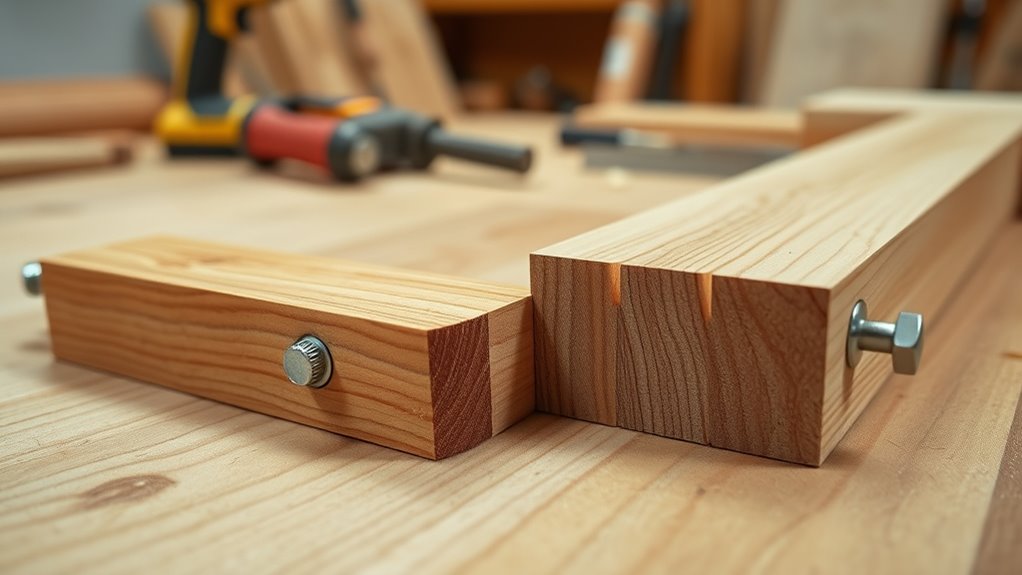
When readers ask “Are pocket screws stronger?” they’re usually trying to compare pocket-screw joinery to other methods—like dowels, biscuits, mortise-and-tenon, or glue-only joints—and figure out if pocket screws will hold up under the loads and conditions they expect.
You want clear comparisons: load direction, long-term durability, aesthetic impact, and environmental considerations like material waste and finish compatibility before choosing a joinery method.
Quick Answer: When to Use Pocket Screws
You’ll reach for pocket screws when you need fast, accessible joints in softwoods, plywood, or cabinet-grade materials where the load isn’t primarily structural. They work best for face-joining, trim, and cabinet frames.
But you should avoid them on heavy load-bearing beams or end-grain connections. If speed and concealed fastening matter more than maximum tensile strength, pocket screws are a smart choice.
When To Use
If you need a fast, strong joint for face-frame and butt-joint assemblies, pocket screws are a great choice because they pull boards tight and resist shear well.
Use them when speed, concealed joinery, and simple clamping matter.
Consider pocket screw alternatives for exposed edges or finer aesthetic considerations; choose plugs, biscuits, or glue-and-clamp when appearance or hidden reinforcement is paramount.
Material And Load
Pocket screws work best in dense, stable woods and engineered panels, but the type of material and the expected load determine whether they’re the right choice.
You’ll prefer pocket screws for light to moderate joints; heavy structural loads call for joinery or plates.
Consider aesthetic considerations if visible faces matter, and weigh environmental impact of fasteners and adhesives when choosing materials and finishes.
Speed And Accessibility
When speed matters and access is limited, reach for pocket screws: they let you clamp two pieces and drive a single screw from an angled pocket in minutes, so you can assemble frames, cabinets, and face-frame work quickly without complex jigs. You’ll appreciate pocket aesthetics options and matching fastener color to hide joints.
| Use case | Benefit |
|---|---|
| Frames | Fast |
| Cabinets | Accessible |
| Repairs | Discreet |
How Pocket Screw Joints Hold Wood
Although you don’t see the fastener from the outside, pocket screw joints hold wood by clamping two surfaces together with a screw driven at an angle into a pocketed hole.
This draws the mating piece tight against the face of the workpiece and resists lateral movement through friction and the screw’s shear strength.
You appreciate pocket aesthetics and efficient screw installation.
- Tight corner joinery, hidden screw head
- Smooth face, no visible hardware
- Angled bite pulling boards flush
Holding Power vs. Structural Strength
If you care about whether pocket screws will hold a project together or actually bear loads, distinguish between holding power—the screw’s grip in the wood and resistance to withdrawal—and structural strength—the joint’s ability to carry shear, tension, and bending without failing. You’ll check grain, pilot holes, wood preservation, and finish compatibility to guarantee grip versus load capacity.
| Aspect | Check |
|---|---|
| Grip | Threads, pilot hole |
| Load | Joint design, supports |
Pocket Screws Plus Glue: Real Performance
When you add glue to pocket-screw joints, the adhesive shares shear loads with the screw and often raises the overall joint shear strength.
You’ll want to evaluate how the glue cures and bonds over time, since long-term durability depends on both the adhesive and the fastener resisting moisture, movement, and creep.
Testing glued-and-screwed assemblies under real conditions will show whether the combination meets your structural needs.
Glue And Screw Shear Strength
Because glue and pocket screws work in different ways, combining them dramatically increases joint shear strength compared with screws alone. You get load sharing: glue resists shear across the face while screws clamp and prevent joint slip.
You’ll also preserve pocket aesthetics and minimize screw visibility when you fill and finish.
- Tight clamp, seamless surface
- Even stress transfer
- Hidden fastener look
Long-Term Joint Durability
How long will a pocket-screw joint last when you glue it as well? You get years of stable performance: glue handles shear, screws handle clamping and alignment. Watch for screw corrosion in humid environments and consider finishes for pocket aesthetics. Maintain joints and avoid moisture to maximize life.
| Feature | Benefit | Risk |
|---|---|---|
| Glue | Shear strength | Moisture |
| Screws | Alignment | Corrosion |
| Finish | Looks | Wear |
Common Uses Where Pocket Screws Excel
Though pocket screws won’t replace every joinery technique, they shine in a lot of everyday projects where speed, alignment, and hidden fasteners matter.
You’ll appreciate pocket aesthetics and fastener variety for clean visible faces. Use them when you need quick, strong alignment for:
- Face frame cabinets with concealed joins
- Table aprons and rails for swift assembly
- Shelf supports that require neat appearance and strength
When Not to Use Pocket Screws
While pocket screws work great for many projects, you shouldn’t use them when joints need maximum long-term strength, full-edge alignment without visible holes, or in fine furniture where traditional joinery is expected.
You’ll avoid them for exposed surfaces where pocket aesthetics matter, when matching screw color is impossible, or when glue-and-dowel or mortise-and-tenon joints provide superior load distribution and cleaner appearance.
How Wood Species Affects Pocket Screw Strength
You’ll notice pocket screws behave differently in hardwoods versus softwoods, with dense woods generally gripping screws better.
Pay attention to grain direction because end grain and cross grain reduce holding power compared with long-grain engagement.
Consider density and species-specific properties when choosing screw size and pilot holes to maximize strength.
Hardwood Versus Softwood
How does the species you pick change a pocket-screw joint’s performance? You’ll find hardwoods grip screws tightly, resisting crush. Softwoods compress more, needing larger pilots or plugs. Consider wood grain and fastener corrosion risks—dense species can hide moisture, speeding corrosion if coatings fail.
- Dense oak resisting screw pull-through
- Pine compressing around the screw
- Moist maple risking hidden corrosion
Grain Direction Effects
Because the orientation of grain changes how wood takes and distributes screw loads, you should pay close attention to grain direction when making pocket-screw joints.
Align screws to cross grain patterns minimally to reduce splitting and localized crushing.
Match joint faces so movement from wood expansion is uniform.
With careful layout you’ll keep screws engaged and joints stable across seasonal moisture changes.
Density And Screw Holding
When choosing wood for pocket-screw joints, density matters because it directly affects how well screws bite and resist withdrawal. You’ll pick hardwoods for superior holding, but softer woods need larger screws or plugs.
Consider decorative finishes that mask plugs and the environmental impact of species choice. Imagine grain, weight, and feel:
- Tight, dense oak gripping a screw
- Pine compressing around threads
- Reclaimed wood with variable density
Grain Orientation: Face, Edge, End Grain
Although pocket screws can work in any orientation, the wood’s grain—face, edge, or end—changes how well the joint holds and how you’ll place the screw. You’ll prefer face or edge grain for strength and pocket aesthetics; end grain needs glue or reinforcement and risks screw corrosion if exposed.
| Grain | Impact |
|---|---|
| Face | Strong |
| End | Weak |
Choosing Screw Size and Thread for Pocket Screws
Picking the right pocket screw size and thread matters more than you might think: it determines holding power, prevents splits, and matches the thickness of the pieces you’re joining.
Picking the right pocket screw size and thread ensures strong joints, avoids splits, and fits board thickness.
You choose coarse threads for softwoods and fine threads for hardwoods, consider pilot depth with dense material texture, and hide heads to protect wood finish.
- Thick beam, deep bite
- Smooth maple, fine thread
- Pine board, coarse thread
Pocket Hole Angle and Placement for Max Strength
You’ve already matched screw size and thread to the wood; now focus on where and at what angle you drive those screws to get the strongest joint. Aim pocket holes toward solid grain, stagger spacing to distribute load, and set a 15°–20° entry for good bite without splitting.
Conceal holes for pocket aesthetics and use coated screws to resist screw corrosion for longevity.
Pilot Holes, Countersinks, and Torque Tips
When you’re preparing pocket joints, drilling the right pilot hole and setting a neat countersink make the screw bite cleanly and reduce splitting. Proper torque control prevents stripped heads and broken fasteners.
You preserve pocket aesthetics and match screw color to finish, and you tone driving speed for wood type.
- Clean countersink rim
- Even pilot depth
- Controlled torque setting
How Pocket Joints Fail: Pullout, Shear, Split
Clean pilot holes and controlled torque cut down on common failures, but pocket joints still fail in three predictable ways: pullout, shear, and split. You’ll prevent pullout with proper depth, resist shear by aligning grain, and avoid split by backing off torque; watch pocket aesthetics and prevent screw corrosion.
| Failure | Cause | Fix |
|---|---|---|
| Pullout | Shallow bite | Deeper pilot |
| Shear | Misalignment | Correct layout |
| Split | Over-torque | Reduce torque |
Pocket Screws vs. Dowel Joints
When you compare pocket screws and dowel joints, think about raw strength, how they handle shear and pullout, and which one suits the load.
You’ll also want to weigh alignment and ease of assembly—dowels force precise registration, while pocket screws let you clamp and adjust quickly.
Finally, consider repairability and adjustments: pocket screws are easier to disassemble or tighten, whereas dowels can be tougher to fix if they fail.
Joint Strength Comparison
Curious which joint will hold up better under real use? You’ll find pocket screws give quick, serviceable strength with attention to pocket aesthetics and preventing screw corrosion, while dowels distribute loads through wood for long-term shear resistance.
Consider load direction, material, and environment.
- A heavy shelf loaded from the front
- An outdoor bench exposed to moisture
- A delicate veneer panel in a living room
Alignment And Assembly
Although pocket screws let you clamp and fasten parts quickly with minimal jigging, they demand careful pilot positioning so joints align as you tighten. You’ll appreciate faster assembly versus dowels, but you must control squeeze and gap to maintain pocket aesthetics.
Dowel joints self-align more predictably, though you’ll avoid visible screw corrosion risk and exposed fasteners only with proper sealing and hardware choice.
Repairability And Adjustments
If you need to fix or tweak a joint later, pocket-screw assemblies give you quicker access and easier disassembly—simply back out the screws and reposition or replace parts.
Whereas dowel joints often require more invasive work like drilling out dowels, splitting glued seams, or adding new reinforcement. You’ll consider aesthetic considerations, environmental impact, and practicality when choosing.
- Loose corner tightened with a driver
- Hidden repair behind trim
- Replacing a damaged rail
Pocket Screws vs. Mortise-and-Tenon
How do pocket screws stack up against mortise-and-tenon joints when strength and longevity matter? You’ll find mortise-and-tenon wins for structural loads and long-term durability.
Offering cleaner Pocket aesthetics and concealed joins.
Pocket screws excel for speed, repairability, and where screw compatibility with material matters.
Choose mortise-and-tenon for heirloom pieces; use pocket screws for quick, functional assemblies and retrofit work.
Pocket Screws vs. Biscuits, Splines, Dominos
When you’re deciding between pocket screws and edge-joining methods like biscuits, splines, or Dominos, think about speed and alignment versus glued surface area and shear strength.
You’ll choose based on appearance, loading, and durability: Pocket aesthetics matter, and you must consider screw corrosion in humid settings.
Visualize joints:
- tight biscuit-aligned seam
- spline-reinforced edge
- pocket-screw access hole
When Pocket Screws Plus Glue Beat Traditional Joints
Because you want quick, accurate assemblies that still hold up under stress, pocket screws combined with glue outshine traditional joints in many shop situations. You’ll rely on glue to spread load across wood grain while screws provide clamp-like pressure and immediate holding power.
Choose compatible screw material to prevent corrosion and match project strength needs, and you’ll get fast, reliable joints without complex joinery.
Long-Term Durability: Cycles and Vibration
You’ll want to test how pocket screws handle repeated stress, since cycles of loading can fatigue wood and fasteners differently than static loads. Pay attention to whether the screws loosen over time and whether glue or bracing reduces that movement.
Practical testing and periodic inspection will show if the joint keeps its integrity under vibration and everyday use.
Resistance To Repeated Stress
Although pocket screws create a strong initial joint, their long-term resistance to repeated stress—like cycles of loading and vibration—depends on joint design, material, and screw placement.
You’ll plan for load paths, choose durable woods or plywood, and orient screws to minimize flex.
Pocket aesthetics and screw color matter for visible pieces, but prioritize reinforcement and correct clamp pressure.
- Oscillating porch swing
- Repeated cabinet door slams
- Vibrating machinery table
Fastener Loosening Over Time
When joints see repeated cycles and vibration, pocket screws can back out or loosen unless you address load direction, material fatigue, and fastening technique.
You should stagger screws, use thread-locking compounds or glue, and choose screw color to blend with pocket aesthetics so repairs stay discreet.
Inspect periodically, tighten as needed, and reinforce with dowels or splines for long-term vibration resistance.
Designing Pocket Joints for Load-Bearing Furniture
Because pocket joints concentrate fastener pull and shear in a small area, you’ll need to plan their placement, orientation, and backing carefully for load-bearing furniture.
You’ll reinforce corners with blocks, choose corrosion-resistant screws to prevent screw corrosion, and consider visible edges for Pocket aesthetics.
Balance joint spacing, grain direction, and glue to distribute loads and avoid splitting.
- Corner block under seat
- Hidden rail backing
- Grain-aligned joint
Aesthetics and Repair Trade-Offs With Pocket Screws
You’ll notice pocket screws can leave visible fastener lines that affect the look of a piece. You can conceal them with plugs, filler, or strategic placement, but those fixes add time and sometimes weaken the joint’s original appearance.
When something fails, pocket-screw joints are often easier to repair than to fully replace, so weigh repairability against how pristine you want the finish to be.
Visible Fastener Lines
Although pocket screws speed up joinery and create strong connections, they leave visible diagonal lines or small plugs that change a piece’s look. So you’ll want to contemplate appearance before choosing this method. You’ll weigh aesthetic impact against environmental effects of fillers and finishes.
Imagine repairs and finishes:
- A diagonal scar across a tabletop
- Small wooden plugs, slightly miscolored
- Sanded patch with faint shadow
Easy Concealment Options
When appearance matters, you can hide pocket screw lines effectively with a few simple tricks that balance look, time, and future repairability. You’ll use plugs, filler, or trim to preserve pocket aesthetics while considering screw materials to prevent corrosion. Choose matching wood plugs for seamless finish; use minimal filler where repairs may be needed later.
| Method | Finish Impact | Repair Ease |
|---|---|---|
| Plugs | High | Moderate |
| Filler | Medium | Low |
| Trim | High | High |
Repairability Versus Replaceability
Hiding pocket screws with plugs, filler, or trim affects not just looks but how easy repairs or replacements will be later, so think ahead about the trade-offs. You’ll weigh aesthetic considerations against ease of access, and consider environmental impact when choosing materials and repair frequency.
- A flush plug blending with grain
- A painted filled pocket, sealed tight
- A removable trim strip for access
Pocket Screws in Face Frames and Cabinet Carcasses
If you’re building a cabinet, pocket screws make joining face frames to carcasses fast and reliable because they pull parts tightly together without clamps.
You’ll hide screws in back or inside stiles to preserve pocket aesthetics while achieving strong alignment.
Use corrosion-resistant fasteners and sealants to prevent joint corrosion where moisture or finishes contact joinery, keeping cabinets durable and tidy.
Best Practices: Softwoods vs. Hardwoods
When you use pocket screws in softwoods versus hardwoods, pay attention to grain direction because it affects holding power and splitting.
You should drill pilot holes in hardwoods and consider smaller pilot holes in softer species to prevent tear-out.
Finally, pick screw lengths that penetrate enough for a strong joint without punching through the opposite face.
Grain Direction Matters
Because wood’s strength varies with grain orientation, you should orient pocket screws to take advantage of the strongest direction — usually with the screw entering across the grain rather than along it.
You’ll also consider wood grain and screw diameter when choosing placement to avoid splitting and maximize bite.
- Tight grain pulling a short screw
- Open grain needing longer engagement
- End grain tension and side grain hold
Pilot Hole Recommendations
After considering grain direction, you should match pilot hole size and depth to the wood type so screws seat properly without splitting or stripping.
For softwoods, use slightly smaller holes; for hardwoods, drill closer to the screw core diameter.
Countersink shallowly to protect pocket aesthetics and let you choose screw color for discreet finishes.
Test on scrap to confirm fit and avoid splitting.
Screw Length Selection
How long should your pocket screws be for different woods? You’ll pick lengths based on thickness: shorter for softwoods, longer for hardwoods, avoiding blowout that ruins decorative finishes and increases environmental impact from waste.
Picture connections:
- Pine boards, shallow bite, gentle grain.
- Oak slabs, deep engagement, firm hold.
- Finished panels, cautious depth, clean surface.
Using Pocket Screws With Plywood and MDF
When you join plywood or MDF with pocket screws, you’ll find the technique fast and reliable—but it needs some adjustments compared to solid wood.
You’ll predrill shallow holes, use shorter coarse-thread screws, and clamp to prevent split layers.
Hide heads for decorative accents, seal exposed edges, and consider environmental impact when choosing fasteners and finishes to avoid off-gassing from MDF.
Reinforcement Options: Plugs, Epoxy, Dowels
If you want extra strength or a cleaner look, you can reinforce pocket-screw joints with plugs, epoxy, or dowels—each adds strength in a different way and suits different materials and finishes.
Reinforce pocket-screw joints with plugs, epoxy, or dowels for cleaner looks and added strength.
You’ll hide or blend pocket aesthetics and match screw color while boosting shear or gap-filling performance.
Visualize options:
- Wooden plug matching grain
- Clear epoxy filling voids
- Dowel pin for mechanical reinforcement
How to Test a Pocket Joint’s Strength at Home
Because a quick hands-on test tells you more than theory alone, you’ll want simple, repeatable methods to check a pocket joint’s strength at home. Use clamping, load, and visual checks. Treat tests like Gardening tips or Travel destinations: note conditions and results.
| Test | Purpose |
|---|---|
| Clamp squeeze | Holds while curing |
| Drop load | Shock resistance |
| Visual inspect | Detect gaps, movement |
Mistakes That Weaken Pocket Joints (And Fixes)
Although pocket screws make joinery quick, a few common mistakes will seriously reduce their strength—and you can fix each one with simple adjustments. You’ll avoid weak joints by using correct screw length, clamping firmly, and aligning pocket holes for even glue spread.
Consider pocket aesthetics and match screw color to finish so repairs blend and don’t invite rework.
- misaligned holes with glue squeeze-out
- too-short screws pulling loose
- gaps from poor clamping
Picking the Right Pocket Hole Jig and Clamps
Fixing misaligned holes, short screws, and poor clamping is only part of the equation—you also need the right jig and clamps to make pocket joinery repeatable and strong.
Choose a jig that locates accurately and offers depth stops.
Use clamps that hold without marring to preserve pocket aesthetics.
Pick corrosion-resistant screw options to avoid screw corrosion issues over time and guarantee lasting joints.
Fastener Materials and Coatings for Corrosion Resistance
When you’re choosing pocket screws, the metal and any coating matter as much as size and thread—especially for projects exposed to moisture or outdoor conditions. You’ll pick stainless for exterior durability, coated steel for cost-effectiveness, or brass for visible joins where furniture design and aesthetic considerations matter.
- gleaming brass screws in a polished walnut table
- zinc-coated screws in garden seating
- stainless screws in coastal benches
When to Add Brackets, Plates, or Dowels
If your joint will bear heavy or shifting loads, or if you want a fail-safe beyond what pocket screws alone provide, add a bracket, plate, or dowel to share the stress and keep alignment.
You’ll reinforce frameworks, prevent racking, and maintain tight seams.
Choose visible plates for decorative accents or hidden dowels for cleaner furniture design, matching material, fit, and load direction.
Cost, Speed, and Labor: Pocket Screws vs. Traditional Joinery
Think about cost and you’ll see pocket screws usually win for materials and minimal tooling.
You’ll also save time with faster setup and fewer fiddly steps compared with traditional joinery.
That reduced labor often makes pocket-screw assemblies cheaper overall, especially on repeat or production work.
Cost Comparison
A few clear factors determine whether pocket screws save you money: material costs, tool investment, and the time you spend on a joint.
You’ll weigh lower fastener cost and less expensive clamps against jig purchase and potential finish work to hide pocket aesthetics or prevent screw corrosion.
- A box of screws on the bench
- A compact pocket jig in your hand
- Sanding and filler for visible holes
Time And Labor
When you’re weighing pocket screws against traditional joinery, time and labor often decide the winner: pocket screws let you assemble most joints faster and with less setup, while dovetails or mortise-and-tenon demand more layout, fitting, and skill. You save shop time and labor with pocket screws, though you’ll consider pocket aesthetics and finish options for visible work.
| Method | Time/Labor |
|---|---|
| Pocket screws | Fast, low skill |
| Traditional | Slow, skilled |
Real-World Pocket-Screw Build Case Studies
Before you commit to pocket screws for a big project, look at how they perform in real builds: case studies show where pocket joinery excels and where it needs backup reinforcement. You’ll see Pocket aesthetics and fastener color choices matter in visible joins.
Examine load scenarios, material types, and finish decisions to judge suitability.
- Dining table apron under stress
- Cabinet face frame visible joins
- Outdoor bench exposed to weather
Repairing and Strengthening Failed Pocket Joints
Seeing how pocket screws hold up in real builds helps you judge when a joint needs repair rather than replacement.
You’ll remove damaged screws, clean or fill stripped holes with hardwood plugs or epoxy, and reinstall appropriately sized screws.
Address screw corrosion with stainless or coated fasteners.
Sand and touch up pocket aesthetics to blend repairs so joints look and perform like new.
Decision Checklist: Should You Use Pocket Screws?
Ask whether the strength and load limits of pocket screws match your project’s demands, because they won’t always handle heavy or long-term structural loads.
Consider which joint types are suitable—face frames and edge joints work well, but miters and end-grain connections may not.
Also weigh assembly speed against the desired finish, since pocket screws are fast but can require plugs or filling if aesthetics matter.
Strength And Load Limits
When you’re choosing joinery, consider how much load the joint must carry and in which direction forces will act. Because pocket screws are best for shear and light to moderate loads rather than heavy structural weight or repeated racking.
You’ll weigh historical context and environmental impact when selecting materials and fasteners.
- A dining table resisting downward force
- A bookshelf bearing lateral pressure
- A cabinet door opening repeatedly
Joint Types Suitable
If you’re deciding whether to use pocket screws, match the joint type to the load and motion it’ll face. Use them for edge-to-face, face-to-face, and lightweight frame joints where shear and clamp hold suffice.
Avoid high-tension, cantilever, or constantly flexing joints. Consider metal corrosion in humid environments and plan coatings or stainless fasteners.
Factor aesthetic considerations—visible pockets need plugs or strategic placement.
Assembly Speed Versus Finish
Although pocket screws speed assembly and cut setup time drastically, you should weigh that convenience against the finish you want: they leave visible pockets that need plugs or filler, and hurried installs can compromise alignment or glue coverage.
You’ll balance speed with Decorative accents and Finishing techniques to match project goals.
- Visible plug dots on face frames
- Quick clamps misaligned edges
- Sanding and filler seams
Further Reading and Testing Standards
To dig deeper into pocket-screw strength and how it compares to other joinery, consult both peer-reviewed studies and reputable woodworking tests that show methods, metrics, and failure modes.
You’ll find standards for load testing, sample preparation, and environmental exposure. Pay attention to pocket aesthetics, screw corrosion, and long-term creep.
Follow ASTM or ISO benchmarks where available, and reproduce tests for valid comparisons.
Frequently Asked Questions
Can Pocket Screws Be Used Outdoors Without Special Treatments?
You can use pocket screws outdoors, but they won’t last without weather resistance measures; you’ll need corrosion-resistant fasteners and guarantee material compatibility with treated lumber or stainless steel, plus sealants or coatings to prevent deterioration.
Do Pocket Screws Interfere With Wood Movement Over Seasons?
About 60% of dimensional changes happen across the grain; yes, pocket screws can restrict wood expansion and seasonal movement, so you’ll want elongated holes, glue, or floating joints to accommodate expansion and avoid splitting or binding over time.
Can Pocket Screws Be Used With Glass or Metal Components?
Yes — you can use pocket screws with metal compatibility and for glass attachment, but you’ll need appropriate fasteners, backing plates or brackets, rubber gaskets, and careful clamping to avoid stress points and prevent cracking or galvanic corrosion.
How Do Pocket Screws Affect Resale Value of Custom Furniture?
Pocket screws can subtly affect resale value: you’ll gain design flexibility and quicker builds, but you’ll need to manage aesthetic impact since exposed holes or crude repairs can lower perceived quality, so finish and joinery cues matter.
Are Pocket Holes Detectable After Refinishing or Repainting?
Yes — you can often hide pocket holes after refinishing, but they’re sometimes noticeable. You’ll sand, fill, and paint the wood joint so screw visibility drops; with care the repair blends into the grain and finish.
Conclusion
You’ve seen how pocket screws grab and where they fall short — but don’t decide just yet. Picture a quick, tidy joint that surprises you by holding up under everyday use; now imagine that same joint stressed without glue, wobbling at the seam. The twist? When you combine pocket screws with good glue and sensible design, they often outperform expectations. So before you pick a joinery method, weigh the load, the look, and whether you want convenience or ultimate strength.
