You shouldn’t expect Tapcon screws to be completely rust proof— they resist corrosion better than plain steel but will still corrode over time, especially in salty or wet environments. You can pick stainless or specially coated Tapcons for much better outdoor durability, or zinc/painted options for dry interiors. Regular inspection and replacement help prevent failures, and proper sealing or material choice will extend service life— keep going to learn which options suit your situation.
Are Tapcon Screws Rust Proof? Short Answer and Quick Verdict
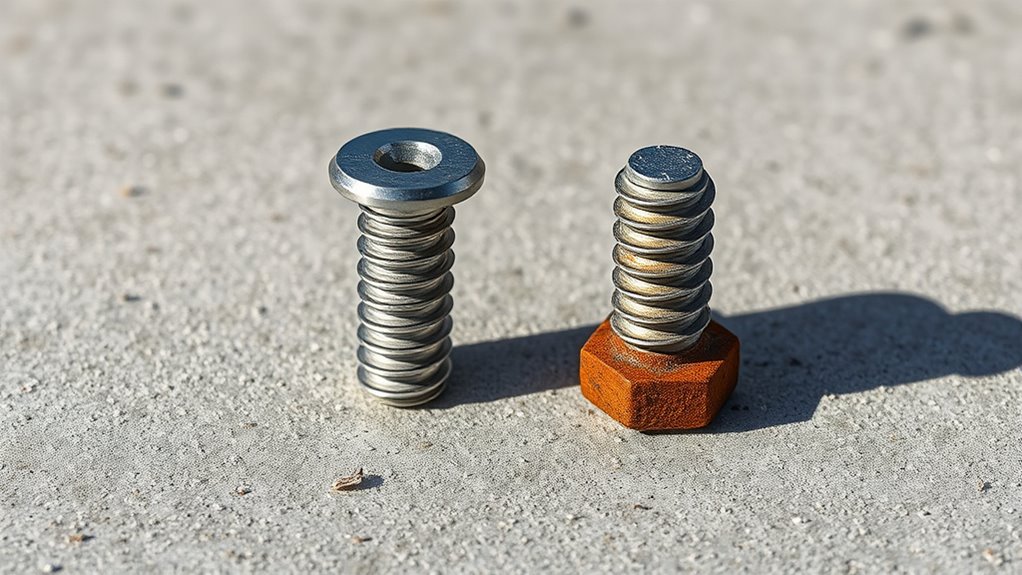
Although Tapcon screws resist corrosion better than plain steel fasteners, they aren’t completely rust proof. You’ll find options with a galvanized finish that help outdoors.
And true stainless steel Tapcons for much greater corrosion resistance. Choose stainless for salty or wet environments; use galvanized where conditions are milder.
Inspect and replace any showing corrosion to maintain safe anchoring.
What “Rust Proof” Actually Means for Screws : Coatings, Metals, and Limits
When you hear “rust proof” for screws, understand it’s more of a spectrum than an absolute—different metals and coatings offer varying levels of corrosion resistance under different conditions.
You should check corrosion testing results and consider environmental factors like salt, humidity, and temperature.
Coatings (galvanic, zinc, polymer) slow corrosion; no screw is universally immune, so match material and coating to exposure for best longevity.
Tapcon Types and Corrosion-Resistant Materials
You’ll want to look at both the base metal and any factory coatings when choosing Tapcons. Options include hardened carbon steel, stainless steel variants, and zinc or proprietary corrosion-resistant coatings.
These coatings change how long screws last outdoors. Knowing the trade-offs between material strength and coating durability helps you pick the right fastener for wet or salty environments.
Tapcon Material Options
Curious which Tapcon will hold up best where you’re working? You’ll choose from zinc-plated, stainless steel, and blue-coated Tapcons based on Tapcon durability and material compatibility.
Stainless resists rust outdoors, zinc suits dry interiors, and blue-coated offers extra protection for mixed environments.
Match screw material to substrate and exposure to guarantee secure, long-lasting anchoring without premature corrosion.
Corrosion-Resistant Coatings
Although Tapcons look similar at a glance, their coatings make a big difference in corrosion resistance and suitability for specific jobs. You’ll choose zinc plating, stainless cladding, or ceramic coatings based on exposure and cost.
Look for Eco friendly finishes and ask manufacturers about manufacturing processes to confirm longevity. Proper coating prevents rust, extends service life, and matches installation environments.
Choosing Tapcons for Indoor vs. Outdoor Use (Quick Checklist)
When deciding between indoor and outdoor Tapcons, think about the environment they’ll face—moisture, salts, and temperature swings matter more outside, so choose coatings and materials accordingly.
Quick checklist: prioritize stainless or hot-dip galvanized for outdoors, zinc or painted for indoor, review Historical corrosion cases for similar projects, consider Environmental impact of coatings, match fastener length and substrate, and follow manufacturer specs.
How Moisture, Salt, and Chemicals Affect Tapcon Life
You’ll notice that steady moisture speeds up rust on Tapcons by breaking down their protective coatings and letting corrosion start at the metal surface.
Salt—especially from coastal air or road de-icing—and harsh chemicals accelerate that process, pitting the steel and weakening the anchor.
Knowing the environment and choosing the right coating or stainless option will help you prevent premature failure.
Moisture-Induced Corrosion
Ever wondered why Tapcon screws that looked fine at install start failing a year later? You’ll see moisture seeps into threads and crevices, accelerating electrochemical corrosion.
Humidity cycling and trapped water degrade coatings, especially if eco friendly materials or manufacturing processes cut corners.
You should control exposure, guarantee proper sealing, and pick proven coatings to extend Tapcon life where wet conditions persist.
Salt And Chemical Exposure
Moisture is only part of the problem — salt and common chemicals speed up the same electrochemical reactions that eat away Tapcon screws, often far faster than plain water alone.
You’ll see accelerated pitting near coastal or industrial sites; environmental impact raises maintenance needs.
Choose screws meeting higher manufacturing standards or apply barriers and regular inspections so corrosive agents don’t shorten service life.
Installing Tapcons: Tips to Reduce Corrosion Risk
When you install Tapcons, take simple steps to minimize corrosion risk: pick the right screw material (stainless or coated), match anchors to the environment, and prep the concrete by cleaning holes and removing dust.
Use proper torque, avoid overdriving, and seal heads to limit moisture.
Keep electrical safety in mind near conduits and balance fastening patterns for aesthetic considerations so finishes stay neat and durable.
How to Spot Rust on Tapcons : And When to Replace Them
How can you tell if a Tapcon is rusting? Look for orange-brown flakes, pitting, or swollen threads where galvanized coatings failed.
How can you tell if a Tapcon is rusting? Watch for orange-brown flakes, pitting, or swollen threads.
Scrape gently; exposed metal alloys that discolor or crumble signal weakening.
If threads won’t engage, heads strip, or corrosion reaches anchor depth, replace the Tapcon.
Don’t wait—compromised fasteners risk fixture failure and masonry damage.
Masonry Anchor Alternatives for Rust-Proof Needs
If you need anchors that won’t rust, consider stainless-steel anchors, polymer or plastic anchors, and non‑ferrous metal options like brass or bronze—they’re designed to resist corrosion in wet or coastal environments.
- Stainless steel — best for longevity, minimal historical corrosion.
- Polymer — lightweight, low environmental impact.
- Brass/Bronze — durable, non‑ferrous.
- Coated anchors — compromise of strength and protection.
Frequently Asked Questions
Do Tapcons Create Galvanic Corrosion With Embedded Metal Rebar?
Yes — they can. You’ll get galvanic corrosion if Tapcons contact embedded rebar in moist concrete; dissimilar metals and electrolytes promote corrosion. You’ll need isolation, stainless fasteners, or protective coatings to prevent damage.
Can Tapcon Threads Be Cleaned and Recoated After Installation?
Yes — you can clean Tapcon threads and recoat them after installation; perform maintenance procedures like brushing, solvent degreasing, and applying a compatible corrosion resistance coating to restore protection and prolong fastener life.
Are There Stainless Steel Tapcon Equivalents for Structural Loads?
Yes — you can use stainless-steel Tapcon equivalents for structural loads; you’ll choose corrosion resistant materials like stainless anchors or epoxy-set threaded rods, and consider alternative fastening methods such as mechanical anchors or chemical anchors for strength.
Do Tapcons Affect Concrete Strength or Cause Cracking Over Time?
No, Tapcons won’t inherently weaken concrete or cause cracking if you install them correctly; you’ll preserve concrete integrity by ensuring installation precision, proper hole depth, spacing, and avoiding over-tightening that could induce stress or microcracks.
Can Electroplating a Tapcon Void Manufacturer Warranties?
Yes — altering fasteners like electroplating usually voids warranties; you’ll lose factory corrosion resistance guarantees and may create material compatibility issues, so don’t modify Tapcons without explicit manufacturer approval to avoid warranty denial.
Conclusion
You can use Tapcons almost anywhere, but they’re not inherently rust‑proof—coated and stainless options resist corrosion, yet moisture, salts, and chemicals can still bite. Picture a row of screws: blue-coated ones gleam like a calm lake, stainless ones hold steady like weathered oaks, and untreated ones flake red like autumn leaves—choose the right type, install them correctly, and replace any that start to rust to keep your anchors holding fast.