You can usually have an MRI with plates and screws, but safety and image quality depend on the implant material, manufacturer labeling (MR Safe/Conditional/Unsafe), scanner strength, and how long ago you had surgery. Titanium and many nonferromagnetic devices are low risk; some stainless steels and ferromagnetic hardware can move, heat, or cause artifacts. Tell your MRI team the implant model and surgeon details so they can confirm safety and adjust settings — keep going to learn specifics and alternatives.
Can You Safely Get an MRI If You Have Plates and Screws?
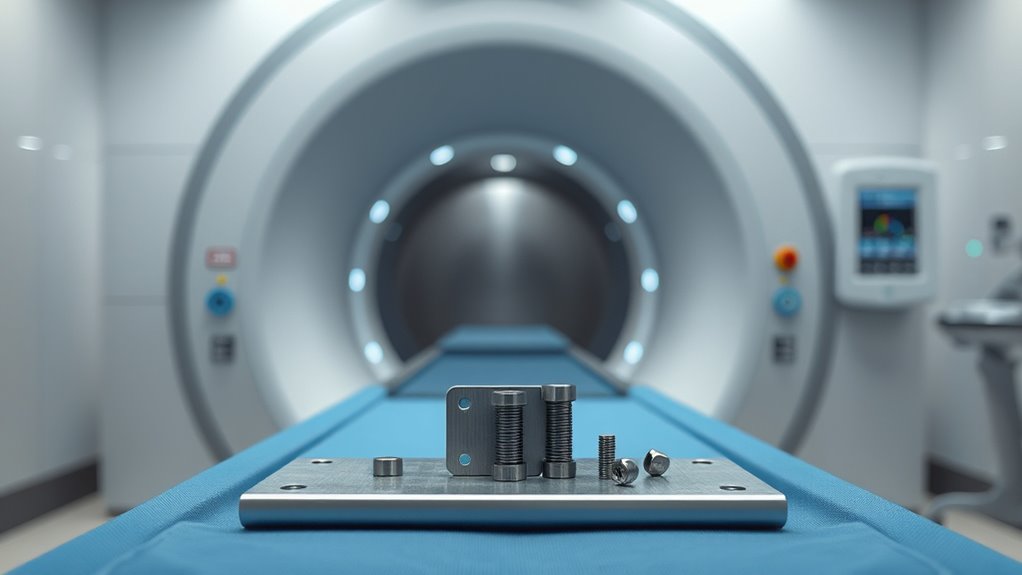
If you have plates and screws from a past surgery, you can usually get an MRI safely.
Most modern implants are made from nonferromagnetic materials like titanium or certain stainless steels that don’t move or heat considerably in the scanner.
You should tell the MRI team about implants so they can confirm compatibility, monitor patient comfort, and assess implant durability under imaging protocols to minimize risk and artifact.
Which Implant Metals Are MRI-Safe (And Which Aren’t)
You’ll want to know whether your implant is ferromagnetic or nonferromagnetic, because that determines how it reacts to an MRI’s magnetic field.
Common implant metals—like stainless steel, cobalt-chrome, and titanium—have different magnetic properties and safety profiles.
Check the manufacturer’s safety label or implant card before your scan so you can tell which category your device falls into.
Ferromagnetic Versus Nonferromagnetic
When evaluating whether plates and screws are safe for MRI, the key question is whether the metal is ferromagnetic—because ferromagnetic implants can move, torque, or heat in the scanner’s magnetic field while nonferromagnetic ones generally don’t.
You should consider biocompatibility concerns and legal considerations.
- Ferromagnetic risk
- Heating potential
- Imaging artifact
- Documentation review
Common Implant Metal Types
Knowing whether an implant is ferromagnetic sets the stage, but to decide MRI safety you need to recognize specific metals and alloys used in plates and screws. You should know titanium and stainless steel distinctions for implant maintenance and patient comfort.
| Metal | MRI risk |
|---|---|
| Titanium | Low |
| Stainless steel | Variable, higher |
Manufacturer Safety Labels
Curious which implants are cleared for MRI? Check the implant’s manufacturer safety label — it tells if the device is “MR Safe,” “MR Conditional,” or “MR Unsafe.”
You should confirm details for patient comfort and insurance coverage before scheduling.
Numeric checklist:
- Locate implant model
- Read safety label
- Note conditional parameters
- Share with radiology and insurer
How Does Implant Location Affect MRI Safety and Image Quality?
Although the risks and artifact patterns vary with where a plate or screw sits in your body, the underlying principles are the same: proximity to the MRI’s imaging target and to critical tissues determines both safety concerns (heating, displacement) and how much the metal will distort the image. You should discuss bone regeneration and implant durability with your radiologist.
| Location | Impact |
|---|---|
| Skull/Face | High artifact, low heating |
| Spine | Moderate artifact, critical safety |
| Extremities | Low artifact, localized heating |
| Chest/Abdomen | Variable artifact, organ risk |
Why Time Since Surgery Matters for MRI Scans
When you schedule an MRI after having plates and screws placed, the time since surgery matters because your healing timeline affects safety and image clarity.
Your surgeon will want to confirm implant stability before scanning to reduce movement or displacement risks.
Also, scar tissue forms over time and can change how tissues look on images, so radiologists take that into account.
Healing Timeline Importance
Why does the time since your surgery matter for an MRI? You need to factor in the healing process and scar tissue formation because they affect imaging clarity and symptom interpretation. Follow recovery timelines and clinician guidance.
Reasons:
- Reduced inflammation improves image quality.
- Scar tissue can alter signals.
- Early scans may mislead diagnosis.
- Waiting lowers complication risk.
Implant Stability Check
Because implant stability changes over time, the interval since your surgery matters for MRI scans. You should tell your radiologist how long ago the procedure occurred so they can assess implant longevity and risk.
Early scans may be deferred if fixation isn’t secure.
Later, healed bone and improved fixation from modern surgical techniques usually reduce movement and heating concerns, allowing safer imaging decisions.
Scar Tissue Formation
Along with implant stability, the amount of scar tissue that forms around plates and screws affects MRI safety and image quality, so tell your radiologist how long it’s been since surgery.
You’ll want to take into account:
- Early tissue healing increases inflammation and artifacts.
- Mature scar tissue may reduce movement.
- Timing guides sequence choice.
- Communicate surgery date for ideal imaging.
How MRI Type and Settings Affect Implants
How do different MRI types and pulse settings change the way plates and screws behave in the scanner? You’ll find that field strength, pulse sequence and gradients affect heating and artifacts.
Modern low‑field or specific sequences can reduce risks, sometimes avoiding implant removal. If imaging remains limited, your clinician may suggest alternative diagnostics like CT or ultrasound.
Always discuss device specifics before scanning.
What Checks the Radiology Team Will Do Before Your MRI
What’ll the radiology team check before your MRI? They’ll confirm implant details and MRI compatibility, review your history, and plan imaging.
Typical checks include:
- Implant model and material for implant durability assessment.
- Prior scan or operative reports.
- Screening questionnaire (metal, devices, symptoms).
- Scheduling appropriate MRI type and protocols based on safety clearance and clinical need.
Risks: Heating, Movement, and Image Distortion
Because MRI uses strong magnetic fields and radiofrequency energy, plates and screws can heat, shift slightly, or create image artifacts that affect your scan.
You might feel warmth or discomfort, and images near hardware may be distorted, complicating diagnosis.
Rarely, severe movement prompts consideration of implant removal.
Discuss risks with your team so your patient experience is safe, informed, and tailored to your situation.
What to Expect and How to Prepare for an MRI With Hardware
Before your MRI, you’ll get clear instructions about screening, positioning, and what sensations to expect so the scan goes smoothly and your hardware stays safe. Follow these steps:
- Bring implant paperwork to confirm MRI-compatibility.
- Remove metallic items and inform staff of discomfort.
- Expect noise, limited movement, short breath-holds.
- Follow Post scan care and checkups to monitor implant longevity.
Questions to Ask Your Surgeon or Radiologist Before the Scan
Before your MRI, ask your surgeon or radiologist for specific details about the plates and screws in your body, including the material, exact location, and date of implantation.
Also confirm whether the hardware is labeled MRI-compatible, conditional, or unsafe and ask for any special scanning precautions.
If they don’t have clear documentation, request imaging records or device identification to avoid surprises during the scan.
Metallic Implant Details
If you have plates, screws, or other metallic implants, ask your surgeon or radiologist specific questions about their material, model, and safety labeling so the imaging team can determine whether an MRI is safe and what scanning adjustments might be needed.
Check these metallic implant details:
- Implant material and composition
- Manufacturer/model number
- Date and surgical techniques used
- Any prior imaging notes or contraindications
MRI Compatibility Status
What exactly is the implant’s MRI compatibility status, and what does that mean for your upcoming scan? Ask if the device is labeled MRI-safe, conditional, or unsafe, and request model-specific documentation.
Inquire about historical cases of artifacts or heating and how recent technological advancements reduce risks.
Confirm scanner strength limits, positioning tips, and whether alternative imaging is safer for your situation.
When MRI Isn’t Suitable for Implants : Alternative Imaging Options
When an implant’s materials or location make MRI unsafe or impractical, you still have several effective imaging choices to evaluate anatomy and complications.
You’ll consider alternative imaging based on implant compatibility, clinical question, and available resources:
- CT — great for bone, metal artifact reduction.
- Ultrasound — for soft tissue, fluid collections.
- X‑ray — quick hardware position checks.
- Nuclear medicine — functional and infection assessment.
Frequently Asked Questions
Can Dental Plates or Jaw Fixation Screws Affect Head/Neck MRIS?
Yes — dental implants and jaw fixation screws rarely affect head/neck MRIs; you’ll usually be safe, but metal can cause local artifacts. Tell your radiologist about implants so they’ll assess MRI safety and adjust imaging accordingly.
Will Spinal Fusion Hardware Trigger Alarms at Airport Security?
Quite often, you won’t set off alarms—by coincidence, most spinal fusion hardware’s nonferrous materials don’t trigger airport security. Still, you’ll carry implant detection cards and tell officers, since scanners and metal detectors can sometimes detect implants.
Can Pregnancy With Plates and Screws Complicate MRI Decisions?
Yes — pregnancy with plates and screws can complicate MRI decisions: you’ll need implant compatibility confirmation and strict MRI safety protocols, so your care team will assess risks, timing, and alternatives before scheduling the scan.
Do Orthopedic Implants Affect Contrast Dye Safety or Reactions?
No — implant compatibility rarely affects contrast interactions; you’ll usually tolerate dye fine. Your team will check implant materials and kidney function beforehand, and they’ll monitor you for allergic reactions or other complications during the scan.
Can Older, Undocumented Implants Be Safely Scanned Without Records?
You can often still scan older, undocumented implants, but you’ll need implant compatibility checks and imaging safety precautions; we’ll investigate metal type and positioning, verify device MRI-conditional status, and run tailored safety protocols before scanning.
Conclusion
So yes, you can usually get an MRI with plates and screws — unless your hardware decides it’s auditioning for a magnet-powered performance. Most modern implants (titanium, some stainless steels) play nicely, but location, age of the implant, and scan type matter. Your surgeon and radiologist should clear you, and if MRI’s off the table there are alternatives. Bring your implant info, ask the right questions, and let professionals handle the drama.