Can I Use Sheet Metal Screws in Wood? Pros, Cons, and Best Use Cases
Yes — you can use sheet‑metal screws in wood for light, nonstructural tasks like attaching metal trim, brackets, or thin plywood, but they’re not ideal for heavy or long‑term load‑bearing joints. They have thinner shanks and finer threads than wood screws, so they work best in hardwoods or stable softwoods with pilot holes and countersinking. Use corrosion‑resistant finishes outdoors, avoid critical structural uses, and consider wood screws or structural fasteners for strength — more tips follow below.
Short Answer: Can You Use Sheet-Metal Screws in Wood?
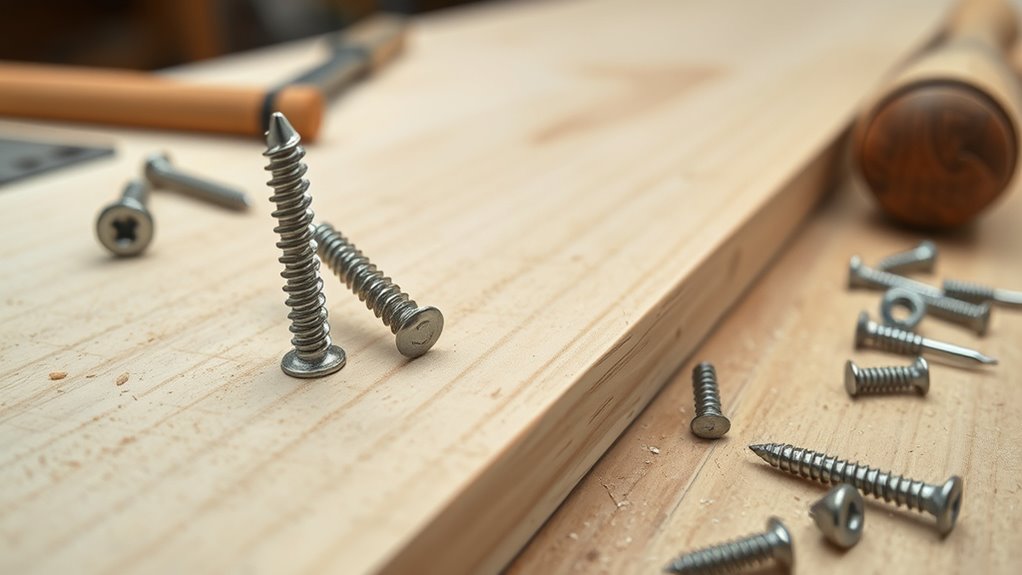
yes—you can use sheet‑metal screws in wood for many light to medium tasks, but you should pick the right size, thread type, and pilot hole to avoid splitting or weak holds.
You’ll find they work for trims, brackets, and temporary fixes, but consider alternative fasteners and proper woodworking techniques for load-bearing joints or fine furniture to guarantee lasting strength and appearance.
How Sheet-Metal Screws Differ From Wood Screws
Since sheet‑metal screws can work in wood for many tasks, it helps to know how they differ from screws made specifically for wood. You’ll notice sheet metal aesthetics, thinner shanks, and sharper points, while wood screws favor wood flexibility, larger cores, and tapered bodies. Choose based on finish and load.
| Feature | Notes |
|---|---|
| Appearance | sheet metal aesthetics |
| Shank | thinner vs thicker |
| Tip | sharp vs tapered |
| Use | surface vs structural |
Why Thread Form and Pitch Matter for Grip in Wood
Because the threads are what bite into wood, their shape and spacing determine how well a screw holds and how the wood responds when you drive it. You’ll notice thread design affects compression, splitting risk, and holding power; pitch controls pull-out resistance and insertion effort.
Consider:
- Coarse pitch increases grip strength but risks splitting.
- Fine pitch reduces vibration loosening.
- Double-start reduces driving torque.
Which Wood Types Accept Sheet-Metal Screws Reliably
When you pick a wood for sheet‑metal screws, look for species that combine sufficient density with consistent grain so threads can bite without splitting. You’ll favor hardwoods like oak and maple, and stable softwoods like Douglas fir, for good Metal fasteners performance and Wood compatibility.
| Wood Type | Reliability |
|---|---|
| Oak | High |
| Maple | High |
| Douglas Fir | Moderate |
| Pine | Low |
When to Use Sheet-Metal Screws in Wood
Use sheet-metal screws in wood when you need a quick, short-term hold rather than a permanent structural fastener.
They’re also a good choice for fastening thin materials or attaching light metal or plastic to wood where countersinking and fine threads help grip.
For heavier loads or long-term joints, choose screws designed for wood instead.
Short-Term Holds
If you need a quick, temporary fastening for light assemblies or prototypes, sheet-metal screws can do the job effectively. You’ll favor them for short-term holds where metal fasteners’ convenience and wood compatibility matter, but not for load-bearing or long-term exposure.
Use cases include:
- Clamping jigs during assembly
- Prototype panels
- Temporary signage or fixtures
Thin Material Fixes
Short-term holds work well for temporary setups, but you’ll handle thin materials differently: sheet-metal screws shine when you need to fasten plywood, thin MDF, or metal-faced laminates to a wood substrate without splitting the thin panel. Use appropriate metal fasteners, pre-drill if needed, and check material compatibility to avoid tear-out.
| Use | Tip | Benefit |
|---|---|---|
| Plywood | Countersink | Clean finish |
| MDF | Pre-drill | Prevent split |
| Laminate | Thin shank | Less stress |
| Repair | Short screw | Holds edge |
| Test | Sample | Confirm fit |
When Not to Use Sheet-Metal Screws
Don’t use sheet-metal screws where they’ll carry structural loads—you’ll want bolts or wood screws rated for shear and tension instead.
Also avoid them for outdoor or corrosive environments unless you pick a corrosion-resistant coating or stainless steel, because ordinary sheet-metal screws will rust and fail.
Consider the fastener’s strength and corrosion resistance before you choose.
Structural Load Applications
When should you avoid using sheet‑metal screws for load‑bearing connections? You shouldn’t rely on them where structural integrity matters or where decorative finishes and aesthetic considerations demand hidden, flush, or engineered fasteners.
- Heavy joists, beams, or rafter connections needing engineered calculations.
- Load paths with cyclic or shear stresses risking pull‑out or metal fatigue.
- Critical safety supports (guardrails, stair stringers) requiring code‑approved connectors.
Outdoor/Corrosive Environments
If you’re fastening exterior wood exposed to rain, salt spray, or persistent moisture, avoid standard zinc‑plated or untreated sheet‑metal screws because they’ll corrode, stain the wood, and lose holding power.
Instead, choose fasteners with proven rust resistance—stainless steel or hot‑dip galvanized—and confirm material compatibility with the wood, coatings, and surrounding metals to prevent galvanic corrosion and guarantee long‑term secure connections.
Choosing Sheet-Metal Screw Diameter & Length for Wood
How long and thick should a sheet‑metal screw be for wood? Choose diameter and length to guarantee proper thread engagement without splitting. Consider screw material strength relative to load and pilot hole size.
- Use thicker gauges for heavy loads; ensure two-thirds of length engages wood.
- Match pilot hole to screw material and wood density.
- Short screws for thin stock; longer for deep hold.
Best Materials and Coatings for Outdoor or Humid Use
Because outdoor and humid environments accelerate corrosion, you should pick screws with corrosion-resistant metals or protective coatings that match the exposure and load.
Because outdoor humidity speeds corrosion, choose screws with corrosion-resistant metals or coatings suited to exposure and load.
Choose stainless steel (304 for general, 316 for salty sites) for metal compatibility with adjoining metals.
For painted or budget projects, use hot-dip galvanized or zinc-plated screws with proven coating durability.
Avoid mixed metals that cause galvanic corrosion.
Pilot Holes and Countersinking for Wood
After choosing the right screw material and coating for your project, you’ll want to prepare the wood with proper pilot holes and countersinks to prevent splitting and make flush, secure fastening.
Match hole diameter to core screw diameter considering metal thickness when penetrating thin metal first.
Consider screw head types for countersink depth.
- Measure
- Drill
- Test fit
Driving Tips to Prevent Splitting and Strip-Out
When you start driving sheet metal screws into wood, use steady pressure, the correct bit, and controlled speed to avoid splitting the grain or stripping the head. Let the driver do the work rather than forcing the screw.
Match screw head types to your driver, use proper drill bit selection for pilot holes, back off periodically, and finish with firm, even torque to prevent strip-out.
Alternatives for Strong Wood Joints
If you need stronger, more reliable joints than sheet metal screws can provide, consider pocket hole joinery for fast, concealed connections.
You can also switch to structural wood screws designed for higher shear and withdrawal loads.
Both options give you cleaner, more durable assemblies without relying on makeshift fixes.
Pocket Hole Joinery
Wondering how to get fast, strong joints without complex joinery? You’ll like pocket hole joinery: it uses angled holes and screws to clamp wooden joints tightly, often replacing metal fasteners where concealed strength matters.
You’ll work quickly, align parts easily, and get reliable pulls resistance for frames and cabinets.
- Quick alignment
- Concealed fasteners
- Strong clamp force
Structural Wood Screws
Though they look like oversized wood screws, structural wood screws are engineered to replace lag bolts and other heavy fasteners when you need high-strength, reliable joints.
You’ll prefer them over sheet metal screws and other metal fasteners for load-bearing connections. Use them with woodworking adhesives for added shear resistance, predrill pilot holes, and follow manufacturer torque specs to avoid splitting or underperformance.
Safety Checklist for Using Sheet-Metal Screws
Before you start driving sheet‑metal screws into wood, run through a short safety checklist to prevent stripped fasteners, damaged materials, and personal injury.
Check hardware compatibility with wood type and coating.
Follow safety precautions: wear eye protection, use proper drivers, avoid over-torquing.
Verify pilot holes, screw length, and clearance to hidden utilities before final fastening.
- Confirm hardware compatibility
- Follow safety precautions
- Verify pilot holes and clearances
Project Examples: Sheet-Metal Screws Used in Wood
With the safety checklist complete, you can look at real-world jobs where sheet‑metal screws work well in wood. Use them to attach thin metal brackets, secure metal trim, or fasten light hardware to plywood.
Follow woodworking tips: predrill pilot holes, select corrosion‑resistant metal fasteners, and match screw length to material thickness so joints stay tight and aligned without splitting the wood.
Common Problems With Fixes (Stripped Screws, Corrosion, Loose Joints)
When a screw strips or rusts, you’ll want straightforward fixes that get the job done without more damage.
For stripped screws, try a rubber band or extractor to regain purchase.
For corrosion, choose stainless or apply a protective coating to stop future problems.
Addressing these early keeps joints tight and saves you time down the road.
Stripped Screw Removal
If a screw head’s damaged so your driver just spins, you’ll need a few simple tricks to get it out without wrecking the surrounding wood. Consider fastener compatibility before reinstalling to avoid repeat issues; proper screw removal preserves material and holds.
- Use rubber band grip and a snug bit.
- Drill a small recess and use an extractor.
- Tap in a larger driver for better bite.
Corrosion Prevention Methods
Because metal meets moisture in lots of projects, corrosion’s one of the most common threats to screw-held joints. You’ll want straightforward prevention to keep fasteners and wood intact.
Use stainless or coated screws for corrosion resistance, apply sealant or epoxy at metal bonding points, and keep joints dry.
Inspect periodically, replace compromised screws, and use washers to reduce wood compression and moisture traps.
Frequently Asked Questions
Can Sheet-Metal Screws Be Reused After Removal From Wood?
Yes — you can often reuse sheet-metal screws after removal from wood, but inspect screw durability and reuse considerations: if threads or head are damaged or corrosion’s present, don’t reuse; otherwise you can reuse them in noncritical, short-term applications.
Do Sheet-Metal Screws Conduct Electricity or Pose Electrical Risks?
Imagine a tiny wire: you’ll find sheet-metal screws do conduct electricity, so they can pose electrical risks if energized; their electrical conductivity varies by material, and corrosion resistance (or lack thereof) affects long-term conductivity and safety.
Can I Paint Over Sheet-Metal Screws in Wood Projects?
Yes — you can paint over sheet-metal screws in wood, but you’ll want to guarantee good paint adhesion and prevent screw corrosion by cleaning, priming with a metal primer or rust-inhibitor, then painting, and letting coatings cure fully.
Are Self-Tapping Sheet-Metal Screws Effective in Pressure-Treated Lumber?
“Measure twice, cut once” — yes, you can use self-tapping sheet-metal screws in pressure-treated lumber, but you’ll want high corrosion resistance and treated-compatible coatings so screw durability isn’t compromised by chemicals and moisture over time.
How Do Sheet-Metal Screws Perform in Load-Bearing Structural Applications?
They aren’t ideal for load-bearing structural applications; you’ll find their load capacity limited and corrosion resistance variable. Use engineered connectors or structural fasteners instead, unless manufacturer data specifically certifies the sheet-metal screws for such loads.
Conclusion
Yes — you can use sheet‑metal screws in wood sometimes, but choose carefully. Sheet‑metal screws have finer threads and a harder shank than wood screws, so in soft or predrilled hardwood they’ll hold fine; in dense hardwoods they can split or strip. Want a neat, quick fix for thin lumber or metal‑to‑wood work? Use stainless or coated screws, pilot holes, and avoid overdriving. For structural joints, pick purpose‑made wood screws or fasteners instead.

