Are Nails Stronger Than Screws
You’ll find that neither nails nor screws are simply “stronger” in all cases — screws usually beat nails for pull‑out (tensile) strength because their threads bite into material, while nails often handle shear and bending better thanks to their smooth, flexible shanks. Your choice should match the load, wood type, and environmental exposure, and account for coatings, pilot holes, and fatigue. Keep going and you’ll get clear guidance on which fastener fits each common job.
Quick Guide: When to Use Nails vs Screws
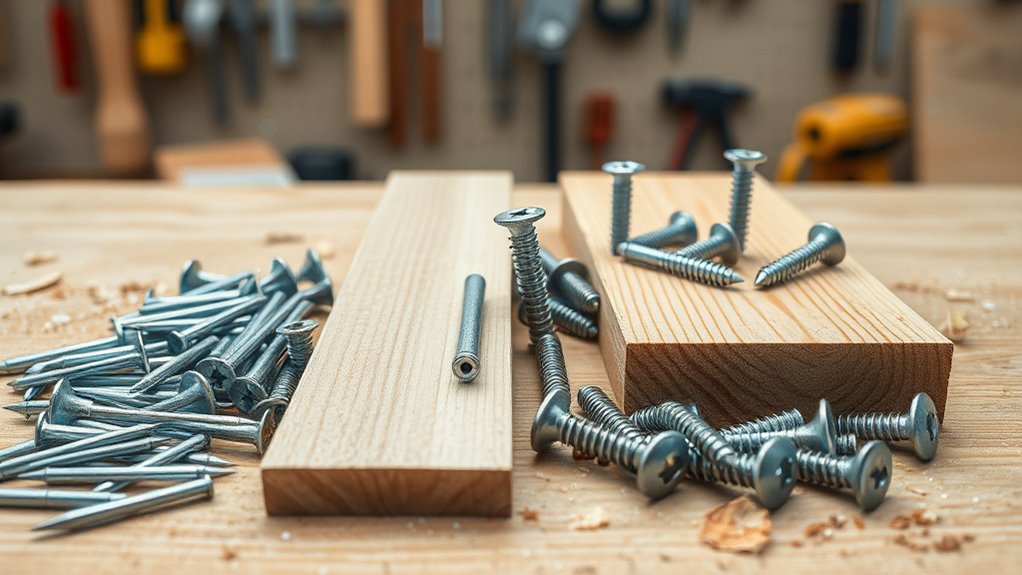
When you’re choosing between nails and screws, think about the job’s priorities: speed and shear strength favor nails, while holding power and withdrawal resistance favor screws.
You’ll pick nails for framing or where quick nailing and some nail corrosion risk is acceptable.
Choose screws for trim, decking, or projects needing strong screw threading and long-term grip.
Consider removal needs and material.
Mechanical Differences and Why They Matter
Although both fasteners join materials, they work differently: nails rely on shear strength and friction, while screws use threaded engagement to resist pull-out.
You’ll choose based on load direction, ease of removal, and vibration tolerance.
Consider corrosion resistance and material compatibility—coatings, alloys, and substrate hardness affect longevity.
Match fastener type to environment and joint demands to avoid failure.
Pull-Out (Tensile) Strength: Why Screws Usually Win
When you pull on a screw, its threads bite into the wood and spread the load across more material. That threaded engagement increases withdrawal resistance, especially in softer or layered materials.
This gives the screw a clear grip advantage over a smooth nail. So for tensile loads where holding power matters, screws usually outperform nails.
Threaded Grip Advantage
Because screws bite into wood with helical threads, they resist being pulled out far better than smooth nails. You’ll notice that difference anytime a joint faces tension.
You rely on screw threading to convert tensile loads into shear across many thread surfaces.
Nails suffer from nail corrosion and lack of grip over time, so screws usually maintain tensile integrity and longer-lasting joints.
Withdrawal Resistance Factors
If you pull on a fastener, you’ll usually find a screw holds far better than a nail because its helical threads develop shear across multiple contact surfaces in the surrounding material.
You rely on thread depth, core diameter, and substrate density for withdrawal resistance.
Coating and corrosion resistance affect long-term grip, while aesthetic considerations influence fastener choice when appearance or exposed heads matter.
Shear and Bending: Why Nails Often Hold Better
Although screws excel at resisting pull-out, nails often outperform them under shear and bending loads because their smooth, slightly flexible shanks let them yield and redistribute forces instead of snapping.
You’ll find nails absorb lateral shocks better, tolerate slight movement, and resist shear where screw threading can create stress risers.
Consider nail corrosion affecting long-term grip, but for immediate shear and bending, nails usually win.
Surviving Repeated Stress: Nails vs Screws Under Fatigue
When you subject fasteners to repeated loading, fatigue — not just immediate strength — determines which will last, and nails and screws behave differently under cyclic stress.
You’ll find nails often tolerate bending cycles by flexing, but Nail corrosion can weaken that resilience over time.
Screws resist pull-out initially, yet cyclic shear promotes Screw deformation and eventual fracture, so inspection matters.
How Metal, Coatings, and Size Affect Nails vs Screws
Fatigue performance depends a lot on the materials and dimensions of a fastener, so you’ll want to look next at the metals, coatings, and sizes that shape nails’ and screws’ behavior. You’ll consider:
Fatigue performance hinges on fastener metals, coatings, and sizes—key factors shaping nail and screw behavior.
- Base metal: steel, stainless, or brass alters toughness and corrosion resistance.
- metal coatings: galvanizing or plating extend life under cyclic loads.
- fastener size: diameter and length change stress distribution and fatigue life.
Wood and Engineered Lumber: Matching Fasteners to Substrate
When you pick a fastener, consider the wood species because density and grain affect holding power.
For engineered products like plywood, OSB, or LVL, you’ll need fasteners rated for those layered assemblies.
Follow manufacturer compatibility guidelines to prevent splitting, pullout, or long-term failure.
Wood Species Considerations
Because different woods grip fasteners differently, you need to match nail and screw types to the species and engineered product you’re using. Consider wood grain and fastener corrosion risk when choosing length, diameter, and coating. Don’t assume one size fits all.
- Dense hardwoods: predrill, use thicker screws.
- Softwoods: nails hold well; screws still add withdrawal strength.
- Exterior: prioritize corrosion-resistant coatings.
Engineered Product Types
Those wood-species choices also affect how you approach engineered products: plywood, LVL, I-joists, glulam, and OSB all behave differently under nails and screws.
You’ll pick fasteners based on density and glue lines: OSB grips threading poorly, LVL needs long screws for shear, glulam accepts both.
Consider nail corrosion where moisture or chemicals exist, and match screw threading to substrate for reliable hold.
Fastener Compatibility Guidelines
If you want reliable connections, match the fastener type, length, and coating to the specific wood or engineered lumber you’re working with. You’ll choose based on density, moisture, and coating resistance — stain, galvanized, or stainless.
Use proper drivers and check screwdrivers compatibility.
Consider:
- Solid wood: nails or structural screws
- OSB/plywood: longer screws
- LVL/OSB edges: avoid thin nails; use screws and protective nail polish
Installation, Shanks, Pilot Holes, and Common Failure Modes
When you drive a fastener into wood or metal, the way its shank, pilot hole, and installation method interact determines whether the joint will hold or fail.
The interaction of shank, pilot hole, and installation decides whether a fastened joint holds or fails.
You’ll choose nail shank style or screw threads based on withdrawal and shear needs.
Drill pilot holes for dense or split-prone materials.
Common failures are splitting, stripping, and shear shear-off from improper depth, angle, or fastener selection.
Practical Trade-Offs: Speed, Cost, Removability, and Looks
Although both nails and screws can join materials effectively, you’ll trade off speed, cost, removability, and appearance when choosing between them. You’ll prioritize different factors based on project needs and aesthetic considerations or environmental impact.
- Speed: nails faster with a gun.
- Cost: nails usually cheaper.
- Removability: screws let you disassemble easily; nails are more permanent.
Fasteners for Common Jobs: Bookshelf, Deck, Framing, Trim
After weighing speed, cost, removability, and appearance, you’ll pick different fasteners for specific jobs—bookshelves need holding power without splitting. Decks demand corrosion resistance and shear strength. Framing prioritizes speed and shear capacity. And trim favors discreet heads and minimal damage.
Use screws where screw threading prevents pullout for shelves and trim. Choose hot‑dipped nails or coated screws to prevent nail corrosion on decks and outdoors.
Frequently Asked Questions
Are There Specialized Nails or Screws for Masonry or Concrete?
Yes — you can use specialized masonry screws and concrete nails; you’ll also find decorative fasteners and aesthetic nail options made for masonry surfaces, so you can secure fixtures and keep a finished look without sacrificing holding power.
Can Nails or Screws Be Used in Metal Framing?
Yes—you can use nails and screws in metal framing, but you’ll pick fasteners rated for metal; consider nail corrosion and screw compatibility with gauge, coating, and self-drilling types so connections stay secure and durable.
How Do Environmental Codes Affect Fastener Choice for Constructions?
You’ll weigh durability against compliance: environmental impact pushes you toward coated or stainless fasteners, while regulatory standards force specific materials, coatings, and testing; you’ll choose fasteners that balance longevity, code requirements, and reduced ecological harm.
Are There Eco-Friendly or Recycled Fastener Options?
Yes — you can choose eco-friendly fasteners. You’ll find biodegradable fasteners for temporary uses and recycled metal options like reclaimed stainless or galvanized screws and nails; they meet many codes while reducing environmental impact and material waste.
Do Nail or Screw Choices Impact Fire Resistance of Assemblies?
Yes—choice matters: fastener durability and installation techniques affect fire resistance; you’ll want corrosion-resistant screws or nails, proper spacing and embedment, and fire-rated coatings or intumescent sealants to maintain assembly integrity under heat.
Conclusion
In short, pick screws when you need pull-out strength and nails when you need shear flexibility. You’ll likely use both: screws for cabinets and deck boards, nails for framing and trim. Remember, a typical wood screw can have about 50% greater pull-out strength than a smooth nail of the same diameter—handy to know when load matters. Match fastener type to substrate, loading, and whether you’ll ever need to remove or reuse the joint.
