You can use deck screws for some structural connections, but only if you pick the right size, material, and rated fastener for the load; screws can provide good shear and withdrawal resistance in joists, ledgers, and rim boards when installed per manufacturer and code specs. Avoid relying on short or decorative screws for load-bearing joints, and use engineered connectors or stainless/hot-dip options in corrosive settings. Keep going to see specific sizing, spacing, and inspection tips.
Quick Answer and Roadmap: Are Deck Screws Structural?
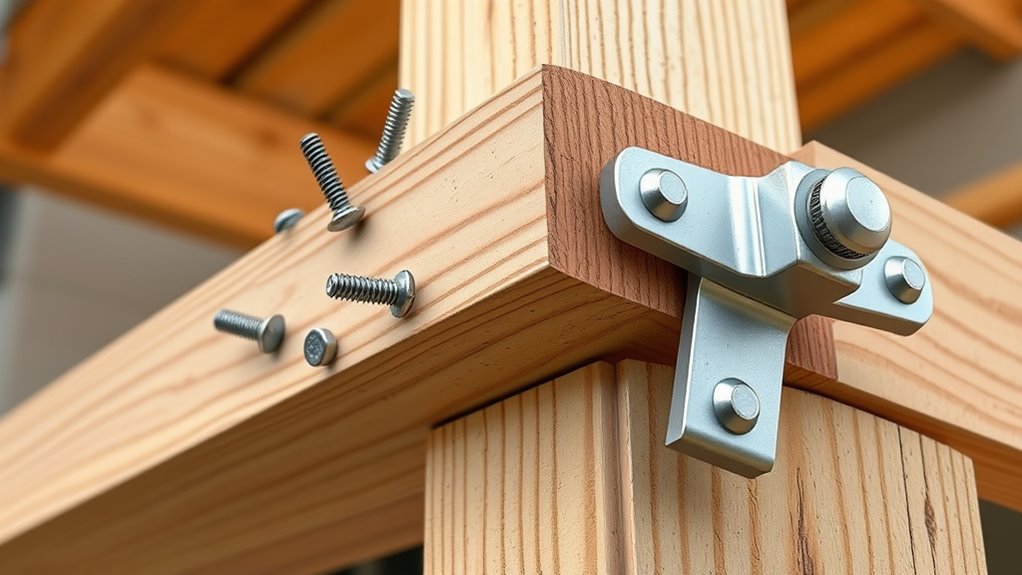
If you’re asking whether deck screws count as structural fasteners, the short answer is: usually not—unless the screw’s manufacturer, the project’s design, and your local code explicitly allow it.
You’ll learn when screws may suffice, when engineered connectors or bolts are required, and how decorative finishes or aesthetic hardware choices affect selection without changing structural qualification.
Follow code and manufacturer specs.
What “Structural” Means for Deck Connections
When we talk about “structural” for deck connections, you’re really asking whether a fastener can carry the load path continuously between members. That means checking the screw’s shear capacity and how it fits into the load path so forces aren’t transferred to weaker parts.
You also need to follow code limits and manufacturer ratings—those define what’s allowed for structural use.
Load Path Continuity
Because a deck must transfer every load safely to the ground, “structural” connections are really about creating an unbroken load path from the decking and railing down through joists, posts, and footings.
You’ll guarantee connections resist movement, tie into anchors, and respect Deck aesthetics and fastener color while prioritizing safety.
Fastener Shear Capacity
Although a single screw might hold a board in place, structural fasteners have to resist shear forces from live loads, wind, and lateral movement without failing.
You’ll assess shear capacity by considering screw diameter, material, and withdrawal strength rather than decorative finishes or aesthetic options.
Choose fasteners rated for shear and use proper spacing and backing to guarantee joints stay secure under repeated loading.
Code & Manufacturer Limits
If you want a fastener to count as “structural” for a deck, you’ll need to meet both code requirements and the manufacturer’s published limits — not just eyeball the screw or trust the package label.
You must verify load tables, corrosion ratings, and installation instructions, balancing environmental impact and aesthetic considerations to guarantee safety and longevity.
- Fear of failure
- Pride in craft
- Frustration with vagueness
- Relief from clarity
- Respect for rules
Common Deck Screw Types and Differences
When you choose screws for a deck, you’ll encounter several types—coated carbon, stainless steel, structural composite, and specialty fasteners—each designed for specific loads, environments, and materials.
You’ll pick coated carbon for cost, stainless for corrosion resistance, and composite-rated screws for engineered decking.
Decorative finishes add aesthetic appeal but don’t change structural rating; always match screw type to material and exposure.
How Screw Size, Thread, and Pilot Holes Affect Capacity
You’ll see that screw diameter directly changes shear and withdrawal capacity, so choosing the right thickness matters.
Thread type also matters because coarse, fine, and self-tapping threads grip differently in wood and composite materials.
And you’ll want to follow proper pilot hole practices to prevent splitting and to guarantee the screw reaches its design capacity.
Screw Diameter Effects
Although screw diameter might seem like a simple dimension, it plays a major role in load capacity and failure mode for deck fasteners. You’ll choose diameter to balance strength, splitting risk, and appearance—Deck aesthetics and fastener aesthetics matter.
Wider screws usually hold more; smaller ones reduce splitting if you predrill.
- Relief knowing your deck won’t sag
- Pride in clean fastener aesthetics
- Fear of split boards eased
- Confidence under load
- Satisfaction with durable joints
Thread Type Importance
Because thread form controls how a screw bites into wood, it’s one of the biggest factors affecting withdrawal and shear capacity—along with diameter and pilot-hole size. You’ll choose coarse or fine threads based on wood density; coarse grips softwood, fine suits hardwood. Consider decorative finishes and fastener aesthetics too. Visualize options:
| Thread Type | Use |
|---|---|
| Coarse | Softwood |
| Fine | Hardwood |
| Dual-thread | Composite |
| Fine-pt | Thin stock |
Pilot Hole Practices
When you match screw size and thread to the right pilot-hole strategy, you’ll get the holding power you expect without splitting the wood or stripping the fastener. You’ll choose pilot diameters to preserve decorative finishes and meet aesthetic considerations while maximizing shear and withdrawal capacity.
- Relief from split wood
- Confidence in long life
- Pride in clean appearance
- Calm during installation
- Satisfaction with strength
Shear vs. Withdrawal Performance of Deck Screws
If you’re comparing deck screws, focus first on how they perform in shear versus withdrawal: shear tests measure a screw’s ability to resist forces sliding parallel to the connection, while withdrawal tests measure the axial pullout strength.
You’ll choose screws with adequate shear capacity for joist loads and good withdrawal resistance for thin boards.
Consider deck aesthetics and screw color when visible, but prioritize structural performance.
Corrosion Resistance: Coatings and Stainless Grades
When you pick deck screws, the coating type—zinc, epoxy, or ceramic—affects corrosion resistance and longevity.
You’ll also want to compare stainless steel grades (304 vs. 316) because chloride exposure can make a big difference.
Next, we’ll look at how each coating and grade performs in wet, coastal, and treated-wood environments.
Coating Types Compared
Curious which coating will actually protect your deck screws from rust and staining? You want coatings that resist corrosion, offer decorative finishes and useful color options, and match your climate without sacrificing strength.
- Calm assurance: long-lasting finish
- Proud aesthetic: color options that pop
- Quiet durability: salt-spray resistance
- Confident choice: proven adhesion
- Relief: minimal maintenance and staining
Stainless Steel Grades
Stainless steel grade matters more than you might think: different alloys offer vastly different corrosion resistance, strength, and cost, so selecting the right grade for your climate and decking material is essential.
You should choose 316 for coastal exposure, 304 for moderate climates, and 410 only for painted or protected decking.
Consider deck aesthetics and compatible fastening tools to avoid staining and guarantee long-term performance.
Load Duration, Impact, and Dynamic Loads on Screws
Because loads on a deck aren’t all steady, you need to account for how duration, impacts, and dynamic forces affect screw performance. You’ll notice long-term creep, sudden shock from dropped objects, and vibration can loosen fasteners.
Decorative finishes and aesthetic considerations don’t change strength. Choose screws rated for cyclic loads and inspect connections regularly.
When Are Screws Acceptable for Ledger-to-House Connections?
Understanding how screws handle dynamic and long-term loads helps you decide when they’re suitable for attaching a ledger to a house.
You can use structural-rated screws where loads are predictable, connections are backed by blocking or flashing, and code allows it.
Consider decorative finishes and aesthetic considerations for exposed heads.
Always follow manufacturer specs, local codes, and inspect for corrosion or movement over time.
Why Bolts Often Outperform Deck Screws for Beams and Posts
When you’re securing beams and posts, bolts usually give a stronger, more reliable connection than deck screws because they deliver greater shear and tensile capacity, resist withdrawal better, and clamp members together under load. You’ll prefer bolts for load-bearing work.
For load-bearing beams and posts, choose bolts — they offer superior shear, tensile strength, withdrawal resistance, and clamping reliability.
They also preserve deck aesthetics by reducing visible fastener movement and offer neater fastener aesthetics.
- Confidence
- Safety
- Pride
- Relief
- Trust
Engineered Connectors vs. Deck Screws: Hangers, Anchors, Ties
If bolts give you better load-bearing performance for beams and posts, engineered metal connectors take that reliability further for many hanger, anchor, and tie applications—you’ll get predictable capacities, tested load ratings, and installation guides that screws alone can’t match. You’ll prefer connectors when code, repeatable strength, and decorative finishes or fastener aesthetics matter.
| Connector | Benefit | Use |
|---|---|---|
| Hanger | Rated loads | Joists |
| Anchor | Concrete tie | Posts |
| Tie | Lateral control | Bracing |
Fastener Spacing and Stagger Patterns for Required Capacity
You’ll need to follow fastener spacing guidelines to make sure screws share load properly and meet code or design requirements.
Stagger patterns can increase withdrawal and shear capacity by reducing splitting and spreading stress across members.
We’ll show how to calculate required load capacity per fastener and translate that into spacing and staggering recommendations.
Fastener Spacing Guidelines
Because load capacity depends on both fastener size and placement, proper spacing and stagger patterns are essential for a safe deck connection. You should follow manufacturer spacing, keep edge distances, and account for decorative finishes and aesthetic choices while meeting structural requirements.
Balance appearance with code spacing to avoid splitting and withdrawal failures.
- Pride in a durable deck
- Calm knowing it’s safe
- Confidence in craftsmanship
- Relief from future repairs
- Joy in lasting beauty
Stagger Pattern Effects
Now that spacing and edge distances are in place, pay attention to how stagger patterns change withdrawal and shear capacity: offsetting fasteners between adjacent members spreads load paths and reduces splitting, while tightly aligned rows concentrate stress and lower overall resistance. You’ll choose staggered layouts to protect decorative finishes and support aesthetic choices while keeping fastener heads accessible.
| Pattern | Effect |
|---|---|
| Staggered | Reduced splitting |
| Aligned | Concentrated stress |
| Offset | Better load spread |
| Tight rows | Lower resistance |
| Mixed | Balanced performance |
Load Capacity Calculations
When you calculate load capacity, start by combining fastener spacing rules with stagger patterns to guarantee the assembly meets required withdrawal and shear strengths. You’ll check table values, adjust spacing to share loads, and balance deck aesthetics with cost considerations while keeping safety margins.
Use staggered rows to reduce splitting and increase shear capacity.
- Relief
- Confidence
- Pride
- Caution
- Satisfaction
How to Calculate Screw Capacity for Typical Deck Joints
Before you pick a screw, you’ll want to quantify the loads the joint must carry and match them to the screw’s capacity; that means calculating shear and withdrawal forces for the specific connection, checking the screw’s published allowable values, and applying any code or safety factors. Consider decorative finishes and aesthetic considerations when choosing size.
| Joint | Shear (lbs) | Withdrawal (lbs) |
|---|---|---|
| Ledger | 1500 | 800 |
| Joist | 1200 | 600 |
| Rim | 1000 | 500 |
Manufacturer Load Tables and Third‑Party Test Reports to Consult
If you want reliable capacity figures, consult manufacturers’ load tables and independent test reports before finalizing fastener choices. You’ll compare withdrawal, shear, and pull-through numbers, balance strength with deck aesthetics, and pick screw color that hides hardware while meeting load needs.
Check ICC-ES, APA, manufacturer tech bulletins, and accredited lab data for unbiased, code-relevant metrics.
- Relief
- Confidence
- Assurance
- Calm
- Pride
Installation Best Practices to Maximize Screw Strength
Now that you’ve reviewed load tables and test reports, focus on installation details that let those numbers matter in the field. Pre-drill hardwoods, use correct pilot hole sizes, avoid over‑driving, and keep screw heads flush for Deck aesthetics.
Space fasteners per manufacturer specs, stagger patterns to reduce splits, and follow torque/driver settings. These DIY tips preserve strength and appearance.
Structural Screws: When to Choose Engineered Fasteners
When should you pick engineered structural screws over standard deck screws? You’ll choose them when load, code, or long spans demand certified capacity, or when connections must resist shear and withdrawal.
Consider decorative finishes and aesthetic considerations too—engineered options can match looks while delivering strength.
Consider finish and aesthetics—engineered screws deliver matching looks without sacrificing strength.
- Safety first
- Confidence in inspections
- Pride in craftsmanship
- Peace of mind
- Beauty and durability
Retrofit: Replacing Nails With Screws-What Changes Structurally
When you swap nails for screws during a retrofit, the load path can shift because screws resist withdrawal and lateral loads differently than nails.
You’ll need to check connections where forces transfer—screws may reduce movement but can concentrate load in smaller areas.
Also confirm screw withdrawal strength for your species and member thickness so the fasteners actually carry the designed loads.
Load Path Changes
Because load paths determine how forces travel through a deck, swapping nails for screws can change where and how loads get transmitted. You’ll notice stiffer, more discrete connections that alter stress routes; decorative finishes and aesthetic considerations may guide screw placement, but you must prioritize structural lines.
Consider these reactions:
- relief at added rigidity
- anxiety over altered joints
- pride in cleaner looks
- frustration with tricky alignment
- confidence in improved performance
Fastener Withdrawal Strength
If you swap out nails for screws during a retrofit, you’ll notice a big change in withdrawal strength. Screws hold far better in grain, reducing pullout risk for joists and rails.
You should choose screw length, thread type, and spacing for structural loads, while balancing decorative finishes and aesthetic choices.
Remember corrosion resistance affects long-term withdrawal performance; pick compatible coatings.
Inspecting an Existing Deck: Signs of Screw Failure
Though screws are small components, they play a big role in your deck’s safety, so you should check them regularly for signs of failure. Look for raised or loose heads, rust staining around decorative finishes, split boards, wobble underfoot, and gaps affecting aesthetic considerations.
Act promptly to avoid hazards.
- Anxiety about collapse
- Frustration at appearance
- Fear for family safety
- Urgency to repair
- Relief after fixes
Common Failure Modes and Prevention Strategies
You’ll commonly see two failure modes: corrosion that eats away screw metal and pull-out where the screw rips free of the wood.
Corrosion reduces load capacity and can make screws brittle or porous.
Prevent corrosion and pull-out by choosing proper coated or stainless fasteners, using correct length and pilot holes, and keeping water drainage and ventilation adequate.
Corrosion-Induced Weakening
Because deck screws sit in a wet, oxygen-rich environment, they’re especially prone to corrosion that eats away at threads and shafts and reduces load-bearing capacity. You’ll lose strength, and decorative finishes meant to improve aesthetic appeal can mask corrosion onset.
Inspect and replace compromised fasteners promptly.
- dread when boards loosen
- shock at rusty joins
- worry about safety
- frustration with staining
- urgency to act
Fastener Pull-Out
Corrosion weakens more than metal — it increases the chance a screw will pull straight out under load. You should check withdrawal capacity regularly, especially where decorative finishes hide damage.
Use longer screws, proper pilot holes, and corrosion-resistant coatings to resist pull-out.
Balance structural choice with aesthetic considerations by selecting fasteners that match look and performance, and replace any with visible corrosion or movement promptly.
Ledger Flashing, Moisture Control, and Corrosion Risk
When you attach a deck ledger to your house, flashing and moisture control become just as important as fastener selection — they stop water from reaching the ledger and the screws, preventing rot and accelerated corrosion.
Proper flashing and moisture control are as crucial as fastener choice—keep water away to prevent rot and corrosion.
You’ll want proper flashing, sealants, and corrosion-resistant screws that match deck aesthetics and fastener color to avoid staining and structural decay.
- Fear of leaks
- Anger at stains
- Relief with protection
- Pride in appearance
- Confidence in longevity
Building Code Essentials: IRC References and Local Checks
You should always check the International Residential Code (IRC) for minimum fastening and connection requirements that affect whether deck screws count as structural. Also, confirm local permit rules and inspections, since jurisdictions can adopt amendments or require specific connectors.
If in doubt, contact your local building department before you build.
IRC Code Requirements
Because building codes set the baseline for safe, durable decks, the IRC (International Residential Code) is the primary reference you’ll check for screw and fastener requirements—though local amendments can change specifics.
You’ll follow IRC tables for connector strength, corrosion resistance, spacing, and approved fastener types while balancing Deck aesthetics and screw color.
- Relief
- Confidence
- Pride
- Caution
- Satisfaction
Local Permit Checks
Curious about whether your deck plans meet local rules? You should check local permit requirements, variance rules, and inspection schedules before finalizing design.
Confirm how Deck aesthetics affect approvals and whether specific materials or railings need stamped plans. Bring your fastening tools list and technical specs to the permit office or inspector.
That prevents delays, fines, and costly rework down the line.
When to Call a Structural Engineer for Fastener Design
When fastener layout, spacing, or load paths get complex, call a structural engineer to verify that screws and connectors will carry the desired loads without overstressing the wood or creating unsafe load concentrations.
When fastener layouts or load paths become complex, consult a structural engineer to ensure connections carry loads safely.
You’ll get precise load calculations, fastening schedules, and tips on decorative finishes and aesthetic considerations so your deck’s looks don’t compromise safety.
- Worry relieved
- Confidence restored
- Safety prioritized
- Beauty preserved
- Responsibility shared
Cost and Time Trade-Offs: Screws vs. Bolts vs. Connectors
If you decide an engineer’s guidance is overkill for your project, you’ll still need to weigh cost and time when choosing between screws, bolts, and metal connectors.
Screws save time and labor, bolts offer superior strength but cost more, and connectors speed assembly with predictable loads.
Consider decorative finishes and aesthetic appeal too; they affect price and installation time but can justify the expense.
Case Studies: Deck Screw Successes and Failures
Although screws can make deck building faster and cheaper, real-world case studies show they perform very differently depending on proper selection and installation.
You’ll see projects where deck aesthetics survived storms and others where failures exposed poor screw materials or technique.
Learn from both so you won’t repeat avoidable mistakes.
- Shock
- Relief
- Regret
- Pride
- Resolve
Recommended Fastener Selection for Ledger, Joist, Post
Real projects teach you which screw choices hold up and which invite trouble, so let’s apply those lessons to the ledger, joist, and post connections where failure risks are highest.
You should pick structural-rated fasteners, hot-dipped galvanized or stainless for corrosion, and heavier-diameter bolts where code requires.
Match decorative finishes to aesthetic considerations only after confirming strength and corrosion resistance.
Fastener Spacing Examples and Quick Reference Patterns
When you’re laying out fasteners, think in patterns rather than random spacing so connections share loads predictably. Consistent edge distances, staggered rows, and equal spacing along members make it easier to meet code and avoid splitting.
When laying out fasteners, use regular patterns—consistent edge distances and staggered rows prevent splitting and ensure predictable load sharing
You’ll balance strength and deck aesthetics, pick screw color to blend, and follow quick-reference patterns for rim, joist, and board attachment.
- Pride
- Confidence
- Relief
- Satisfaction
- Safety
DIY Checklist: Safely Relying on Screws Without Breaking Code
Because safety and code compliance hinge on proper fastener choice and installation, your DIY checklist should start by verifying that the screws you plan to use are approved for structural applications, rated for exterior use, and sized for the loads and lumber species involved.
Check manufacturer specs, corrosion resistance, required pilot holes, and local code.
Balance structural needs with decorative finishes and aesthetic options without compromising strength.
Summary: Rules of Thumb for Structural Use of Deck Screws
If you’re choosing screws for structural deck connections, follow a few practical rules of thumb: use fasteners labeled for structural or heavy-duty applications, pick corrosion-resistant materials (stainless or hot-dipped galvanized) for exterior exposure, match screw length and diameter to the member thickness and load, and follow manufacturer and local code limits for shear and withdrawal.
- You’ll feel confident.
- You’ll avoid costly failure.
- You’ll protect decorative finishes.
- You’ll respect aesthetic considerations.
- You’ll sleep better knowing connections are right.
Further Resources: Standards, Manufacturers, and Labs
To dig deeper into deck-screw selection and testing, consult the standards, manufacturers, and independent labs that set performance benchmarks and publish test data you can rely on. You’ll find corrosion ratings, load charts, and guidance on decorative finishes that preserve aesthetic appeal. Use certified test reports and manufacturer datasheets to compare fastener strength, coating, and applicability.
| Source | Data | Use |
|---|---|---|
| ASTM | Load tests | Spec limits |
| Manufacturer | Coating info | Aesthetics |
| Lab | Corrosion | Certification |
Frequently Asked Questions
Can Deck Screws Be Used for Connecting Railing Posts to Top Plates?
Yes—you can use deck screws to connect railing posts to top plates if they’re rated for structural loads; you’ll guarantee deck material compatibility and follow proper screw installation techniques, like predrilling, correct length, and fastening patterns for strength.
How Do Temperature Extremes Affect Screw Performance Over Time?
It can weaken screws over time—wait, don’t ignore this: you’ll see loosening, corrosion, and fatigue as temperature swings exploit material compatibility and thermal expansion differences, so you’ll choose coatings and alloys that resist movement.
Are Specialized Screw Drivers or Torque Settings Required for Structural Screws?
Yes — you’ll need appropriate screwdrivers and to follow torque specifications; screw material dictates driver type and required torque. Use drivers that match head design, and a torque-controlled tool so you won’t overtighten or strip.
Can Stainless Screws Cause Galvanic Corrosion With Metal Connectors?
Absolutely — stainless screws can cause galvanic corrosion with dissimilar metal connectors, and you’ll feel like the whole deck’s yelling about it. You should assess stainless compatibility, use compatible metals, coatings, or isolators to prevent it.
What Inspection Interval Is Recommended for Screws in Coastal Decks?
You should inspect screws in coastal decks every 6 months to assess corrosion resistance and material compatibility, checking for rust, loosening, and galvanic attack; tighten, replace, or upgrade fasteners promptly to maintain structural integrity.
Conclusion
You can use deck screws for many deck connections, but don’t assume they’re always structural — are you willing to risk a failed connection? Check manufacturer ratings, pick the right size and thread, predrill where needed, and follow code spacing and load tables. When in doubt, use structural connectors or consult an engineer. Following these steps keeps your deck safe and code-compliant without overbuilding or gambling on under-rated fasteners.