Yes — you can cut a screw when clearance, fit, or looks require it, but you’ve got to be careful. Pick the right tool for the screw’s material and diameter — nippers or bolt cutters for thick studs, a hacksaw for thinner screws, and a Dremel or grinder for speed and precision. Clamp the screw securely, wear PPE, cool during power cuts, and restore threads afterward; follow safe methods and alternatives to avoid weakening critical joints if you want to learn more.
When to Cut a Screw (Quick Answer)
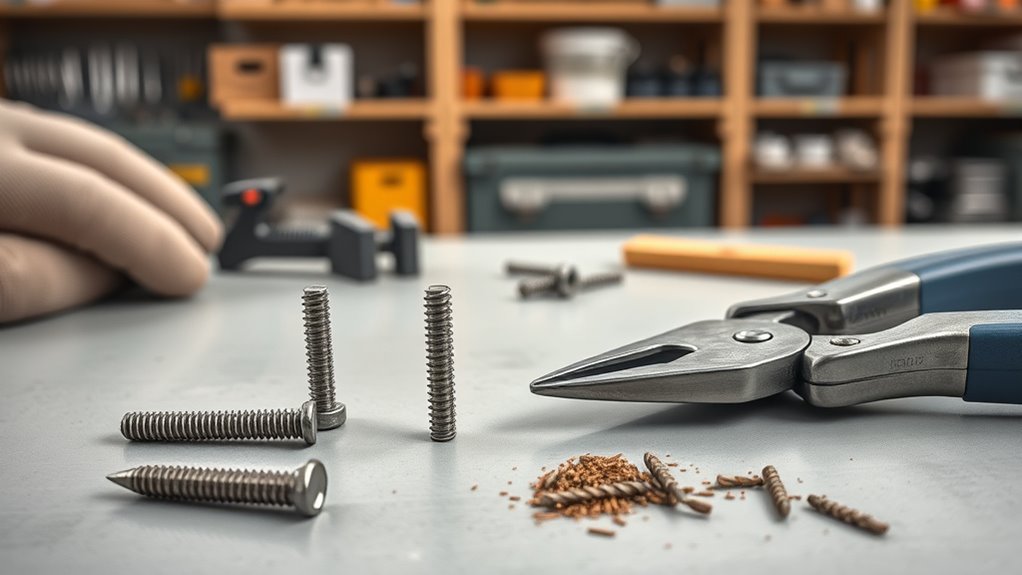
If a screw sticks out, prevents a part from seating, or extends past the material’s edge where it’s a hazard, cut it to size.
You’ll also trim screws for functional clearance, to avoid snags, or when finishing work needs aesthetic improvements.
For decorative modifications like flush caps or hidden heads, shorten screws carefully, clamp securely, and pick the right tool to maintain strength and fit.
When You Shouldn’t Cut a Screw
Don’t cut a screw when doing so would compromise the structural integrity of the assembly, such as load-bearing joints or safety-critical fastenings.
You should also avoid cutting screws if the manufacturer’s warranty or specifications explicitly prohibit modification, since that can void coverage.
Cutting can increase the risk of fastener failure from weakened threads or reduced engagement, so consider alternatives first.
Compromises Structural Integrity
When a screw is part of a load-bearing connection—like joists, structural beams, or critical hardware in a deck or porch—cutting it can weaken the joint and create a safety hazard you mightn’t notice until failure.
Don’t cut screws where material compatibility matters or where aesthetic considerations mask damage; you’ll undermine strength, invite movement, and complicate repairs.
Replace or reroute hardware instead.
Voids Warranty Coverage
Ever checked your product manual and wondered whether cutting a screw would still leave your warranty intact? You shouldn’t assume it’s okay. Altering fasteners often voids coverage, affecting rust prevention promises and aesthetic considerations the manufacturer guarantees. Check terms, contact support, and document any repair. If warranty matters, avoid cutting; choose approved replacements or authorized service to keep protection valid.
| Issue | Action |
|---|---|
| Warranty clause | Read manual |
| Damage proof | Photograph |
| Rust prevention | Use approved parts |
| Aesthetic considerations | Ask manufacturer |
| Service | Use authorized shop |
Risks Fastener Failure
If your warranty limits alterations, you should also think about how cutting a screw can undermine the fastener’s strength and safety.
You shouldn’t cut screws that carry structural loads, fasten safety equipment, or join dissimilar screw material where heat or grinding reduces corrosion resistance.
Altering these fasteners can cause fatigue, stripping, or rusting, creating failure risks and liability you don’t want.
Choosing the Right Tool for Cutting Screws
You’ll first assess the types of cutting tools available—nippers, bolt cutters, hacksaws, and rotary grinders—and what each does best.
Then match the tool to the screw’s material, diameter, and head type so you don’t damage the fastener or surrounding work.
Choosing the right tool saves time and keeps the cut clean and safe.
Assess Cutting Tool Types
When choosing the right tool for cutting a screw, match the tool to the screw’s size, material, and where it’s located. You’ll consider Material compatibility and Cutting precision: hand hacksaw for coarse cuts, bolt cutters for thick screws, Dremel for precision, and grinder for fast removal. Compare speed, control, heat, and portability.
| Tool | Best use |
|---|---|
| Hacksaw | Thin metal |
| Bolt cutter | Thick bolts |
| Dremel | Precision |
| Grinder | Fast cuts |
Match Tool To Screw
How do you pick the right cutter for a specific screw? Consider screw material and thread compatibility to avoid damage. Match tool strength and blade type to metal hardness, choose a cutter size that preserves threads, and select clamps or vises for secure holding.
- Hardened steel screws: use bolt cutters or cutoff wheel.
- Soft metals: use tin snips or Dremel.
- Fine threads: use precision files.
- Thick bolts: use angle grinder.
Workholding and Safety: Clamps, PPE, and Prep
Before you cut, secure the screw and surrounding material so nothing shifts under your tool: clamp the workpiece in a vise or use a locking plier on the screw head.
Before cutting, firmly secure the screw and workpiece—use a vise or locking pliers so nothing shifts under your tool.
Add a sacrificial block to protect surfaces.
Position supports to prevent bending.
Use proper clamp techniques, wear PPE considerations—gloves, eye protection, hearing protection—and clear the area.
Double-check stability before starting.
Cutting a Screw With Hand Tools (Bolt Cutters, Hacksaw)
Now that the screw and workpiece are held securely, you can move on to hand tools: bolt cutters for thicker steel and a hacksaw for more controlled, fine work.
Choose tool by screw material and thickness, minimize burrs, and consider Environmental impact when disposing metal shavings.
Use steady strokes, protect threads, and clamp tightly.
- Position
- Cut
- File
- Dispose
Cutting a Screw With Power Tools (Dremel, Grinder, Bench Grinder)
When speed and precision matter, power tools like a Dremel, angle grinder, or bench grinder let you quickly trim screws to length while maintaining a clean edge.
You’ll choose bits or wheels based on screw material and desired cutting speed. Clamp the screw securely, wear eye and hearing protection, cut in short passes to avoid overheating, and cool periodically to prevent damage.
Finishing a Cut Screw: Restoring Threads & Cleaning the Head
After you’ve cut a screw, you’ll want to restore the threads and clean the head so the fastener functions reliably and seats cleanly. Use a file or chase to re-cut threads, deburr the shank, and polish the head for tool engagement.
- File threads straight for thread restoration.
- Use a tap/die if needed.
- Deburr with a round file.
- Wipe and oil for head cleaning.
Troubleshooting: Common Problems and How to Avoid Damage
If you run into problems after cutting a screw, don’t panic—most issues have straightforward fixes if you act carefully.
Check the screw material to choose proper tools and avoid stripping. File burrs, chase threads with a die, and replace weakened fasteners.
Identify the screw material, use correct tools to avoid stripping, file burrs, chase threads, and replace weakened fasteners.
Watch for heat damage reducing corrosion resistance; cool with cuts and use lubricants.
Clamp securely to prevent slipping.
Frequently Asked Questions
Can You Cut a Screw While It’s Still Threaded Into Metal?
Yes — you can cut a screw while it’s still threaded into metal, but you’ll risk damaging threads; you’ll need thread removal tools or careful screw resizing techniques, and you’ll protect surrounding material while cutting and rethreading afterward.
How Do Stainless Steel Screws React to Cutting Methods?
Like a stubborn tree, stainless steel resists heat and work-hardens, so you’ll need proper cutting techniques and consider material compatibility. You’ll use abrasive wheels, carbide cutters, or freezing methods; expect more tool wear and slow cuts.
Will Cutting a Screw Affect Its Corrosion Resistance?
Yes — cutting a screw can increase corrosion impact and reduce material durability because you’ll remove protective coatings and disturb passive layers; you should recoat or passivate cut ends to restore corrosion resistance and prolong durability.
Can You Reuse a Screw After Cutting and Shortening It?
Yes — you can reuse a screw after cutting, but check thread strength and tool durability; if threads stay intact and you didn’t overheat or nick them, the screw should hold, though use in critical joints is risky.
Are There Legal or Warranty Issues Cutting Manufactured Fasteners?
Yes — you can face fastener legality and warranty concerns: manufacturers or codes might void warranties or prohibit altered fasteners, and using modified screws in regulated applications can breach rules, so check specs and consult suppliers first.
Conclusion
You can cut a screw when a stubborn tip peeks out like a splinter from wood, but don’t rush — picture sparks softly showering as you choose the right tool and clamp the work like a surgeon. Keep PPE on, cut cleanly, then chase the threads and deburr the head so the fastener slips back into duty without binding. With care and the right finish, a shortened screw will hold like it was never altered.