Can Surgical Screws Come Loose Years Later? Long-Term Risks Explained
Yes — surgical screws can loosen years after surgery, though it isn’t inevitable. You may get new pain, instability, or a feeling of hardware prominence months to years later; rates vary by procedure (spine ~2–10%, hip ~1–5%) and depend on bone quality, implant design, infection, and repetitive motion. Treatment ranges from monitoring to revision with augmentation. Stay alert to symptoms and follow-up schedules, and keep going to learn causes, prevention, and treatment options.
Can Surgical Screws Loosen Years After Surgery?
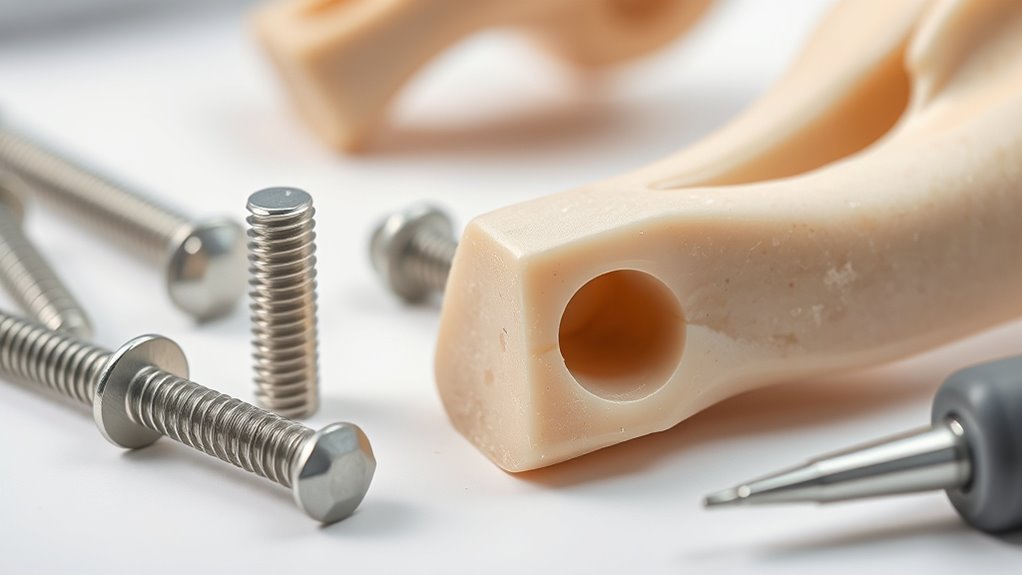
Yes — surgical screws can loosen years after surgery, though it’s not inevitable. You might notice new pain, instability, or hardware prominence long after healing.
Risk factors include bone loss, repetitive stress, and infection.
You’ll work with clinicians to monitor symptoms, consider imaging, and weigh options. Lifestyle changes like diet modifications and adjuncts such as alternative therapies may complement medical management.
How Common Is Late Screw Loosening by Procedure Type?
Knowing that screws can loosen years after surgery, you’ll want to understand how often this happens for different procedures. Rates vary by site, bone healing, and surgical techniques. Common examples:
| Procedure | Typical Rate | Notes |
|---|---|---|
| Spine fusion | 2–10% | Motion stresses |
| Hip fixation | 1–5% | Load-bearing |
| Wrist/ankle | 1–8% | Small bones, variable healing |
Why Bone Quality Matters for Long‑Term Screw Stability
Because bone is the foundation that holds a screw in place, its density and quality directly determine how well hardware resists the repeated forces of everyday activity. You’ll feel safer when bone healing is strong; poor bone raises Implant failure risk.
Take action if you notice pain or looseness.
- Fear of reoperation
- Frustration with limits
- Hope for recovery
- Urgency to test
Do Implant Design and Materials Affect Loosening Risk?
Bone quality sets the stage for long‑term fixation, but the implant itself plays a big role in whether screws stay put. You should consider design geometry, surface coating, and Material durability—these affect Implant longevity and loosening risk. Compare options:
| Feature | Benefit | Concern |
|---|---|---|
| Thread design | Better grip | Stress risers |
| Coating | Osseointegration | Wear debris |
| Alloy choice | Strength | Corrosion risk |
How Activity and Repetitive Motion Increase Loosening Risk
When you repeatedly load a screw with everyday movements or high-impact activities, micro-motions at the implant‑bone interface gradually widen tiny gaps and fatigue the surrounding bone and metal. This raises the chance the fixation will loosen over months to years.
You should watch for warning signs, use activity modification after surgery, and avoid repeat sports injuries that stress hardware.
- Frustration
- Fear
- Urgency
- Hope
How Infection Leads to Delayed Screw Loosening
If bacteria get into the surgical site, they can set off a low‑grade infection that slowly eats away at the bone and the metal‑bone interface. This can make screws lose their grip over months or years.
You may not notice early signs; chronic infection complications weaken surrounding bone as your immune response creates inflammation and bone resorption.
Gradually, this process loosens hardware and risks persistent pain or implant failure.
Medical Conditions That Raise the Risk of Screw Loosening
If you have low bone density or osteoporosis, your bone may not grip screws as firmly, raising the chance they’ll loosen over time.
Chronic inflammatory conditions like rheumatoid arthritis can also weaken bone and interfere with healing, increasing mechanical stress on hardware.
We’ll look at how these conditions affect fixation and what preventive steps might help.
Osteoporosis And Bone Density
Because weakened bone can’t hold hardware firmly, osteoporosis and low bone density are major reasons screws loosen years after surgery. You may feel worried knowing your skeleton can’t anchor implants.
Improve outcomes by addressing risk factors and nutrition, including Vitamin D.
- Fear of reoperation
- Frustration with limited mobility
- Anxiety about fractures
- Hope for prevention through treatment
Chronic Inflammatory Diseases
Alongside low bone density, long-standing inflammatory diseases can weaken the local bone and soft tissues that secure surgical screws, making loosening more likely years after surgery. You should monitor rheumatoid arthritis or lupus activity, since chronic inflammation and an autoimmune response can erode fixation. Consider implant biocompatibility and medical control to reduce risk.
| Condition | Mechanism | Action |
|---|---|---|
| RA | Bone erosion | Treat inflammation |
| Lupus | Soft tissue damage | Monitor closely |
| Psoriatic | Local inflammation | Optimize implant biocompatibility |
Common Symptoms That Suggest a Screw Is Loosening
You should watch for persistent local pain around the surgery site that doesn’t improve with time or treatment.
You might notice new or worsening instability—like a joint giving way or difficulty bearing weight.
Unusual grinding or clicking sounds with movement can also signal a screw has loosened.
Persistent Local Pain
Notice a dull or sharp ache right around the incision or hardware site that won’t fade with time—this persistent local pain can be a key sign a screw is loosening. You’ll feel localized tenderness and sensitivity, and you should track changes.
Consider factors like Dental hygiene and Surgical techniques that affected healing.
- Throbbing that wakes you
- Sharp twinges with touch
- Constant pressure
- Night worsening
New Or Worsening Instability
When movement that used to feel secure suddenly feels loose or wobbly, it’s a strong sign a screw may be loosening around the fixation site.
You may notice joints, plates, or dental implants shifting under pressure or failing to support normal loads.
Don’t ignore increasing instability; it can reflect hardware corrosion or bone loss, and you should seek prompt evaluation to prevent further damage.
Unusual Grinding Sounds
Ever heard a sudden grinding or clicking where things used to move smoothly? You might notice unusual grinding or implant noise near the surgical site, signaling loosening. Don’t ignore persistent sounds.
Check for:
- Startled fear when a click occurs
- Worry about activity limitations
- Relief when a sound stops
- Urge to seek medical review immediately
When Pain or Stiffness Is Not Caused by a Loose Screw
Although a loose screw can be an obvious culprit, not all post-surgical pain or stiffness comes from hardware problems. You might be experiencing scar tissue formation, arthritis progression, tendon or muscle imbalance, nerve irritation, or normal healing-related stiffness instead.
You should work with your provider to rule out non-hardware causes, consider physical therapy, diet modifications, alternative therapies, targeted exercises, and nerve-focused treatments tailored to your symptoms.
What Your Surgeon Will Ask When Evaluating Suspected Loosening
If you suspect a screw has loosened, your surgeon will ask targeted questions to pinpoint timing, triggers, and severity of symptoms so they can decide what tests or treatments are needed next.
They’ll also explore your activity, healing, and coping plans, including Diet modifications and Physical therapy.
They’ll ask:
- When did pain start?
- What worsens it?
- Any numbness or weakness?
- Any fever or wound changes?
Best Imaging to Detect Late Screw Loosening (X‑Ray, CT, MRI, Nuclear)
You’ll usually start with plain radiographs because they’re quick, inexpensive, and can show screw migration, breakage, or peri‑implant radiolucency.
If X‑rays are inconclusive or you need detailed bone and screw relationship, CT gives excellent bony detail and multiplanar views.
Reserve MRI for soft‑tissue or infection assessment and nuclear imaging for suspected occult infection or loosening when functional information is needed.
Plain Radiographs Utility
When you suspect late screw loosening, plain radiographs are the first-line imaging because they’re quick, widely available, and can reliably show gross changes like screw back-out, haloing, or progressive radiolucent lines around hardware.
You’ll also weigh radiograph limitations and consider imaging alternatives if needed.
- Relief seeing clear alignment
- Frustration with subtle signs
- Anxiety awaiting further tests
- Hope for noninvasive answers
Advanced Cross‑Sectional Imaging
Plain radiographs often give you a fast initial answer, but subtle or equivocal signs of late screw loosening commonly need higher-resolution cross-sectional imaging.
You’ll rely on CT for detailed bone-screw interfaces, MRI for soft-tissue reaction and biocompatibility concerns, and nuclear studies for infection.
Use fusion with surgical navigation data for planning revision, balancing artifact, sensitivity, and clinical context.
How Blood Tests and Cultures Help Diagnose Infection‑Related Loosening
Because infections can be subtle years after surgery, blood tests and cultures play a key role in distinguishing infection‑related loosening from mechanical wear or other causes.
You’ll get lab markers, a Blood culture for pathogen ID, and targeted infection detection to guide treatment.
Emotional impact:
- Fear of recurrence
- Relief from a clear diagnosis
- Anxiety about surgery
- Hope for targeted therapy
First‑Line Non‑Surgical Treatments for Suspected Loose Screws
If you’re dealing with suspected loose surgical screws, your care team will usually start with conservative, non‑surgical measures aimed at controlling pain, stabilizing function, and reducing inflammation.
You’ll get rest, targeted physical therapy, bracing, NSAIDs or short steroid courses, and guided activity modification.
Patient education on signs to watch and how prior surgical techniques affect healing helps you make informed, timely decisions.
When Revision Surgery for a Loose Screw Becomes Necessary
If you have persistent pain, new instability, swelling, or signs of infection long after the original surgery, those are key signs that revision might be needed.
Your surgeon will weigh the risks of another operation—like infection, nerve injury, or implant failure—against the expected benefit.
Recovery time and expected outcomes vary by location and your health, so you’ll want a clear plan for rehab and realistic goals before proceeding.
Signs Warranting Revision
When a surgical screw works loose, you’ll usually notice clear changes in how your body feels and functions that signal more than routine discomfort. Watch for signs that prompt revision to protect bone regeneration and implant longevity:
- Sharp, worsening pain that won’t settle
- New instability or deformity in the limb
- Persistent swelling or redness
- Worsening nerve symptoms like numbness or weakness
Surgical Risk Assessment
How do you weigh the benefits of revision surgery against its risks after a screw works loose? You assess infection risk at the surgical site, hardware stability, and nerve or bone damage potential.
Consider your overall health, anesthesia tolerance, and the likelihood that revision improves function or relieves pain.
Discuss postoperative care needs and realistic expectations with your surgeon before deciding.
Recovery And Outcomes
Although revision surgery for a loose screw can feel intimidating, you can expect a structured recovery plan focused on pain control, protecting the repair, and gradually restoring function.
You’ll follow wound care, rehab, and mindful nutrition—dietary influences matter.
Expect emotional shifts; psychological impacts are real. Support helps.
- Fear and relief
- Slow patience
- Small victories
- Renewed confidence
Common Revision Techniques for Loosened Screws and Why Surgeons Choose Them
Because loosened screws can threaten fusion, surgeons typically pick revision strategies that balance stability, bone preservation, and infection control. You’ll hear about hardware exchange, augmentation with cement, and bone grafting; Surgical innovations plus Patient education guide choices.
| Technique | Goal | When used |
|---|---|---|
| Hardware exchange | Restore stability | Isolated loosening |
| Cement augmentation | Improve purchase | Osteoporotic bone |
| Grafting | Promote fusion | Bone loss |
Risks and Recovery After Revision Implant Surgery
If you need a revision surgery, know that reoperation carries risks like infection, bleeding, nerve injury, and implant failure that can affect outcomes.
You should also expect a recovery timeline that may be longer than the original procedure — from weeks of limited activity to several months for full healing.
Talk with your surgeon about specific risks and realistic milestones so you can plan support and rehab.
Risks Of Reoperation
When a surgical screw or implant needs revision years after your original operation, reoperation carries higher risks than the first procedure. It often requires a longer recovery.
You may face infection at the surgical site, implant corrosion concerns, scarring, and nerve irritation.
Consider emotional and practical impacts:
- fear of further surgery
- loss of mobility
- prolonged pain
- financial strain
Recovery Timeline Expectations
Although revision implant surgery can feel overwhelming, you’ll usually follow a clearer recovery timeline than you might expect.
You’ll spend days to weeks managing pain and wound care.
Weeks to months will be dedicated to regaining mobility through prescribed physical therapy.
It may take months before full strength returns.
Your surgeon may recommend dietary supplements to support bone healing.
Expect follow‑ups and gradual activity increases based on progress and imaging.
How Bone Grafts and Augmentation Improve Screw Fixation
Because bone quality often degrades around implanted hardware, surgeons routinely turn to grafts and augmentation to restore support and lock screws in place. You’ll find that added graft material promotes Bone healing and reduces micromotion, improving Implant longevity and stability.
Consider how this feels:
- Relief that fixation’s strengthened
- Hope for fewer revisions
- Anxiety eased by sturdier construct
- Confidence in recovery trajectory
Preventive Strategies to Reduce Long‑Term Screw Loosening Risk
To lower the chance that screws loosen years after surgery, you should combine surgical technique, implant choice, and postoperative management into a deliberate prevention plan. Optimize fixation, pick appropriate implants, and follow rehab. Consider diet modifications to support bone, and discuss alternative therapies like supervised weight‑bearing and supplements with your surgeon.
| Strategy | Action |
|---|---|
| Surgical | Precise placement |
| Implant | Stable design |
| Rehab | Gradual loading |
| Lifestyle | Nutrition, supplements |
Long‑Term Follow‑Up and Imaging Schedule After Implant Surgery
Having a prevention plan is only part of the story—you’ll also need a clear long‑term follow‑up and imaging schedule to catch early signs of implant loosening and bone changes.
Balance routine checks, annual imaging, and symptom‑driven visits, using Technology advancements and Patient education to empower you.
- Regular clinical reviews
- Scheduled X‑rays/CT as advised
- Prompt reporting of pain
- Emotional reassurance and guidance
Questions to Ask Your Surgeon If You Suspect Screw Loosening
If you suspect a screw is loosening, come prepared with specific questions so your surgeon can quickly assess risks, explain options, and plan next steps. Ask about symptoms, imaging needed, revision thresholds, and whether Surgical materials or technique contributed. Request a timeline and Patient education resources, plus risks of removal versus monitoring.
| Question | Why it matters | Expected answer |
|---|---|---|
| Symptoms | Guides urgency | Clear signs |
| Imaging | Confirms loosening | Type/timing |
| Options | Treatment choices | Monitor/repair |
Frequently Asked Questions
Can Screw Loosening Affect Adjacent Joints or Cause Arthritis Later?
Yes — you can develop adjacent-joint pain or arthritis later if screw loosening alters joint mechanics. Poor bone healing or suboptimal implant design increases stress on nearby cartilage, so you’ll need monitoring and possible revision to prevent progression.
Can Medications (E.G., Steroids, Osteoporosis Drugs) Influence Loosening Risk?
Like a weakened foundation, yes—medications can raise loosening risk. You’ll find steroids hinder bone healing, osteoporosis drugs alter remodeling, and implant materials interact with altered bone; discuss timing, dosage, and monitoring with your surgeon.
Are There Nonmetallic Screws and Do They Loosen Differently Over Time?
Yes — you can get nonmetallic screws like PEEK or bioabsorbable polymers; they have biocompatibility concerns and different failure modes, and nonmetallic material durability varies so they can loosen or degrade differently over time.
How Does Smoking or Alcohol Use Change Long‑Term Screw Stability?
Like a storm battering a lighthouse, smoking and heavy drinking weaken your Bone healing and corrode Implant materials; they’ll slow fusion, raise infection risk, and increase long‑term screw loosening, so you should quit or cut back promptly.
Can Imaging Artifacts From Implants Hide Early Signs of Loosening?
Yes — implant imaging can suffer artifact interference that hides early loosening signs, so you should get complementary modalities, like CT with metal‑artifact reduction or ultrasound, and compare serial images and clinical exam findings closely.
Conclusion
Yes — surgical screws can sometimes loosen years after surgery, but it’s not inevitable. How likely it is depends on procedure type, your bone quality, implant materials, and activity level. Poor bone or repetitive motion raises risk, while modern designs, bone grafts, and surgical technique reduce it. Stay on scheduled follow‑up and get imaging if you notice pain or change. Ask your surgeon clear questions about symptoms, revision options, and prevention.
