Can I Screw Into Drywall Without Anchor
You can screw into drywall without an anchor for very light items if you hit a stud or use the right drywall screw, but drywall alone only holds a few pounds per screw and strips easily. Use coarse-thread drywall screws for gypsum and fine-thread wood screws when you hit wood; countersink slightly and test paint. For heavier items use anchors or studs; removable hooks or adhesive strips work for temporary mounts. Keep going to learn which screws and anchors suit each situation.
Can You Screw Into Drywall Without an Anchor? (Short Answer)
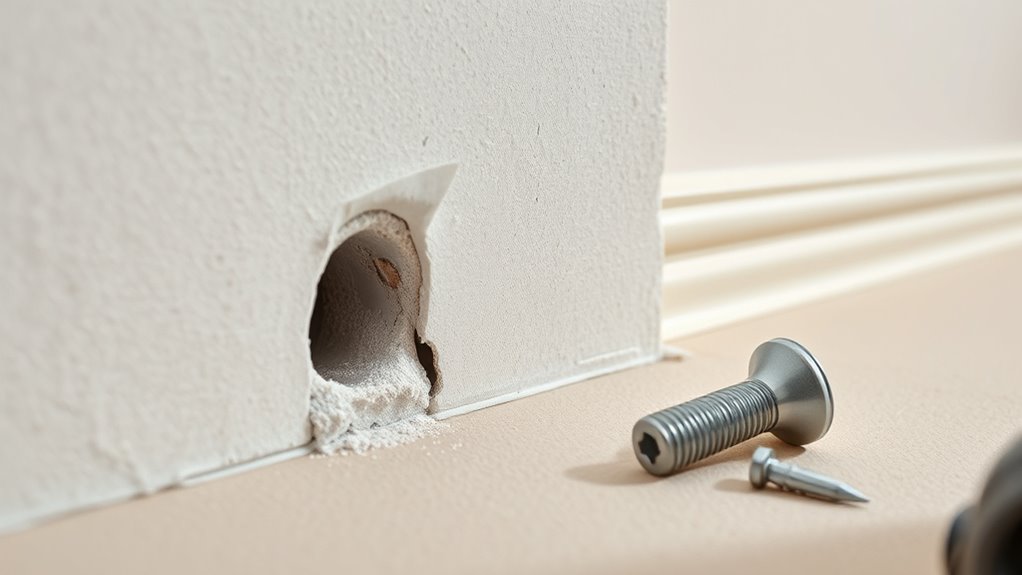
You can screw into drywall without an anchor for very light loads—think small picture frames, lightweight decorations, or a single towel hook—but the screw will rely only on the gypsum paper and will pull out if stressed.
You’ll limit this to decorative finishes or temporary acoustic panels; heavier items need anchors or studs.
Test load, avoid repeated stress, and replace damaged drywall.
When It’s Safe to Skip an Anchor on Drywall
If you can fasten into a stud or beam, you can usually skip an anchor and get a secure hold. That’s especially true for light fixtures and other items that need steady support.
Before you skip an anchor, make sure you’ve located the framing and used a proper screw length.
Light Fixture Attachment
When a light fixture’s mounting bracket lines up with a ceiling joist or a solid electrical box, you can skip drywall anchors and fasten directly into the structural backing.
Otherwise, anchors — or better, a rated fixture support — are required to prevent sagging or failure.
Before mounting, handle electrical wiring safely, shut power, test connections, and complete paint preparation so fixtures sit flush and finish looks clean.
Stud Or Beam
Although drywall alone can’t hold heavy loads, you can skip anchors whenever a screw goes into a stud or beam because the wood backing provides the necessary shear and pull-out strength.
You should locate stud framing with a finder or by tapping, drive into the center of the stud, and use appropriate screw length.
Drywall density affects holding power only when you miss the stud; otherwise, the wood carries the load.
How Drywall Construction Affects Screw Strength
How thick your drywall is changes how much bite a screw gets, so you’ll want to know whether you’re working with 1/2-inch, 5/8-inch, or another thickness.
Also consider whether the screw hits a stud or only gypsum: studs give far more holding power than the board itself.
Knowing these differences helps you decide if you can skip an anchor or need extra support.
Drywall Thickness Variations
Because drywall comes in several thicknesses—typically 1/4″, 3/8″, 1/2″, and 5/8″—the board you choose changes how well a screw will hold and whether you even need an anchor. Consider drywall composition and installation techniques: denser boards grip screws better; thinner panels strip easier. Use the right screw length and consider anchors for light fixtures.
| Thickness | Grip | Typical Use |
|---|---|---|
| 1/4″ | Low | Curves/overlays |
| 1/2″ | Medium | Standard walls |
| 5/8″ | High | Ceilings/insulation |
Stud vs. Gypsum Strength
When you drive a screw into drywall, the holding power depends less on the gypsum board and more on whether the screw hits a stud—the dense wood or metal behind the panel—because studs provide far greater shear and pull-out resistance than gypsum alone.
You’ll notice wall texture and paint adhesion don’t increase strength. Consider:
- Stud — best strength
- Gypsum — low pull-out
- Anchors — improve grip
- Surface finish — cosmetic only
Why Hitting a Stud Changes Everything
If your screw bites into a stud instead of just drywall, the whole equation changes — you get far more holding power and can skip anchors for many loads.
When you hit wood, ceiling installation and wall paneling hang securely with fewer fasteners. You’ll rely on the stud’s shear and withdrawal strength, reduce wobble, and avoid anchor failure for typical shelves, mirrors, and fixtures.
Best Screw Types to Use Without an Anchor
Although drywall alone won’t grab most fasteners, you can still use specific screw types without anchors for light items or when you hit a stud.
Use these options considering wall texture and paint compatibility:
- Coarse-thread drywall screws for better bite in gypsum.
- Fine-thread wood screws when you hit a stud.
- Self-drilling drywall screws for thin metals or fixtures.
- Trim-head screws for minimal surface damage and paint compatibility.
How Much Weight a Screw Holds in Drywall
Screw holding capacity in drywall varies a lot, so you’ll want to match the fastener and location to the load.
Generally, a screw in drywall alone holds only a few pounds; thin panels and lower drywall durability reduce that further.
For better results, you’ll assess screw compatibility, choose thicker screws or anchors, and prefer studs when supporting heavier items to avoid failure.
Quick Tests to See If Drywall Will Hold a Screw
When you need a quick check, try a few simple tests that tell you whether drywall will hold a screw. Use these fast checks before hanging items, especially around decorative finishes or acoustic treatment.
When you need a quick check, try simple tests to know if drywall will hold a screw.
- Press test: push to feel hollow vs. solid.
- Tap test: listen for hollow sound.
- Pilot hole: try a small screw.
- Pull test: tug gently after partial seating.
How to Find Studs Fast and Accurately
When you need a secure screw, start with a stud finder — it’s the fastest way to pinpoint framing.
If you don’t have one, measure 16 inches from an outlet or switch to estimate stud locations.
You can also tap the wall and listen for a solid sound to confirm you’ve found a stud.
Use A Stud Finder
If you want to hang something heavy without guessing, grab a stud finder and let it do the work. It locates framing behind wall texture and avoids cosmetic issues like paint matching.
Use it like this:
- Calibrate per instructions.
- Scan slowly vertically.
- Mark stud edges.
- Confirm with a small pilot hole.
Now mount into the stud for secure support.
Measure From Outlets
Because outlets and switches are typically mounted to studs, you can measure from them to find studs fast and accurately.
Measure 16 or 24 inches left or right from the outlet edge to locate typical stud centers. Mark lightly, then verify with a small pilot hole.
This helps guarantee secure drywall installation and preserves wall aesthetics while minimizing unnecessary damage.
Tap And Listen
Want a quick, no-tools method to find studs? Tap and listen across the wall, using sound testing to note hollow vs. solid spots. Denser sound indicates higher material density — likely a stud.
Mark firmer taps and confirm by tapping above and below. Repeat every few inches until located.
- Tap lightly
- Compare tones
- Mark firm spots
- Verify vertically
Screwing Into Seams, Backing, or Trim: Risks and Tips
When you’re tempted to drive a screw into a drywall seam, backing, or trim instead of using an anchor, know that each option carries distinct risks you should weigh upfront.
Seams can split and ruin paint preparation.
Backing may hold but often hides voids.
Trim offers solid bite but can crack with wrong wall texture or fastener.
Pre-drill, choose correct screw, and test load.
Small Pictures and Decor: When Drywall Alone Is Fine
For small, lightweight frames and decor, you can usually screw directly into drywall without an anchor.
Just make sure you’re using the right screw type—sharp-thread drywall screws or short wood screws work best.
If the item feels secure and doesn’t wobble, you’re good to hang it that way.
Lightweight Frames Only
Although drywall won’t hold heavy items, you can usually hang small frames and lightweight decor directly with a standard screw or picture hook without anchors.
You’ll want to take into account surface finish and nearby features like drywall painting or Acoustic panels.
Tips:
- Choose light pieces under manufacturer weight.
- Use short screw/picture hook.
- Test stability gently.
- Avoid load-bearing expectations.
Use Proper Screw Type
If your picture is light enough to hang without an anchor, pick a screw designed for drywall to get a secure bite and avoid surface damage.
Choose coarse-thread drywall screws or self-drilling variants for holding power in paper and gypsum across varying drywall textures.
Test paint compatibility to prevent chipping or staining, and countersink slightly so the frame hangs flush without cracking the finish.
Why Shelves, Mirrors, and TVs Usually Need Anchors or Studs
Because drywall’s gypsum core and paper facing can’t hold heavy loads reliably, you shouldn’t rely on screws alone when hanging shelves, mirrors, or TVs. You need anchors or studs because drywall primarily provides decorative finishes and insulation properties, not structural support.
Drywall’s gypsum core and paper can’t bear heavy loads—use anchors or studs, not screws alone.
Consider risks and load paths:
- Shear failure
- Pullout under weight
- Vibration loosening
- Tile or finish damage
Renter‑Friendly Temporary Mounts That Avoid Anchors
When you need to hang things without leaving marks or drilling, several renter‑friendly mounts give secure, temporary support without anchors. You can use heavy‑duty removable hooks, 3M Command strips, and adhesive mounting squares for frames, small shelves, or hooks.
They minimize drywall cleaning and allow easy paint touch ups later. Test weight limits, follow instructions, and remove slowly to avoid damage.
How to Choose the Right Anchor When You Need It
Although anchors add permanence, you’ll want the right type for the load, wall material, and fixture.
Choose a plastic expansion anchor for light loads and hollow‑wall toggles or molly bolts for heavier items.
For light loads use plastic expansion anchors; trust hollow‑wall toggles or molly bolts for heavier fixtures.
Pick metal or self‑drilling anchors when vibration or repeated use is likely.
- Match anchor strength to weight.
- Consider drywall thickness.
- Preserve decorative finishes.
- Use toggles for acoustic panels.
Step‑by‑Step: Install a Screw in Drywall Safely
Before you drill or drive anything, plan the hole location and gather the right tools so you won’t have to backtrack.
Mark the spot, check for studs or wires with a reliable detector, and pick a screw and bit suited to the load and drywall thickness.
Drill a pilot hole if needed.
Drive the screw straight, avoid over-tightening, and consider wall texture and paint compatibility to preserve finish.
How to Remove a Screw From Drywall With Minimal Damage
Before you start, check the screw head and surrounding drywall to see if the screw is stripped or the paper is torn.
Work slowly with the right screwdriver or a pair of pliers to back the screw out without widening the hole.
Once the screw is out, patch the hole neatly with spackle or a small drywall plug and sand it smooth.
Assess Screw Condition
When you’re getting ready to remove a screw from drywall, first check how it sits: is the head stripped, flush, protruding, or bent? Evaluating screw condition helps with drywall maintenance and prevents extra damage.
Consider these points:
- Head type and grip.
- Alignment with wall surface.
- Corrosion or rust presence.
- Any surrounding drywall cracks.
Remove Screw Carefully
Now that you’ve assessed the screw’s condition, you can remove it with minimal harm by working slowly and using the right tools.
Hold a screwdriver aligned with the head, apply steady pressure, and turn counterclockwise. If it resists, back it out a bit then try again.
Preserve drywall aesthetics by avoiding wobble, and maintain screw durability if you plan to reuse it.
Repair Hole Neatly
Although the screw is out, you’ll want to tidy the hole so it’s ready for a patch or a new fastener. Clean edges, remove loose paper, and avoid widening the opening.
Match repair to decorative finishes and wall texture for a seamless look.
- Trim ragged paper
- Sand lightly
- Fill small voids
- Prime before paint
Repairing Screw Holes and Reinforcing for Reuse
If you plan to reuse a screw location, start by clearing loose material from the hole and evaluating its size and condition so you can choose the right repair method.
Fill oversized holes with compound or a wood plug, sand smooth, and prime for drywall aesthetics.
For stronger holds, insert a threaded metal anchor or glue a hardwood dowel; consider soundproofing techniques if wall vibration matters.
Common Mistakes People Make When Skipping Anchors
When you skip drywall anchors to save time or because the screw seems tight, you’re risking common mistakes that lead to loose fasteners, stripped holes, or damaged drywall.
- Overloading screws for creative decorating causes pull-out.
- Using wrong screw length rips paper face.
- Ignoring paint compatibility when patching shows stains.
- Reusing stripped holes widens damage and weakens mounts.
Anchors vs. No Anchors: Cost, Time, Permanence
Those common mistakes make it worth weighing anchors against going bare: anchors cost a bit more up front and take a few extra minutes, but they save you time fixing failures later and give a far more permanent hold for heavier items.
You’ll pay slightly more and spend minutes installing anchors, but they protect decorative finishes, support acoustic panels, and prevent repeated repairs, so choose by load and longevity.
Troubleshooting: What to Do If the Screw Pulls Out
Because a screw can pull out suddenly, you’ll want to act quickly and assess the damage before reusing the hole. Check hole size and surrounding drywall texture; remove loose fragments.
Consider these steps:
- Clean and inspect the hole.
- Fill with joint compound or wood filler.
- Sand to match drywall texture.
- Prime and paint, doing paint matching for a seamless finish.
Quick Checklist: Decide Anchor or No Anchor
After you’ve repaired a stripped hole, decide quickly whether to use an anchor or just a screw based on the load, wall material, and screw size.
Check weight: light items under 10 lbs often need no anchor.
Assess drywall durability and locate studs.
For moderate loads, use anchor alternatives like toggle bolts or molly screws.
Always match anchor type to load and screw diameter.
Frequently Asked Questions
Can Drywall Anchors Damage Electrical or Plumbing Behind the Wall?
Yes — you could hit wiring or pipes and create electrical hazards or plumbing interference if anchors go into hidden systems. You’ll avoid risks by scanning, probing gently, and drilling with caution, or hiring a pro for assurance.
Are There Specific Screw Lengths for 5/8″ Versus 1/2″ Drywall?
Yes — you should pick screw lengths for drywall thickness variations: use 1–1¼” screws for 1/2″ and 1¼–1½” for 5/8″. You can also choose alternative screw types like coarse-thread or self-drilling options.
Can Moisture or Humidity Affect Screw Holding Power Over Time?
Yes — moisture effects and humidity impact can weaken drywall and corrode screws, so you’ll see reduced holding power over time; use corrosion-resistant fasteners and proper sealing to maintain long-term strength and prevent deterioration.
Do Building Codes or Insurers Require Anchors for Certain Fixtures?
By golly, yes—you’ll find building code requirements and insurance coverage policies often mandate anchors for heavy or safety-critical fixtures; you should follow local codes and your insurer’s rules to avoid violations or denied claims.
How Do Plaster Walls Differ From Drywall for Screwing Without Anchors?
Plaster walls hold screws better than drywall because their dense, brittle base and often solid lath backing give more grip; you’ll still consider framing considerations for heavy loads and account for surface texture which affects screw seating and finishing.
Conclusion
You can screw into drywall without an anchor when you’ve hit a stud or hang something feather-light, but don’t kid yourself—drywall alone is a paper-thin promise. Treat anchors like seatbelts: optional for short strolls, essential for highway speeds. When in doubt, pick the right screw or anchor, and test the load gently. If the fastener pulls, patch, reinforce, and try again—don’t keep forcing a weak branch to hold a heavy load.
