Are Construction Screws Structural
You can use construction screws structurally, but only when they’re listed, tested, and specified for the exact loads and installation conditions involved. Don’t assume generic wood screws will do; structural screws have documented shear, tension, and withdrawal values and corrosion protection. Follow manufacturer specs for size, spacing, edge distance, and embedment, and avoid replacing bolts in high‑demand joints. Keep components and inspections within code limits, and continue below to learn how to pick and install them safely.
Quick Answer: Are Construction Screws Structural?
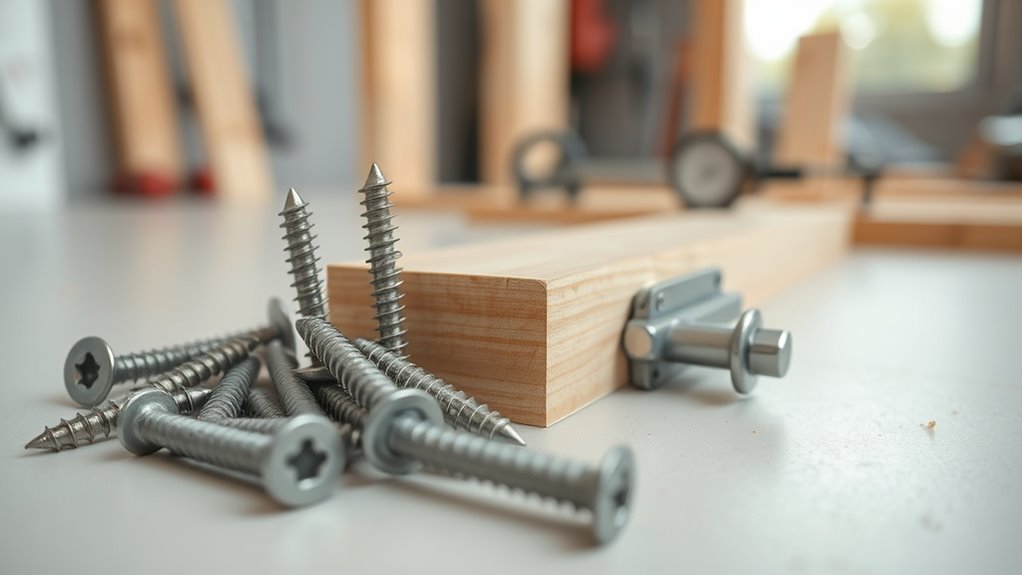
Although the term “construction screw” covers many fasteners, most aren’t rated as structural by themselves—you shouldn’t assume a screw is structural just because it’s used in framing. You should check ratings and codes: only specific screws meet structural standards.
Consider the historical significance of fastener evolution and the environmental impact of materials when choosing. Certified structural screws protect safety and often reduce waste.
What Makes a Fastener “Structural
What actually makes a fastener “structural”? You judge it by rated strength, tested load capacities, compliance with codes, and predictable performance under shear, tension, and cyclic loads.
You also consider environmental impact—corrosion resistance and longevity—and aesthetic considerations only as secondary factors.
If a fastener meets engineered specifications and approvals, you can rely on it for load-bearing applications rather than decorative use.
Construction Screws vs. Structural Bolts
Construction screws are threaded fasteners designed for quicker installation, often with self-tapping features and rated shear and withdrawal strengths for wood-to-wood or wood-to-masonry connections.
You’ll choose bolts when code requires higher tensile capacity, predictable clamping, and removable connections.
Consider corrosion resistance for exterior use and weigh cost considerations: screws save labor, bolts cost more but give greater structural certainty and standardized load tables.
Construction Screws vs. Framing Nails
When you compare construction screws to framing nails, you’ll notice screws usually have lower shear strength but much higher withdrawal resistance.
That means nails can handle lateral loads better while screws resist pull-out far more effectively.
Consider the load direction in your design to choose the right fastener.
Shear Strength Comparison
Curious how screws stack up against nails in side-loading situations? You’ll find screws often offer higher shear strength per fastener due to larger shank diameter and thread engagement.
While nails rely on shear planes and group capacity. Consider environmental impact and historical development: nails evolved for speed; screws evolved for clamping and precision.
Choose based on load, spacing, and connection design.
Withdrawal Resistance Differences
How well will a fastener resist being pulled straight out of wood or another substrate? You’ll find construction screws typically outperform framing nails in withdrawal resistance because threads bite the wood, distributing load over length.
Surface finishes and corrosion resistance affect long-term holding strength—galvanized or coated screws keep grip better in damp conditions.
Choose screws when pullout is critical; nails may still suit shear-only connections.
Standards and Tests for Screw Strength
You should first look at the common testing standards (ASTM, ISO, and manufacturer protocols) that define how screw strength is measured.
Pay attention to both load-bearing tests and withdrawal tests, since they tell you how screws perform under shear, tension, and pullout.
Comparing test methods and results helps you choose the right screw for specific structural demands.
Testing Standards Overview
Why do testing standards matter for construction screws? You need consistent benchmarks—historical context shows evolving protocols after failures.
Standards now factor materials, coatings, and environmental impact. You’ll depend on ASTM, ISO, and manufacturer tests that specify procedure, sample size, and reporting.
These standards let you compare designs, ensure compliance, and predict performance without guessing.
Load And Withdrawal
Standards for testing materials and coatings naturally lead to the specific measures of screw performance under load and withdrawal forces. You’ll review pullout, shear, and embedment tests, noting historical trends in test rigor and how manufacturing processes affect results.
You’ll apply standards like ASTM and ISO, compare lab-to-field performance, and choose screws rated for calculated loads and expected withdrawal resistance.
Rated vs. Unrated Screws: Reading Labels and Reports
When choosing fasteners for structural work, it’s important to know whether a screw is rated or unrated because that label tells you what loads and conditions it’s been tested for.
When choosing fasteners for structural work, know if a screw is rated or unrated — it defines tested loads and conditions.
You’ll read labels and reports for Material compatibility and Environmental durability. Check:
- Rating standard and load values.
- Corrosion class and coatings.
- Installation limits and test reports.
Use rated screws for predictable performance.
How Head, Shank, and Thread Affect Strength
You’ll see that head design changes how load is distributed and whether the screw sits flush or pulls through.
The shank diameter controls shear and withdrawal strength, so choosing the right thickness matters.
Thread pitch affects grip and fatigue resistance, with coarse and fine threads offering different trade-offs.
Head Design Impact
A screw’s head design plays a big role in how load gets transferred from fastener to material, so you should consider head shape, bearing surface, and drive type together with shank and thread geometry to predict joint strength.
You’ll also weigh surface finishing and corrosion resistance. Consider these factors:
- Head bearing area affects clamp and shear.
- Drive type resists cam‑out.
- Head profile alters countersink stability.
Shank Diameter Role
How does the shank diameter change the way your screw carries load and fails? You’ll see larger shanks resist shear and bending, while smaller shanks concentrate stress near threads. Surface treatment and Manufacturing standards also alter fatigue life and corrosion resistance, so choose diameter per design load and spec.
| Diameter | Failure Mode | Notes |
|---|---|---|
| Small | Shear | High stress |
| Medium | Bend | Balanced |
| Large | Fatigue | Stiffer |
Thread Pitch Effects
When you change thread pitch, you alter how load transfers between the head, shank, and threads. Finer pitches distribute tensile loads more evenly along engaged threads and improve fatigue life.
While coarse pitches let you drive faster and resist pull-through in soft materials, they also concentrate stress at the first engaged thread.
- Finer pitch: better thread compatibility, fatigue resistance.
- Coarse pitch: faster drive, less stripping.
- Balance corrosion risk: screw corrosion worsens if pitch traps moisture.
Materials and Coatings That Change Durability
Because the metals, alloys, and protective coatings you choose determine a structural screw’s lifespan, knowing their properties lets you match fasteners to job conditions.
Consider material fatigue resistance for cyclic loads and select alloys accordingly.
Specify coatings to prevent coating corrosion in corrosive environments—galvanizing, stainless, or specialty platings.
Regular inspection, correct substrate selection, and compatible coatings reduce premature failure risk.
When Screws Are Allowed for Structural Connections
You’ll need to confirm the specific code-approved screw types for your project, since not all screws meet structural requirements.
Pay attention to engineered connection details and manufacturer specifications that show allowable loads and installation methods.
When both the screw type and connection design are approved, you can use screws confidently for structural connections.
Code-Approved Screw Types
If a screw is meant for a structural connection, the building code requires it to be a listed, tested fastener with specified load values rather than a generic wood screw you grab from the box.
You’ll choose based on load tables, corrosion resistance, and installation method, balancing historical innovations and aesthetic considerations.
- Listed structural screws
- Engineered lag-type screws
- Manufacturer-tested connector screws
Engineered Connection Details
When screws are permitted for structural connections, you must follow engineered details that specify screw type, size, spacing, edge distances, and allowable loads so the connection performs as designed.
You’ll use stamped drawings and calculations showing withdrawal, shear, and overturning capacities.
Historical trends influenced today’s standards, and you should consider environmental impact on durability and corrosion when selecting coatings, materials, and maintenance intervals.
Common Structural Uses for Construction Screws
How do construction screws fit into the backbone of most structural projects? You rely on them for efficient, load-bearing joins and for visible details where decorative finishes and aesthetic applications matter.
Construction screws form the backbone of structural projects, delivering strong load-bearing joins and clean, visible finishes for aesthetic detailing
Common uses include:
- Framing connections for light structures.
- Fastening exterior cladding and trim.
- Securing subfloors and decking where shear strength is required.
When Screws Should Not Replace Bolts or Connectors
Because screws offer speed and convenience, it’s tempting to use them everywhere, but you shouldn’t substitute them for bolts or engineered connectors in high-load, safety-critical, or code-governed connections.
You should use bolts or certified connectors for structural joints, heavy ledger attachments, and shear-critical members.
Reserve screws for temporary fixes, small DIY projects, or decorative fasteners—never for connections where failure risks injury or code violations.
Installation Factors That Change Screw Capacity
If you change installation details—like hole size, edge distance, or embedment depth—you’ll change a screw’s load capacity, sometimes dramatically. You must consider Material properties and Installation techniques to avoid failures.
- Hole fit: oversize holes cut capacity.
- Edge distance: too close causes splitting.
- Embedment: shallow depth reduces withdrawal strength.
Follow recommended Installation techniques and account for Material properties.
What Engineers and Inspectors Check When Calculating Loads
When you calculate loads, engineers and inspectors check a tightly defined set of factors that directly affect a screw’s capacity and the safety of the connection. You’ll review applied loads, load directions, material properties, embedment depth, spacing, edge distances, and corrosion exposure.
You also consider historical trends and manufacturing processes to assess variability, tolerances, and documented performance under expected service conditions.
Choosing the Right Screw for Your Structural Project
Selecting the right structural screw starts with matching the fastener’s mechanical properties and coating to your loads, materials, and environment so you get reliable performance without overbuilding. Consider Historical trends and Environmental impacts when choosing metals and finishes.
- Strength: shear/tension ratings for your load.
- Corrosion resistance: coatings and environment.
- Compatibility: material pairing and long-term durability.
Practical Checklist for Safe, Code-Compliant Screw Use
You’ve matched strength, corrosion resistance, and compatibility to your project; now apply a practical checklist that keeps installations safe and code-compliant.
Verify load ratings, spacing, embedment depth, and compatible materials.
Use approved fastener types and follow manufacturer torque/specs.
Inspect for corrosion, replace during furniture maintenance or garden decor updates, and document fastener locations for future inspections and code verification.
Frequently Asked Questions
Can Construction Screws Be Used in Concrete or Masonry?
Yes — you can use construction screws in concrete or masonry if you select appropriate types of masonry anchors and follow installation guidelines; otherwise you’ll consider alternative fastening methods like sleeve anchors, wedge anchors, or epoxy-set threaded rods for stronger holds.
Do Wood Screws Need Pre-Drilling to Meet Structural Requirements?
Yes — you often need pre-drilling to meet structural requirements. For wood fastening, pre drilling necessity depends on species, screw size, and load; you’ll reduce splitting, guarantee proper embedment, and maintain designed joint strength.
How Do Temperature Extremes Affect Screw Performance?
You’ll see performance drop: thermal expansion cycles loosen joints and create stress concentrations, and material fatigue from repeated temperature swings causes cracking, reduced load capacity, and eventual failure unless you choose compatible metals and control movement.
Are Stainless Steel Screws Safe in Coastal Environments?
Yes — you’ll find stainless steel screws offer superior corrosion resistance in coastal environments, but you’ll need to check material compatibility with surrounding metals, choose the right grade (316 often), and maintain regular inspections to prevent galvanic issues.
Can Screws Be Reused After Removal From a Connection?
Yes — you can sometimes reuse screws after removal, but you’ll assess screw durability and reuse safety first; if threads, heads, or coatings are damaged or corrosion’s present, don’t reuse them, and replace with equivalent fasteners.
Conclusion
So, are construction screws structural? Think of them as trusty bridges: some are built for heavy traffic, others only for footpaths. You’ll want to pick screws rated, tested, and installed like a pro—otherwise your connection’s a house of cards. Engineers check specs, embedment, and load paths; inspectors look for code-compliant fasteners and proper installation. With the right screw, placed precisely, your structure will stand firm like a well-rooted oak against wind and time.
