You can drive a screw straight into some walls, but it depends on the material and load. If you hit a stud or solid wood, screws hold well with a pilot hole. Drywall and plaster usually need anchors to prevent pull‑out or cracking. Masonry and concrete require masonry screws or anchors and a hammer drill. Use the right screw length, pre‑drill brittle surfaces, and match anchors to load — keep going for tips on best practices and fixes.
Quick Answer: When You Can (And Can’t) Drive a Screw Into a Wall
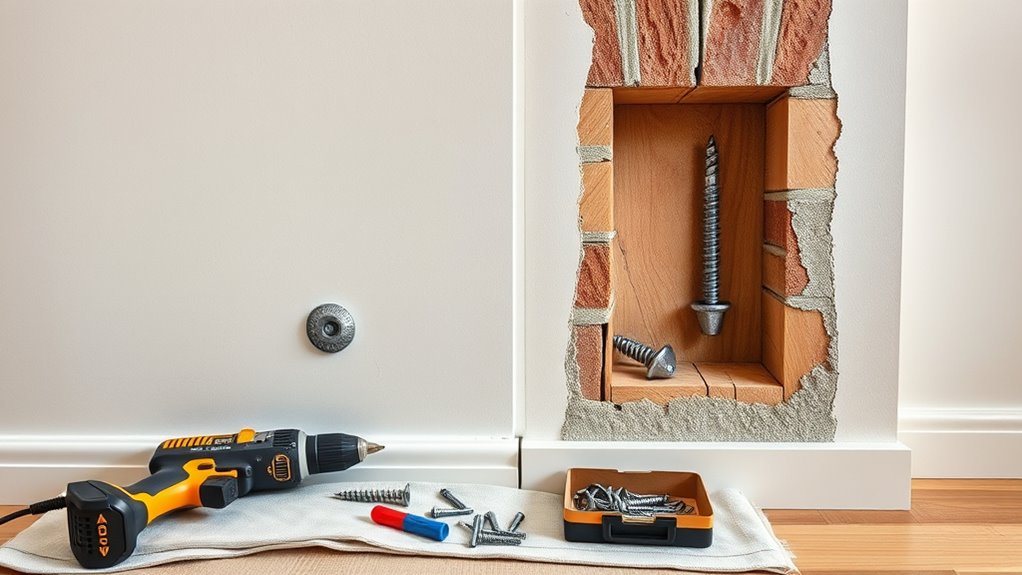
If you need a fast rule: you can drive a screw straight into drywall only for very light loads and with the right anchor, but you shouldn’t expect it to hold heavy items or grab into studs unless you hit one.
You’ll protect decorative finishes and preserve wall paint durability by using proper anchors, predrilling when needed, and limiting load to hang lightweight frames or mirrors.
How Wall Material Affects Screw Holding Strength
What the wall’s made of changes how well a screw will hold, so you’ll choose different fasteners for solid wood, engineered wood, drywall, plaster, and masonry.
In solid wood you can usually drive screws directly for strong grip, but engineered wood needs pre-drilling or special screws to avoid splitting.
For drywall and plaster you’ll rely on anchors, while masonry and concrete require masonry anchors or screws with plugs for reliable holding.
Solid Wood vs Engineered
Because solid wood and engineered wood behave very differently under load, you’ll need to choose screws and anchoring techniques that match the material.
Solid wood grips screws well but can split without pilot holes. Consider decorative finishes and paint preparation to avoid surface damage.
Engineered boards (plywood, MDF) need thread-forming or longer screws and often require anchors or glue for sustained loads.
Drywall And Plaster
Moving from wood to drywall and plaster means you’ll be dealing with materials that grip screws very differently and often much less securely.
You should use anchors or find studs because thin gypsum and brittle plaster offer poor withdrawal strength.
Consider wall texture and paint preparation—smooth, well-prepped surfaces help anchors seat properly.
Test load, avoid over-tightening, and choose anchors matched to weight and wall type.
Masonry And Concrete
When you fasten into masonry or concrete, expect a much firmer bite than wood or drywall. You’ll need appropriate anchors, masonry screws, and a hammer drill with carbide bits.
Drill the correct hole, insert anchors flush, then tighten screws slowly.
For decorative fixtures, plan anchor placement and consider color matching caps or covers so installations look neat and cohesive on hard surfaces.
Drywall: Why Screws Often Fail Without Anchors
Drywall looks solid, but it’s basically two thin layers of gypsum board with a soft, powdery core that doesn’t hold screw threads well.
Drywall appears sturdy, but it’s just thin gypsum layers with a soft core that won’t hold screws well
So if you drive a screw straight in without an anchor, the screw will pull out under load or over time.
- Wall textures can hide minor pull-out but won’t strengthen the core.
- Paint compatibility won’t affect holding power.
- Use anchors to distribute load and prevent failure.
Plaster Walls: Risks of Driving Screws Directly
Plaster walls might look sturdier than drywall, but they bring their own risks if you drive a screw directly into them. You can crack plaster, dislodge lath, or hit old nails; consider wallpaper removal beforehand and insulation considerations behind the surface. Use anchors or toggle bolts for heavy loads, and probe gently before screwing.
| Risk | Mitigation |
|---|---|
| Cracking | Pre-drill |
| Lath damage | Small pilot |
| Hidden nails | Scan |
| Insulation issues | Inspect |
Screwing Into Studs: When You Don’t Need Anchors
Before you drive a screw, find a stud with a detector or by tapping and measuring so you hit solid wood, not just drywall.
Use the right screws—coarse-thread wood screws or structural-grade fasteners—to bite into the stud securely.
Even in a stud, match screw size and type to the load and follow weight limits so your mount stays safe.
Finding Studs First
If you can hit a stud, you can skip anchors altogether—studs give screws the solid wood grip needed for heavy loads and long-term stability. Use a stud finder, tap for a hollow sound, or measure 16″–24″ from corners.
Consider decorating tips and wall paint compatibility when planning hole placement to avoid touch-ups.
- Stud finder
- Sound test
- Measure spacing
Screw Types For Studs
Which screw should you reach for when you hit a stud? Use wood screws or structural screws with coarse threads to bite into timber.
Choose corrosion-resistant screw materials like stainless steel or coated steel for longevity.
For wall decoration, pick head styles (flat, pan, or trim) that sit flush or hide under caps.
Pre-drill pilot holes to prevent splitting.
Load And Weight Limits
How much weight can a screw in a stud actually hold? You’ll usually get 80–100+ lbs for a single wood screw in a good stud.
Consider load distribution, screw length, and wall aesthetics when planning. Color coordination for visible heads can matter.
- Single screw: ~80–100+ lbs
- Multiple screws spread load
- Heavy loads need bolts or plates
Screwing Into Masonry and Concrete: Drill or Drive?
When you’re fastening into masonry or concrete, you can’t treat it like drywall — the material’s density and brittleness mean you need the right approach and tools.
You should drill pilot holes with a hammer drill and masonry bit, then use anchors or concrete screws.
Account for decorative finishes and wall textures to avoid chipping; drive slowly, avoid overtightening, and match anchor type to load.
How to Find a Stud Before You Drill
Before you drill, you’ll want to locate a stud so your screw has solid backing. Use a stud scanner to quickly find the framed studs behind drywall.
If you don’t have a stud scanner, measure from corners or electrical outlets in 16- or 24-inch increments to predict stud locations.
Tap the wall or drive a small nail to confirm the stud before putting in your final screw.
Locate Studs With Scanner
Want a quick, reliable way to find a stud before you drill? Use an electronic scanner that detects studs behind wall insulation and alerts you to wiring. Calibrate for paint compatibility and depth settings first.
Follow scanner beeps slowly across the wall to mark edges and center.
- Sweep slowly
- Mark edges
- Confirm with small pilot hole
Measure From Corners
If you can’t use a scanner, measure from the nearest corner to locate studs quickly: studs are typically spaced 16 inches on center, so measure 16 inches, 32 inches, and so on along the wall and mark those points.
Then check for a stud edge by tapping or probing before you drill.
After marking, watch wall paint for cracking, avoid electrical wiring runs, and confirm with a small pilot hole.
Choose the Right Screw Type and Length for Walls
How deep should your screw go, and what head and thread will hold best in your wall material? Pick screws that protect decorative finishes and preserve wall paint durability. Match length to thickness plus 1–1.5 inches into stud or substrate.
Choose head for tooling and countersink needs.
- Wood screw, coarse thread
- Sheet metal/ self-tapping
- Fine-thread machine screw
When to Use Wall Anchors, Toggles, or Molly Bolts
Decide based on the weight you’re hanging, the wall material, and how much time or skill you want to spend on installation.
Lightweight items can usually go with simple plastic anchors, while heavier loads call for toggles or molly bolts that grip behind the drywall or in hollow walls.
If you’re unsure, check the anchor’s rated capacity and match it to your wall type before you start.
Weight Capacity Needed
When you’re mounting something to drywall, the key question is how much weight the fastener must safely hold — and that determines whether a simple screw, a plastic anchor, a molly bolt, or a toggle bolt is appropriate.
Consider wall texture and paint compatibility when choosing anchors.
- Lightweight (under 20 lbs): plastic anchors.
- Medium (20–50 lbs): molly bolts.
- Heavy (50+ lbs): toggle bolts.
Wall Material Type
Weight needs tell you what strength is required, but the wall material tells you which fastener will actually hold that load.
If studs are absent in drywall, use plastic anchors for light items, molly bolts for medium, and toggles for heavy loads.
In plaster or masonry, choose masonry anchors or screws.
Prep surfaces with paint preparation or wallpaper removal so anchors seat flush and grip properly.
Installation Complexity
Although choosing a fastener seems simple, the wall type, load, and how permanent the mounting needs to be determine whether you should use a basic plastic anchor, a molly bolt, or a toggle.
You’ll pick based on weight, access, and finish needs—protect decorative finishes and consider soundproofing applications.
Choose anchors to match drywall, masonry, or hollow walls.
- Light loads: plastic anchor
- Medium: molly bolt
- Heavy: toggle
Choosing the Right Anchor (By Weight & Wall)
Because different walls and loads demand different fasteners, pick an anchor that matches both the weight of what you’re hanging and the material behind your drywall or plaster. Check wall paint and wall discoloration for hidden damage. Use this quick guide:
| Wall type | Anchor |
|---|---|
| Drywall | Toggle |
| Plaster | Molly |
| Concrete | Wedge |
| Stud | Screw |
Quick Test: Will Your Wall Hold the Load?
Before you drill, do a simple load check so you know the wall can take it: press the item against the wall, mark its top and bottom, then apply a steady downward force (about what the hung object will exert) to see if the wall flexes, cracks, or shows loose paint.
- Note decorative finishes—soft coatings may mask weakness.
- Check wall texture for crumbling or separation.
- Reassess if you feel movement or hear hollow sounds.
Pre-Drill Pilot Holes: When and How
If your wall material is brittle, dense, or you’re using large screws, you’ll want to pilot first to prevent splitting and guarantee a tight fit.
Pick a drill bit about the same diameter as the screw’s core (not including threads) and match the length to the screw shank.
Drill straight, go slow, back the bit out occasionally to clear debris, and use a stopper or tape if you need a consistent depth.
When To Pilot
When you’re driving screws into wood, masonry, or tight-fit materials, you should usually pre-drill a pilot hole to prevent splitting, wandering, or stripped threads.
Pilot when surfaces or function demand precision:
- Thin or brittle wood, and decorative finishes to avoid cracking.
- Dense substrates like masonry or engineered lumber.
- When adding soundproofing barriers or layered assemblies needing exact alignment.
Choosing Drill Bit
How do you pick the right bit for a pilot hole? Choose a drill bit sized to the screw’s core diameter and matched to wall texture—smooth drywall needs thinner bits than plaster or masonry.
Use masonry bits for brick and carbide bits for tile.
Consider paint compatibility: avoid abrasive bits that chip finish, and test on scrap to make sure the hole won’t crack or peel surrounding paint.
Drilling Technique Tips
Because pilot holes guide screws and prevent splitting or misalignment, you’ll save time and avoid damage by drilling them whenever you’re fastening into dense material, close to edges, or using large screws.
- Match bit to screw shank; test depth for decorative finishes.
- Use slow speed, steady pressure to prevent plaster cracking.
- Clean dust for proper paint preparation and secure anchoring.
Safe Screw Installation Steps for Drywall and Plaster
Before you start, gather the right tools and assess the wall so you can install screws safely into drywall or plaster. Mark locations, check for wiring, and score paint removal zones gently.
Use anchors appropriate for drywall or plaster, pre-drill pilot holes, and drive screws straight without over-tightening.
Clean debris, touch up paint for wall decoration, and test stability before hanging items.
Tips for Securely Installing Screws Into Studs
When you can hit a stud, screws hold far more weight and stay put longer than in drywall alone, so locate the stud with a reliable detector or by tapping for a solid sound and mark its centerline.
- Pre-drill a pilot hole to avoid splitting wood and scuffing wall paint.
- Use coated or #8–#10 screws for strong bite.
- Countersink slightly when hanging decorative panels for a flush finish.
Anchoring Heavy Items: Shelves, TVs, Cabinets
If you’re mounting shelves, TVs, or cabinets, you’ll need to prioritize finding studs or using rated anchors so the fasteners actually carry the load rather than the drywall.
Measure stud spacing, use long screws into studs for max support, and pick anchors rated for the weight.
Account for decorative finishes and varied wall textures when choosing anchor style and drill bit to avoid surface damage.
Top Mistakes That Cause Screws to Pull Out
Although you might tighten a screw until it feels secure, common mistakes like missing studs, using the wrong anchors, or overtightening can still let fasteners pull out under load.
Even a tight screw can fail—missing studs, wrong anchors, or overtightening let fasteners pull out under load.
You should watch for:
- Wrong anchor type for wall texture or load capacity.
- Incompatible paint compatibility that hides cracks or weakens adhesion.
- Drilling too large a hole or stripping the drywall core.
Signs a Screw Is Failing and What to Do Next
Because screws don’t always give a dramatic warning, you’ll need to watch for subtle signs like wobbling, visible gaps between the head and wall, or fixtures that sag or shift under normal use.
If you notice loosening, rust, chipped decorative finishes, or increased wall vibrations near the fastener, remove the load, inspect the screw and substrate, and replace or reposition the fastener promptly to prevent further damage.
Repairing Stripped or Crumbling Screw Holes
Noticing a loose or crumbling screw hole means you’ll have to fix the substrate before reinstalling a fastener—otherwise the new screw won’t hold. Use filler suited to wall texture and guarantee paint compatibility when finished.
- Clean debris, enlarge slightly, and insert epoxy or filler.
- Sand smooth to match texture.
- Prime, paint, then reinstall screw or anchor.
Tools You Need for Drilling Into Different Walls
When you’re preparing to drill into drywall, plaster, brick, or concrete, having the right tools will save time and prevent damage. You’ll need a drill, masonry and wood bits, anchors, screws, and a hammer. These help with wall painting touch-ups and secure Home decoration fixtures.
| Tool | Use |
|---|---|
| Cordless drill | General drilling |
| Masonry bit | Brick/concrete |
| Drywall bit | Plaster/drywall |
| Anchors/screws | Secure fixtures |
Rough Weight Capacities: Screw and Anchor Guidelines
Now that you’ve got the right bits and anchors, you need to match them to the load you plan to hang. Use drill bits sized for anchors and screws, and check anchor ratings.
Typical rough capacities:
- Small plastic anchors: 10–25 lbs — light pictures.
- Medium toggle/nylon anchors: 25–50 lbs — shelves, mirrors.
- Heavy-duty toggles/metal anchors: 75–200+ lbs — large cabinets, TVs.
When to Hire a Pro for Wall Mounting Jobs
If you’re unsure about the wall material, the weight of the item, or the location of studs and wiring, hire a pro—it’s safer and often faster than guessing. You’ll avoid damage from wrong screw material and mismatched anchors, and guarantee wall texture isn’t ruined. Visualize decisions:
| Task | Risk | Result |
|---|---|---|
| Heavy TV | High | Pro fit |
| Mirrors | Medium | Secure |
| Shelves | High | Level |
| Wiring | Critical | Safe |
Frequently Asked Questions
Can I Paint Over Screws or Anchors After Installation?
Yes — you can paint over screws or anchors after installation. You’ll want to use appropriate primers for paint adhesion, apply compatible decorative finishes, and lightly sand or fill heads so the finish looks smooth and holds well.
Will Humidity or Temperature Affect Screw Holding Power?
About 30% of fastener failures relate to environmental changes: yes, humidity impact and temperature effects matter — you’ll see corrosion, wood swelling or shrinkage, and reduced grip over time, so pick appropriate materials and coatings.
Can I Install Screws Near Electrical Wiring or Plumbing?
You shouldn’t—electrical safety and plumbing interference matter. You’ll avoid studs or chase areas, shut power, use a detector, and keep clearance from pipes. If unsure, call a pro to prevent shocks or leaks.
Are Stainless Steel Screws Safe for Outdoor Walls?
Absolutely — stainless steel screws are ideal for outdoor walls, offering stainless steel durability and excellent corrosion resistance; they’ll last forever compared to ordinary screws, so you’ll avoid rust, staining, and frequent replacements in most environments.
How Long Do Wall Anchors Last Before Needing Replacement?
Wall anchor lifespan typically spans decades if installed correctly and not overloaded; Anchor durability depends on material, environment, and moisture exposure, so you’ll inspect periodically and replace anchors showing corrosion, cracking, loosening, or reduced holding capacity.
Conclusion
You can usually picture it: a screw biting into a solid stud like a nail through apple, or skimming plaster and crumbling like dry toast. Know your wall—drywall needs anchors, plaster risks cracking, studs hold fast—so choose the right bit and anchor. When holes strip, patch and reset. If the load’s heavy or the wall’s unsure, call a pro. Take a breath, pick the right hardware, and screw with confidence.