They’re not the same: you’ll find construction screws have coarser threads, higher shear strength, tougher alloys and heavy-duty coatings for framing and structural loads, while wood screws are tuned for finish work and different woods with varied thread pitch and head styles. Pick based on material, exposure and load — pilot holes, drive type and coating matter. Choose stainless or galvanized outdoors. Keep going and you’ll get practical guidance on selection, installation and avoiding common failures.
Are Construction Screws and Wood Screws Different?
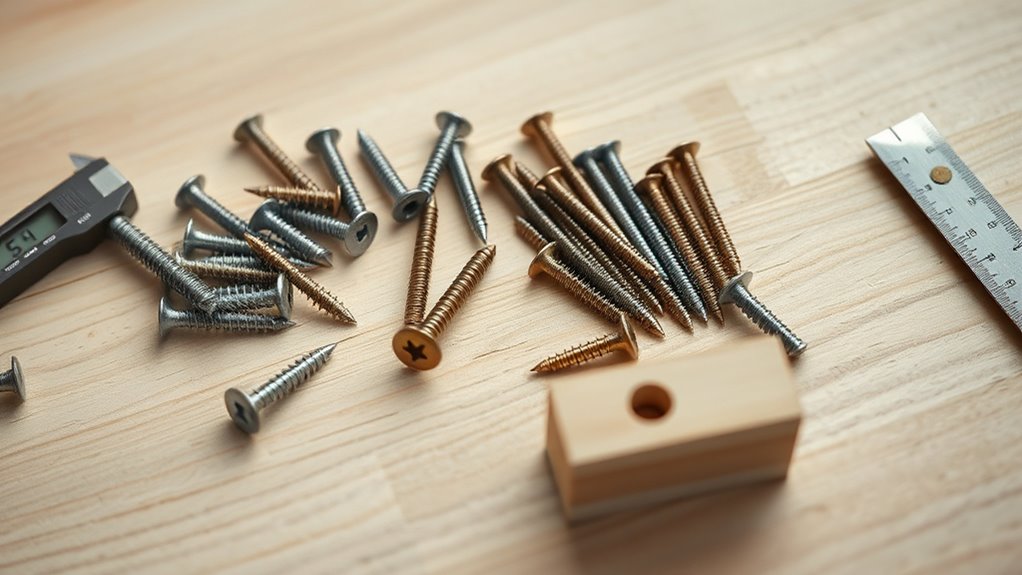
Although the terms often get used interchangeably, construction screws and wood screws aren’t identical — they’re designed for different materials and loads.
You’ll notice construction screws boast coarse threads and higher shear strength for framing, while wood screws suit softer timbers.
Consider historical manufacturing changes that improved alloys and coatings, and weigh environmental impact from galvanizing versus untreated options when choosing.
Quick Decision Flow: Which Screw to Use?
Start by asking what kind of project you’re tackling—decking, framing, or a fine woodworking piece—and that will narrow your options fast.
Then match the screw to the material (softwood, hardwood, composite, or metal) and the expected load.
Use heavier-duty construction screws for structural or high-load jobs and wood screws for lighter, finish-focused work.
Project Type First
When you pick a screw, think about the project first: the materials, load, and exposure determine whether you need a wood screw, a construction screw, or a specialty fastener.
You’ll match screw type to task, considering surface finishes for corrosion resistance and appearance.
Check manufacturing processes for strength and coating consistency, then choose based on environment and required durability rather than brand or habit.
Material And Load
Now that you’ve matched screw type to the task and environment, think about the materials you’re fastening and the loads they’ll carry before picking a specific screw.
You’ll choose strength and corrosion resistance for structural joints, lighter screws for trim, and anchors for masonry.
Also consider color matching and aesthetic appeal for visible work so fasteners blend with or enhance the finished project.
Who Needs to Care Before Starting a Project?
Before you pick up a drill, think about who will use the finished piece and what stresses it will face—home DIYers, professional carpenters, and even contractors all need to weigh whether construction screws or wood screws will meet load, material, and code requirements. You’ll consider interior design, tool maintenance, longevity, budget, skill, and inspection needs.
| User | Concern |
|---|---|
| DIYer | Budget |
| Pro | Code |
| Contractor | Durability |
| Designer | Aesthetics |
| Inspector | Safety |
How to Choose by Project Type: Framing, Decking, Trim
For framing you’ll want screws rated for high shear and withdrawal strength so your structure stays solid under load.
For decking, choose corrosion-resistant fasteners that can handle outdoor exposure and pressure-treated wood.
For trim, pick screws with a fine finish and the right length and head style so they sit neat and don’t split the material.
Framing Fastener Strength
When you’re picking fasteners for framing, decking, or trim, strength and purpose should drive your choice.
You’ll prioritize shear and withdrawal strength for framing, while trim needs discreet heads and Color matching or Finish options for appearance.
Choose structural screws for load, and gauge for material.
- Structural shear strength
- Withdrawal resistance
- Head style for trim
- Gauge and length
- Appearance finish
Decking Corrosion Resistance
Because decking sits exposed to weather and often contacts treated lumber or natural moisture, you should pick fasteners rated specifically for corrosion resistance rather than generic wood screws.
For decks you’ll choose stainless or hot‑dip galvanized screws with proven track records. Consider historical fastening methods for preservation projects.
Also prioritize ergonomic design in screw heads and drivers so installation is faster and reduces fatigue during repetitive decking work.
Trim Finish And Size
You’ll want to match screw finish and size to the specific demands of the job: framing needs long, strong fasteners. Decking requires corrosion-resistant lengths and coatings. Trim wants smaller, less conspicuous screws that still hold securely without splitting. Choose decorative finishes and consider screw coloration to blend with trim.
- Use short, fine-thread screws for trim.
- Match head style to visibility.
- Pre-drill to avoid splitting.
- Pick compatible coatings.
- Consider length for grip and clearance.
How Screw Design Affects Holding Power
Although screws may look similar at a glance, their design details—thread profile, pitch, shank length, and point type—determine how well they bite into and hold different materials.
You’ll pick coarse threads for soft wood and fine for hard stock; partially threaded shanks resist pull-through.
Consider historical manufacturing practices and environmental impact when choosing coatings and alloys to balance grip, durability, and sustainability.
How to Weigh Holding vs. Shear When Choosing a Screw
When deciding between a screw that maximizes pull-out (holding) and one that resists lateral forces (shear), think about the load direction and failure mode you’re most likely to face.
Choose for function first, then consider color matching and aesthetic considerations for visible work.
- Assess load type
- Prioritize holding for withdrawal
- Prioritize shear for side loads
- Match finish to trim
- Test in scrap material
Why Shaft Diameter Matters for Structural Work
Why does shaft diameter matter in structural work? You’ll choose screws whose shaft diameter matches forces and material to prevent bending or pull-through.
Larger shaft diameter increases shear strength and improves load capacity, letting fewer fasteners carry more weight.
You’ll balance diameter with material thickness and embedment depth, ensuring connections stay rigid without splitting or weakening the surrounding wood.
How Thread Pitch Distinguishes Construction vs. Wood Screws
Matching shaft diameter to loads sets the stage, but thread pitch is what dictates how a screw behaves under those loads. You’ll pick coarse or fine pitch to control pull-in speed, holding power, vibration resistance, and appearance—screw aesthetics matter for visible work.
Thread pitch, not just shaft diameter, governs pull-in speed, grip, vibration resistance, and visible finish.
- Faster drive with coarse thread
- Finer adjustment with fine thread
- Better hardwood grip with fine pitch
- Speedy assembly with coarse pitch
- Visible finish affects screw aesthetics
How Thread Form Changes Withdrawal Resistance
How does the shape of a screw’s threads change its resistance to being pulled out? You’ll see that deeper, sharper thread forms bite wood better, increasing withdrawal resistance by raising contact area and shear transfer.
Higher thread density adds more engagement per inch, while coarse forms perform differently in soft or laminated materials.
Don’t forget coating durability—corrosion reduces grip over time.
Which Head Styles Are Common on Construction Screws?
Once you understand how thread form affects withdrawal resistance, the next factor you’ll notice on a screw is the head — its shape dictates driving method, countersinking behavior, and surface finish.
You’ll pick heads based on application, aesthetics, and coating so screw color and thread color match your project.
- Flat (countersink)
- Pan
- Hex washer
- Bugle
- Trim
Which Head Styles Are Common on Wood Screws?
When working with wood screws, you’ll most often see Phillips and Pozidriv heads for general use.
You’ll also find slotted and combination heads for simple or retrofitting tasks, and Torx/star drives where higher torque and reduced cam-out matter.
Knowing these common styles helps you pick the right driver and avoid stripped heads.
Phillips And Pozidriv
Curious which driver you’ll need for most wood screws? You’ll find Phillips and Pozidriv heads common; their head shape affects engagement with your driver and can influence screw thread performance during installation.
- Phillips fits many drivers
- Pozidriv reduces cam-out
- Both suit wood screw head shapes
- Pozidriv needs matching bit
- Match driver to screw thread and head shape
Slotted And Combination
Alongside Phillips and Pozidriv heads, simple slotted and combination heads still show up on many wood screws, especially in trim and vintage-style work, so you’ll want to recognize them.
You’ll use slotted screws for basic, low-torque tasks where a flat blade fits.
Combination screws give you flexibility—accepting flat and cross drivers—handy when matching older hardware or minimizing toolbox bits.
Torx And Star Drives
Because they resist cam-out and deliver high torque with less driver slippage, Torx (star) drives have become a go-to head style for many wood screws. You’ll find them on screws where consistent torque matters, and their design reduces driver wear while preserving screw color and thread color finishes.
- Easier torque control
- Faster driving with less cam-out
- Compatible with power drivers
- Preserves plated screw color
- Cleaner thread color retention
How Screw Drive Types Affect Installation Speed
When you pick a screw, its drive type directly affects how quickly you can start, stop, and finish each fastener.
Phillips and Pozidriv centers let you work fast with common power drivers but tend to cam out under high torque.
While Torx and hex drives give better bit engagement so you can run screws faster and with less stripping.
Choose the right screw head and Drive type for speed and control.
Which Screwdriver Bits Avoid Cam-Out and Stripping?
To avoid cam-out and stripping, pay attention to bit geometry, choose bits made from tough materials with protective coatings, and use the correct size for the screw head.
You’ll get better torque transfer with precision-machined tips like Torx or hex than with worn Phillips.
Always match the bit to the screw and replace damaged bits promptly to keep connections secure.
Bit Geometry Matters
If you want screws to bite without stripping, the shape of the bit matters more than you might think. You’ll reduce cam-out by matching geometry to drive types and considering Fastener aesthetics and screw color options when visible.
Use bits that fit tightly, apply steady pressure, and swap worn tips promptly.
- Phillips (avoid worn)
- Pozidriv (better hold)
- Torx (excellent anti-cam)
- Robertson (square fit)
- Tri-point (specialty)
Material And Coating
Although bit geometry sets the foundation, material and coating determine how well a driver resists wear and bites without camming out, so pick bits that match your workload.
You’ll choose hardened steel or S2 for toughness, and coatings like black oxide, TiN or DLC for corrosion resistance and reduced friction.
Consider surface finishing and occasional color matching to organize sets and prolong useful life.
Proper Bit Fitment
Matching bit geometry and durable materials won’t help much if the bit doesn’t seat tightly in the screw head—proper fitment prevents cam-out and stripping by maximizing contact area and torque transfer.
You should choose bits that match head type, use hardened bits, and mind Paint compatibility when finishing; follow Storage tips to keep edges sharp.
- Use Torx for high torque
- Prefer Pozidriv over Philips
- Keep bits clean
- Replace worn bits
- Use magnetic holders
How Power Tools and Clutch Settings Affect Screws
When you pick up a drill or impact driver, the tool and its clutch settings determine how a screw behaves—how fast it goes in, how much torque it delivers, and whether the head strips or the wood splits.
You’ll choose torque for screw type, use ergonomic grips to steady control, and consider accessories like bit holders and color options for quick ID to prevent overdriving.
When to Predrill for Wood Screws vs. Construction Screws?
When you’re deciding whether to predrill, consider the density of the material—hardwoods and dense engineered lumber usually need a pilot hole to prevent splitting.
Also, use the screw diameter as a guideline: larger screws almost always require predrilling, while smaller screws can often be driven without one in softer woods.
For construction screws, which are usually thicker and meant for structural loads, err on the side of predrilling more than you’d for thinner wood screws.
Material Density Consideration
Because different screws bite and flex differently in dense or soft wood, you’ll need to choose whether to predrill based on the material’s density and the screw type. Consider material properties and density considerations to prevent splitting or stripped threads.
- Hardwoods often need pilot holes.
- Softwoods may accept self-tapping screws.
- Thin pieces risk splitting.
- Long screws increase stress.
- Use lubricant for very dense timber.
Screw Diameter Guidelines
If you’re deciding whether to predrill, let the screw’s diameter guide you. For thin screws (small gauge), you usually won’t need a pilot hole in soft woods, but you should for hardwoods.
Larger construction screws often require predrilling regardless.
Consider color coding to quickly identify gauges on the job and maintain screw aesthetics by choosing appropriate countersinking and fill for visible surfaces.
How Countersinking Needs Differ Between the Two Types
Although both screw types bite into wood, their head profiles and thread designs mean you’ll need different countersinking approaches for construction screws versus traditional wood screws.
You adjust Countersink depth to get a Screw head flush without splitting or weakening the face.
- Use pilot hole plus shallow countersink for wood screws
- Deeper recess for structural construction screws
- Match bit to head angle
- Test on scrap
- Avoid overcountersinking
How Screw Length Influences Joint Strength
Having the right countersink and pilot hole settings is only part of the equation; screw length plays a major role in how a joint performs.
You’ll notice longer screws negotiate grain changes better, engaging more screw thread for pullout resistance.
While longer screws can be beneficial, too-long screws can split material.
Also consider head material compatibility with your fastener and environment to prevent galvanic issues that weaken connections over time.
How to Choose Screw Length and Embedment Depth
You’ll pick a screw long enough to pass through the first piece and enter the second by the proper amount without protruding.
Calculate embedment depth so the threaded portion grips the receiving material—typically two to three times the thickness of the softer member.
Always account for material thickness and any coatings or gaps to guarantee adequate holding power.
Select Proper Screw Length
Wondering how long a screw should be for a particular job? Check screw color and packaging labels for material and length guidance, then pick a length that penetrates the base material without overdriving.
Consider load, thickness, and coating.
- Match screw type to material
- Allow full thread engagement
- Avoid protrusion
- Factor in pilot holes
- Prefer manufacturer recommendations
Calculate Embedment Depth
When you pick a screw, think about how deep its shank and threads must bite into the base material so the fastener carries the load without splitting or poking through the other side. Measure embedment for at least 1.5× core diameter in wood; consider screw color and thread color for coated screws and corrosion resistance.
| Material | Min Embedment | Note |
|---|---|---|
| Softwood | 1.5d | Use pilot hole |
| Hardwood | 2.0d | Pre-drill |
| Composite | 1.75d | Check coating |
| Metal | 3.0d | Use proper tap |
Account For Material Thickness
Because the screw must pass through the top piece and still engage enough of the base, pick a length that equals the thickness of the material being fastened plus the required embedment in the receiving member.
You’ll also consider material compatibility and screw color options for exposure and corrosion resistance.
- Measure material thickness
- Determine embedment depth
- Match screw type
- Check finish/color
- Test fit and adjust
Why Corrosion Resistance Matters for Outdoor Fastening
Though outdoor projects look solid at first, exposure to moisture, salt, and temperature swings will quickly reveal weak fasteners. You need corrosion resistance to keep joints secure, prevent staining, and honor historical applications where long-lasting hardware mattered.
Choose fasteners that preserve aesthetic considerations and structural integrity so you won’t face rusted failures, costly repairs, or compromised safety over time.
Coatings and Materials Construction Screws Use
Now you’ll look at the coatings and base metals that make construction screws last in different conditions. You’ll learn about common protective finishes like galvanizing, zinc plating, and ceramic coatings, the steel and stainless options used as base metals, and how corrosion-resistance grades guide your choice. That context will help you pick the right screw for exterior, high-moisture, or chemically exposed environments.
Common Protective Coatings
When you pick a construction screw, the coating often matters more than the steel underneath because it determines corrosion resistance, longevity, and where you can safely use the fastener. You’ll choose protective coatings for environmental durability and application.
Consider common options:
- Zinc plating — general indoor use
- Galvanized — outdoor, economical
- Stainless finish — marine resistance
- Ceramic coating — high durability
- Polymer coating — paintable and moisture-resistant
Base Metal Types
Protective coatings only tell part of the story — the core metal beneath determines strength, shear resistance, and how the screw behaves under load.
You’ll choose carbon steel for toughness, stainless for corrosion-prone sites, or brass for appearance and conductivity.
Consider metal oxidation tendencies and match alloy to application.
Also watch screw branding—manufacturers list base metal specs so you can pick the right fastener.
Corrosion Resistance Grades
Corrosion resistance matters because it determines how long a screw will hold up in moisture, salt air, or chemically aggressive environments. So you’ll want to match coatings and base metals to the job.
You evaluate corrosion prevention by grade, coating durability, and substrate choice to avoid failures:
- Zinc plate: indoor, low-cost
- Galvanized: outdoor, moderate
- Stainless: high resistance
- Ceramic coatings: specialty
- Hot-dip: marine-grade
Materials and Finishes Wood Screws Typically Use
Although wood screws come in many shapes and sizes, their materials and finishes are what determine durability and suitability for different projects.
You’ll choose steel, brass, or stainless for strength and corrosion resistance.
Decorative finishes dress visible fasteners, while manufacturing processes like plating, galvanizing, or coating add protection.
Pick combinations that match exposure, appearance, and mechanical needs.
Which Screws Perform Best in Engineered Lumber?
When you’re fastening into engineered lumber like LVL, I-joists, or OSB-based products, pick screws designed for dense, layered materials rather than standard wood screws — they’re made with threads, shanks, and tips that reduce splitting, pull-through, and vibration loosening.
- High-thread construction screws
- Self-tapping countersink heads
- Coated fasteners for corrosion resistance
- Manufacturer-backed options for Brand reputation
- Match Screw color to finish to avoid visible wear
How Screw Design Affects Splitting Risk in Thin Boards
When you work with thin boards, the screw’s thread geometry and whether you pre-drill a pilot hole make a big difference in splitting risk.
Choosing a screw with finer threads or cutting threads can reduce outward pressure.
Using the right head type and drive helps you control insertion torque.
Pick a head/drive combo that lets you seat the screw flush without over-tightening to avoid cracks.
Pilot Holes And Threads
Because thin boards can’t absorb the same stress as thicker stock, choosing the right pilot hole size and thread type matters for preventing splits. You’ll use a proper screwdriver and match thread depth to board thickness so the screw pulls without forcing fibers apart.
- Match pilot hole to screw gauge
- Use shallow threads for thin stock
- Pre-drill near edges
- Countersink when needed
- Test on scrap wood
Head Type And Drive
Although the screw’s head and drive might seem like minor details, they play a big role in whether thin boards split. You’ll prefer low-profile heads and self-countersinking drives to reduce surface stress.
Torx or Phillips with proper bit fit prevent cam-out and splitting. Also weigh color options and branding considerations for visibility and corrosion resistance when choosing screws for delicate, thin-board work.
What Builders Mean by “Construction‑Grade” Screws
A construction‑grade screw isn’t a specific model but a category builders use to mean fasteners rated for structural work—stronger shanks, tougher threads, heat‑treated or hardened steel, and coatings that resist corrosion for jobsite conditions.
You’ll consider strength, durability, and also environmental impact and historical development of standards.
- High tensile strength
- Corrosion resistance
- Thread form for grip
- Heat treatment
- Jobsite reliability
Manufacturer Specs: Allowable Loads for Construction & Wood Screws
When you check manufacturer specs for construction and wood screws, you’ll find allowable loads presented as specific shear and withdrawal values based on standardized test methods. These numbers tell you how much load a screw can carry in different materials and installation conditions rather than serving as a blanket “strength” claim.
You’ll compare values by substrate, length, and coating, and note environmental impact statements tied to the manufacturing process.
When Building Codes or Inspectors Require Specific Screws
If local codes or your inspector specify a screw type, you’ve got to follow those requirements exactly—substituting a similar-looking fastener or relying on general-purpose wood screws can lead to failed inspections or unsafe connections.
You should check labels, screw color, and packaging design to confirm compliance and traceability.
- Confirm grade markings
- Verify corrosion rating
- Match thread type
- Keep documentation
- Ask inspector for approval
When to Use Screws Instead of Nails for Framing?
When framing, you’ll choose screws over nails when load-bearing connections need higher withdrawal resistance and less long‑term loosening.
Screws generally resist pullout better and can handle shear differently than nails, so consider the specific structural requirements.
Also weigh speed and practicality—nails are faster with a nail gun, but screws give superior holding power where it matters.
Load-Bearing Considerations
Although screws offer superior withdrawal resistance and shear strength in many scenarios, you shouldn’t default to them for every framing job.
You should weigh load paths, code requirements, and long-term performance against decorative finishes and environmental impact.
- Use screws where tension dominates
- Prefer nails for dynamic shear loads
- Follow engineer specs
- Consider corrosion resistance
- Balance cost and sustainability
Shear And Withdrawal
Curious how shear and withdrawal affect whether you should pick screws or nails for framing?
You’ll favor screws where withdrawal resistance matters—they grip better in end grain and tension.
For shear-dominated connections, use structural nails or engineered screws rated for shear.
Also consider color finish for exposure and choose an appropriate head style for driving and seating without splitting the timber.
Speed And Practicality
If you need to move fast on a framing job, nails still beat screws for speed and ease of use—pneumatic nailers drive dozens of nails a minute and let you set and toe-nail without stopping to switch bits or reload.
You’ll choose screws for precision, retrofit, or decorative finishes; watch screw branding for quality and pilot-hole needs.
- Retrofit braces
- Shear-sensitive joints
- Demountable assemblies
- Tight corners
- Finish work
When Screws and Nails Are Used Together for Best Results
When you combine screws and nails thoughtfully, you get the holding power and shear strength each fastener does best: screws for strong withdrawal resistance and precise clamping.
Nails are better suited for flexibility and shock absorption. You should place screws where withdrawal matters, nails where shear or movement occurs.
Match screw color and thread color with materials and coatings so appearance and corrosion resistance stay consistent.
How to Convert a Project Designed for Nails to Screws
Because screws offer better withdrawal resistance and clamping, converting a nail-based plan to screws can give your project greater strength and longevity. Start by checking material thickness, fastener spacing, and the load paths so you pick the right screw type and length.
Consider screw lubrication and packaging innovations when buying.
Tips:
- Match screw length to thickness
- Adjust spacing for load
- Pre-drill hardwoods
- Use corrosion-resistant screws
- Test fit and torque settings
What Shear Strength Tests Reveal About Each Screw
You’ll want to start by understanding shear strength — the force that causes one material layer to slide past another — because it determines how screws resist lateral loads.
Comparative load tests show how construction screws and wood screws differ in the maximum shear they can bear under similar conditions.
Pay attention to the failure modes observed, like shaft shear, head pull-through, or wood splitting, since they tell you which screw suits a given application.
Shear Strength Defined
How strong is a screw where it’s loaded across its shaft rather than along it? You learn shear strength by testing crosswise loads, revealing failure modes, material limits, and how manufacturing processes affect performance and environmental impact through material choice.
- Test setup and sample prep
- Material composition effects
- Thread geometry influence
- Failure mode observation
- Data interpretation for design
Comparative Load Tests
When you run comparative shear tests on construction and wood screws, you’ll see clear differences in how each handles crosswise loads.
You’ll notice screw color often signals coating and corrosion resistance, affecting long-term shear.
Results tie to brand reputation—premium brands show consistent yields and tighter tolerances.
Use test data to match screw type, coating, and expected load rather than assumptions about appearance alone.
Failure Modes Observed
Although both construction and wood screws can fail under shear, the patterns are distinct and tell you where each is likely to give out. You’ll see metal shaft fractures in construction screws and thread pullout in wood screws; tests show how surface finishing and aesthetic considerations affect grip and corrosion.
Things to note:
- Shaft breakage
- Thread pullout
- Head shearing
- Grip loss at surface
- Corrosion-induced failure
How Withdrawal Resistance Varies With Thread Form
Because the thread shape controls how a screw bites into wood, you’ll see big differences in withdrawal resistance between coarse, fine, and specialty thread forms.
You should evaluate thread geometry: coarse threads grab soft, fibrous wood, boosting withdrawal strength, while fine threads suit hardwoods with more material contact.
Specialty threads (double-start, deep flutes) target specific grain, balancing installation torque and pullout performance.
How Environmental Conditions Change Screw Selection (Freeze, Sun, Salt)
When you’re choosing screws, think about freeze damage, salt exposure, and UV from the sun because each factor affects durability differently.
Freezing cycles can cause split wood and loosening, so you’ll want screws that tolerate movement and corrosion.
In salty or sunny environments, pick corrosion-resistant coatings or stainless steel to prevent rust and UV-accelerated degradation.
Freeze Damage Risks
If you’re fastening outdoors or in unheated spaces, freeze-thaw cycles change how screws perform and what coatings or metals you should choose.
You’ll want corrosion-resistant alloys and flexible coatings that tolerate thermal expansion and contraction to avoid loosening, cracking, or stripped threads.
- Choose stainless or hot-dipped galvanized
- Prefer thicker coatings
- Use sealed or coated heads
- Allow movement in joints
- Inspect after winters
Salt And UV Effects
The same environmental forces that make freeze-thaw cycles a problem — repeated stress, moisture, and exposure — also change how screws handle salt spray and sunlight.
You’ll choose stainless or hot-dip galvanized fasteners to resist salt corrosion near coasts.
UV-stable coatings or polymer sleeves can prevent UV degradation on exposed assemblies.
Match finish to environment to avoid premature failure.
Coastal Exposure: Which Screws to Use?
Because salt air and moisture accelerate corrosion, you’ll want screws rated for coastal use rather than standard construction fasteners.
In a marine environment you’ll choose stainless or coated fasteners for exterior exposure, while interior applications can use less exotic options.
Consider these choices:
- 316 stainless steel for maximum corrosion resistance
- Hot-dipped galvanized for budget exterior use
- Polymer-coated screws for extra barrier
- Bronze for historical accuracy
- Self-tapping stainless for metal-to-wood connections
Top Recommended Construction and Wood Screws by Use Case
When you pick screws for a specific job, match the material, coating, and head type to the application rather than defaulting to “construction” or “wood” labels.
For exterior framing, use hot-dip galvanized or stainless construction screws.
For fine carpentry, choose brass or fine-thread wood screws.
Consider historical manufacturing practices for strengths and the environmental impact of coatings when selecting fasteners.
Cost Comparison: Construction Screws vs. Wood Screws
When you compare costs, factor in material and coating differences—galvanized or stainless construction screws usually cost more than basic wood screws.
You’ll pay extra up front for coatings that resist corrosion and extend service life.
Over time those higher-priced screws can offer better long-term value by reducing replacements and maintenance.
Material And Coating Costs
Although both screw types look similar at a glance, their material and coating choices drive most of the price gap.
Construction screws often use higher-strength alloy steel and thicker, corrosion-resistant coatings like polymer or zinc with passivation.
Wood screws typically use softer steel or brass with basic zinc plating.
You should weigh material alternatives and coating longevity:
- Alloy vs. softer steel
- Polymer coatings
- Zinc with passivation
- Brass options
- Cost per protective layer
Long-Term Value
Because upfront price tells only part of the story, you should compare construction and wood screws by lifetime cost — including durability, maintenance, and replacement frequency — rather than just per-pack price. You’ll weigh Historical manufacturing quality, coatings, and Environmental impact. Choose higher-grade screws to cut replacements and labor costs over time.
| Type | Durability | Replacement Rate |
|---|---|---|
| Construction | High | Low |
| Wood | Medium | Medium |
| Economy | Low | High |
How to Read Screw Markings and Packaging Labels
If you want to pick the right screw quickly, learn to decode the markings on the head and the information on the package — they’ll tell you material, drive type, length, thread style, and any coatings or special uses.
Check screw color and packaging design for corrosion resistance and meant use.
Look for:
- head stamp
- size/length
- thread type
- coating label
- drive style
How Pilot-Hole Charts Guide Screw Selection
When you’re choosing screws for different woods and fastener sizes, pilot-hole charts give you precise hole diameters so screws drive cleanly without splitting or stripping; they match screw gauge, shank type, and wood density to the right pilot size. You’ll consult charts for screw head style and thread pitch to prevent tear-out and ensure proper holding.
| Wood Type | Pilot Size |
|---|---|
| Softwood | 2.5 mm |
| Hardwood | 3.0 mm |
| Plywood | 2.8 mm |
| Composite | 2.6 mm |
How to Choose Screw Diameter and Grade for Safety
Pilot-hole charts give you the right hole size, but choosing the correct screw diameter and material grade is what keeps your connections safe under load.
Pilot-hole charts guide hole size, but correct screw diameter and grade ensure the connection carries the load safely.
You should match diameter to shear/tension needs, pick corrosion-resistant grades, and consider screw ergonomics and brand reputation for consistency.
- Match diameter to load
- Choose appropriate grade
- Prefer corrosion resistance
- Check brand reputation
- Consider screw ergonomics
How to Drive Screws Without Damaging Material
Want screws to bite without splitting or crushing the wood? Pre-drill pilot holes sized to screw diameter, countersink for flush heads, and use the correct driver bit to prevent cam-out.
Apply steady, moderate torque and back off if grain crushes.
Learn historical manufacturing choices for thread form and use color coding for coated screws to match material and corrosion needs.
How to Remove Stuck or Broken Screws Safely
If a screw won’t budge or snaps off despite correct pilot holes and driver bits, you’ll need a careful extraction strategy to avoid splitting the wood or damaging surrounding hardware. Assess screw color and thread pattern, then act:
- Use penetrating oil and wait.
- Try reverse drill or extractor.
- Grip with locking pliers.
- Cut a new slot.
- Reinforce hole before reinstalling.
How to Store and Organize Screws on the Jobsite
Because you’ll spend less time hunting for fasteners and more time building, organize screws on the jobsite by size, head type, and length before work starts.
Use clear bins, labeled dividers, and magnetic trays.
Sort by screw color for quick ID, keep packaging with branding labels for reorders, and stash a portable kit for daily tasks so you won’t waste time searching.
Marketing Labels vs. Real Performance
When you read product descriptions and packaging, don’t assume marketing labels tell the whole story — terms like “construction-grade,” “heavy-duty,” or color-coded coatings can mean different things from one brand to another.
You should test specs, ignore hype, and weigh Screw aesthetics against corrosion resistance; branding impact can mislead.
- Check material specs
- Compare load ratings
- Seek third‑party tests
- Match coating to use
- Consider warranty
Deck Failure: Wrong Screws (Case Study)
Although the screws looked right on the box, they failed in the field—causing a deck board pullout and warped joists after just two winters. You’ll see how misuse affected construction safety and material durability, and what went wrong.
| Issue | Cause | Impact |
|---|---|---|
| Pullout | Wrong thread | Unsafe deck |
| Warping | Corrosion | Reduced durability |
| Inspection | Missed specs | Repair costs |
Quick Checklist: Choose the Right Screw for Your Task
Need a screw for decking, framing, or trim? Use this quick checklist to pick wisely, considering historical manufacturing choices and environmental impact.
- Match screw type to material and load
- Choose coating for corrosion resistance
- Select length and gauge for secure grip
- Prefer proven brands with transparent historical manufacturing records
- Factor recyclability and minimal environmental impact in selection
Common Mistakes Carpenters Make When Picking Screws
Because you’re aiming for strong, lasting joins, picking the wrong screw can undo hours of work and cost you time and money.
You’ll often ignore screw material, assuming any coating suffices, or mismatch thread types to the wood density.
Don’t use oversized lengths, wrong head styles, or cheap metals that corrode.
Match screw material and thread types to the application for durable results.
Appendix: Fastener Standards and Spec References
When you reference fasteners, use the right standards so your specs translate on the job: common documents include ASTM, ISO, ANSI/ASME, and industry-specific guides for timber and structural connectors.
You’ll check historical manufacturing notes, corrosion testing, and Environmental impact statements to guarantee compatibility, durability, and code compliance.
- ASTM classifications
- ISO fastener norms
- ANSI/ASME tables
- Timber connector guides
- Corrosion/environment reports
Frequently Asked Questions
Can I Use Construction Screws for Metal-To-Wood Connections?
Yes — you can use construction screws for metal-to-wood connections if you choose appropriate metal fasteners; you’ll compare screw material comparison, selecting corrosion-resistant, hardened screws rated for metal-to-wood fastening to guarantee strength and longevity.
Do Screw Heads Affect Paint or Finish Adhesion?
Yes — screw heads affect paint adhesion and finish durability; you’ll get uneven coverage and possible peeling if heads aren’t flush, clean, or primed, so sand, prime, and use compatible screws to maintain a durable finish.
Are Specialty Screws Required for Hardwood Flooring Installation?
Like a surgeon’s scalpel, you’ll need specialty screws for hardwood floors; choose fastener materials and proper screw threading to prevent splitting, guarantee strong holding, and resist corrosion, so your floor stays tight and stable for years.
How Do Screw Choices Impact Acoustic or Thermal Performance?
You’ll affect sound insulation and thermal bridging by choosing screw type, length, and density; fewer, insulated fasteners reduce thermal bridging, while resilient or isolating screws and proper spacing improve sound insulation, so pick screws to minimize rigid connections.
Are There Regulations for Resale Affecting Fastener Choices?
You’ll find soft mandates: resale regulations often require disclosures and compliance with fastener standards like building codes and ASTM; you’ll need to confirm permitted materials, corrosion resistance, and documentation to avoid surprises during property transfer.
Conclusion
Don’t let screw choices turn your project into a slow-motion disaster—pick the right one. Construction screws and wood screws aren’t identical, and using the wrong type can make joints squeal, decks weep, and walls regret their life decisions. You’ll save time, money, and your reputation by matching screw design to task: framing, decking, trim. Read labels, consider coatings and shank types, and tighten your choices like your work depends on them—because it does.