Can Nails and Screws Be Recycled? Recycling Rules and Tips
Yes—you can usually recycle nails and screws, but you’ll need to sort, clean, and contain them first. Separate ferrous (magnetic) from nonferrous metals, remove debris, oil, or attached materials, and keep heavily rusted or painted pieces apart. Curbside programs often won’t accept loose fasteners, so take them to a scrap yard or drop‑off that lists small hardware. Follow local rules for coated or hazardous items, and keep going to learn practical prep, storage, and donation options.
What This Guide Covers and How to Use It
Before you plunge in, know that this guide explains why you should recycle nails and screws, where to take them, and how to prepare them for recycling so you don’t waste time or create hazards.
You’ll learn to sort by metal type, remove fastener adhesives safely, and separate small hardware.
Skip nail art supplies and unusable mixed debris; follow steps to drop items at proper facilities.
Quick Answer: Can Nails and Screws Be Recycled?
Yes — most nails and screws are metal and can be recycled, but you’ll need to prepare them first by removing dirt, wood, and nonmetal parts.
Check local rules because some centers accept loose fasteners and others want them contained or mixed with scrap metal. Following your municipality’s guidelines will save you time and guarantee the materials actually get recycled.
Metal Recycling Possibility
Although small, nails and screws are recyclable because they’re made of steel or other metals that scrap yards and recycling centers can process, and you can usually drop them off mixed with other ferrous scrap or in a designated metal bin. Consider nail design and screw threading when sorting.
| Type | Material | Recyclable |
|---|---|---|
| Nail | Steel | Yes |
| Screw | Steel | Yes |
| Mixed | Assorted | Yes |
| Rusty | Surface rust | Yes |
Preparation For Recycling
If you want to recycle nails and screws, you’ll need to sort, clean, and contain them so recycling centers can process them safely and efficiently.
You should separate ferrous from nonferrous pieces, remove debris and oil, and bag small items to prevent spills.
Inspect for metal corrosion; heavily corroded fasteners may lower material value.
Proper prep preserves fastener durability during handling and transport.
Local Rules And Limits
Rules for recycling nails and screws vary by facility and municipality, so check local guidelines before dropping them off. You should confirm size, material, and contamination limits to meet recycling regulations and minimize environmental impact. Follow local rules to avoid rejection.
- Contact your municipal recycling center
- Bundle or contain loose hardware
- Separate mixed metals if required
What To Do First: A Simple Action Plan for Fasteners
Before you sort or store anything, gather all the loose nails and screws into a single container so you can assess quantity and condition at a glance.
Gather all loose nails and screws into one container first to quickly assess quantity and condition.
Next, separate rusty or damaged pieces, set aside reusable ones, and bag tiny items.
Label containers clearly.
If you have nail art or cosmetic nails mixed in, segregate them for proper disposal or specialty recycling to avoid contamination.
Identify Common Metals in Nails and Screws
You’ll learn the common metals used in nails and screws—steel, stainless steel, brass, and aluminum—so you can sort them correctly.
Check magnetism to separate magnetic steels from nonmagnetic alloys and brass.
Also note corrosion and coatings, since rust and plating affect recyclability and may change how items should be processed.
Common Metal Types
Which metals show up most often on your toolbox? You’ll find steel, stainless steel, and brass common.
Metal plating affects appearance and corrosion resistance, while fastener corrosion tells you when replacement’s needed.
- Steel: strong, often plated
- Stainless steel: corrosion-resistant
- Brass: nonferrous, decorative and durable
Magnetic Versus Nonmagnetic
Knowing the metals you commonly see—steel, stainless steel, and brass—helps when you sort fasteners by magnetic properties. You’ll find plain steel nails and screws attract magnets, while many stainless and brass don’t.
Use a magnet to separate ferrous from nonferrous for recycling.
Check nail aesthetics only for identification; inspect screw threading for type, not magnetism, when deciding where each goes.
Corrosion And Coatings
How do you tell which nails and screws will resist rust and which won’t? You check metal type and coatings for corrosion prevention.
Galvanized, stainless, and zinc-plated differ in durability and recyclability; sometimes coating removal is needed before processing.
- Galvanized: zinc layer for rust resistance
- Stainless: alloyed for inherent corrosion resistance
- Zinc-plated: thin protective coating
How Coatings and Platings Affect Recycling
Because coatings and platings change a fastener’s surface chemistry and appearance, they also change how you should sort, clean, and process nails and screws for recycling.
Check coating durability to decide cleaning methods and whether mechanical separation is needed.
Identify plating corrosion that signals mixed metals or hazardous finishes.
Label batches, avoid abrasive stripping that contaminates scrap, and follow recycler guidelines for treated fasteners.
When Attached Materials Block Recycling
Coatings and platings can complicate recycling, but attached materials—like wood, drywall, insulation, or plastic anchors—often stop the process entirely if you don’t remove them first.
You should separate parts to guarantee fastener compatibility with scrap streams and avoid common recycling myths that everything metal is accepted.
Remove contaminants, sort by type, and check local rules.
- Remove wood and drywall
- Pull out anchors
- Segregate coated fasteners
Do Single‑Stream Recycling Programs Accept Loose Nails and Screws?
While single‑stream programs aim to make recycling easy, they generally don’t accept loose nails and screws because those small, sharp items can damage sorting equipment and pose safety risks to workers.
You should bag or contain them per local rules; check your municipality.
Know that nail manufacturing and fastener history explain why these items are common, but don’t assume curbside acceptance.
How Drop‑Off Scrap Metal Centers Handle Nails and Screws
When you take nails and screws to a drop-off scrap metal center, you’ll first need to check their acceptance policies to see if they take small fasteners or require them bundled.
You’ll usually be asked to sort or prepare them—separating by metal type, removing nonmetal parts, and keeping them contained so they don’t scatter.
Knowing the center’s rules and doing basic prep guarantees you get proper credit or recycling.
Drop-Off Acceptance Policies
Most scrap metal drop-off centers accept nails and screws, but policies vary by size, material, and how they’re packaged. Call ahead or check the facility’s website so you don’t bring a mixed bin they won’t take.
You should ask about thresholds, fees, and accepted alloys, and mention nontraditional items like nail art pieces or screw accessories.
- Ask limits
- Confirm fees
- Declare alloys
Preparation And Sorting
Because nails and screws come mixed in boxes, jars, and loose piles, drop-off centers first separate them by size, material, and contamination before weighing or processing. You’ll remove nonmetal bits, wipe away nail polish drips, and sort stainless, brass, and ferrous fasteners.
Use basic screwdriver techniques to loosen stuck items, bag similar grades, and label containers so recyclers can accept and process them efficiently.
When Fasteners Fall Under Household Hazardous Waste Rules (Lead, Paint, Oil)
How do you know if nails or screws count as household hazardous waste? Check coating, contamination, and use: fastener design can hide lead paint or oil residues despite recycling myths.
If suspect, treat them as HHW and don’t toss in scrap bins.
- Visible lead-based paint
- Oily or solvent-coated fasteners
- Corroded items with contaminated residue
How Bulk Versus Small Quantities Change Your Options
When you’re dealing with a handful of nails or a lone box of screws, you’ve got different options than when a contractor drops off a pallet.
Small quantities can usually go to standard recycling or municipal drop-offs, while bulk loads often require special handling, documentation, or a commercial scrap processor.
You should track seasonal trends for pickup schedules and use secure storage solutions to consolidate, label, and schedule commercial removal.
Sort Nails and Screws for Recycling Pickup
If you’re preparing nails and screws for recycling pickup, start by separating ferrous (steel) fasteners from non‑ferrous ones like brass or stainless, since most municipal programs and scrap yards sort metals by magnetic properties.
You should bag items, label containers, and keep hobby pieces separate so nail art or screw fashion leftovers don’t contaminate loads.
- Bag ferrous
- Bag non‑ferrous
- Label clearly
How To Separate Nails and Screws From Wood and Drywall
Want to strip nails and screws from wood or drywall without damaging the material or your fasteners? Use pliers, a pry bar, or a drill with reverse bit; work slowly, protect surfaces, and consider fastener ergonomics to reduce strain. Treat reclaimed pieces like nail art inspiration or material stock.
| Tool | Technique | Tip |
|---|---|---|
| Pliers | Grip & pull | Protect wood |
| Pry bar | Leverage | Use shim |
| Drill | Reverse | Secure bit |
How To Remove Rust and Oil Before Recycling
Before you recycle nails and screws, remove any loose rust with a wire brush or steel wool so the pieces are clean and safe to handle.
If parts are oily or greasy, wipe them with a rag soaked in degreaser or a simple mix of dish soap and hot water.
Let everything dry completely before sorting or dropping them off for recycling.
Remove Loose Rust
When you’re prepping nails and screws for recycling, remove loose rust and oil so they won’t contaminate other metals or clog sorting equipment.
Use a stiff brush, wipe with a rag, and tap pieces to dislodge flakes. Small decorative bits from Nail art or worn Screw accessories should be treated the same.
- Brush vigorously
- Tap to shake off debris
- Wipe until dry
Degrease Metal Parts
After you’ve removed loose rust and debris, degreasing is the next step to make nails and screws ready for recycling. Use a solvent or mild degreaser to dissolve oil, grease, and leftover fastener adhesives. Scrub with a brush, rinse, and dry.
For painted or coated pieces, remove nail polish or similar coatings first so metal is fully exposed for effective recycling.
How To Bundle or Contain Loose Fasteners for Collection
If you’re collecting loose nails and screws for recycling, secure them so they don’t spill, injure handlers, or damage sorting equipment. Use sturdy containers, sealable bags, or jars; label contents and weight.
Clean items—remove grease, paint flakes, or nail polish residue—and stow with tools used for cleanup, like those for screwdriver maintenance.
- Use clear, sealed containers
- Label type and condition
- Keep small parts taped or bagged
How Magnetic Separation Works at Recycling Facilities
How does a pile of mixed hardware turn into sorted streams of metal? You’ll see conveyor belts feed shredded material under magnets; magnetic separation pulls ferrous pieces like steel nails away.
Nonferrous items fall through for further sorting. Facilities then use eddy currents and sensors to separate different metal alloys, so each stream can be recycled appropriately without cross-contamination.
How To Identify Steel Versus Brass and Stainless
You can usually tell steel, brass, and stainless apart with a few quick checks. Use a magnet first—steel will stick, brass and most stainless won’t.
Look for color and heft: brass is yellowish and heavier than aluminum, while stainless is silvery and often lighter than solid steel.
Combine those visual, magnetic, weight, and color cues to sort items before recycling.
Visual And Magnetic Tests
When sorting nails and screws, simple visual cues and a quick magnet check will usually tell you whether an item is steel, brass, or stainless.
You’ll spot brass by its yellow tone, stainless by a dull silver, and steel by magnetic attraction.
Consider appearance vs. function; Nail art or Screws design can mislead, so test instead:
- Use a magnet.
- Inspect finish.
- Check corrosion.
Weight And Color Cues
Although visual and magnetic checks are quick, weight and color give reliable secondary clues. You’ll heft pieces: brass feels lighter and warmer than steel; stainless is denser.
Color-wise, brass shows a golden hue, steel a gray or silver tone, and stainless a brighter, slightly bluish silver.
Use these cues alongside screw anatomy and even nail art finishes to ID metals for recycling.
How To Test Fasteners at Home (Magnet and Visual Checks)
Before you toss a batch of nails or screws into a recycling bin, give them a quick magnet and visual check to separate ferrous from non-ferrous pieces and spot defects. These simple tests take minutes and save sorting hassle later.
You’ll test with a magnet, inspect rust, and note coatings—think sorting like fashion trends or plant care routines: consistent, intentional.
- Use a strong magnet.
- Look for rust or plating.
- Discard bent or stripped pieces.
When To Keep Fasteners for Reuse Instead of Recycling
After your magnet and visual checks, inspect each fastener for worn threads, bent shafts, or stripped heads.
If they’re structurally sound and match the size and finish you need, keep them for future projects rather than recycling.
Stashing usable nails and screws saves money and cuts down on waste.
Inspect For Wear
How do you tell when a nail or screw is still worth keeping? Inspect threads, points, and heads for damage. Slight rust or cosmetic marks might still work for nail art or household fixes with fastener adhesives. Keep items with intact threads and straight shafts.
- Straight, unworn shafts
- Clean, undamaged threads
- No bent or mushroomed heads
Keep For Projects
Now that you know what wear looks like, decide which nails and screws deserve a second life by matching their condition to future projects. Keep straight, rust-free fasteners for structural fixes; save decorative pieces for nail art or unique fastener design experiments.
| Condition | Suggested Use |
|---|---|
| Straight, clean | Structural repairs |
| Slight rust | Noncritical projects |
| Decorative head | Nail art |
| Bent | Scrap/recycle |
| Tiny screws | Electronics/restoration |
Practical Reuse Ideas for Nails and Screws
When you clear out a toolbox, don’t toss usable nails and screws—give them new life with simple projects and fixes around the house. You can repurpose them for small repairs, craft accents, or hardware swaps while appreciating nail design and screw history in vintage finds.
- Patch and reinforce loose trim
- Create rustic wall hooks
- Use in mixed-media crafts
How To Sort and Store Reusable Fasteners Efficiently
If you want to keep usable nails and screws ready for projects, start by sorting them into clear, labeled containers by type, size, and material so you can grab the right fastener without hunting.
Keep specialty items separate, catalog odd sizes, and store magnets, trays, and drawer dividers for quick access.
You’ll appreciate the order—useful for nail art projects and learning screws history while you work.
Where To Donate Surplus Fasteners Locally
You can check with local hardware stores to see if they’ll accept cleaned, sorted fasteners for resale or community programs.
Also, reach out to neighborhood repair cafes and craft groups that often need mixed nails and screws for projects.
If you contact them first, you’ll save time and make sure your donation’s useful.
Hardware Stores Accepting Donations
Looking for a quick way to offload extra nails and screws? You can bring them to local hardware stores that accept donations for community projects or resale.
Ask store managers about acceptance, sorting, and labeling.
Mention Nail art or Screws design interest to steer items to craft-friendly spots.
- Call ahead to confirm
- Sort by size/type
- Label quantities and condition
Community Repair/Craft Groups
Where can extra nails and screws make the biggest local impact? Check community repair cafés, makerspaces, schools, and craft collectives—they’ll reuse fasteners for projects or teach repair skills.
Label boxes with counts and keep fastener packaging tidy so volunteers can sort quickly.
Offer mixed assortments for Nail art, furniture repair, or tool libraries, and announce availability on local forums or social media.
Online Marketplaces and Groups for Giving Away Fasteners
If you’ve got boxes of leftover nails and screws, online marketplaces and local swap groups make it easy to pass them on rather than toss them — and often faster than taking them to a recycling center.
Got leftover nails and screws? List them on local swap groups or marketplaces—quick pickup beats recycling trips.
You can list items for free, specify sizes, and mention Nail art or Screws design uses to attract hobbyists.
- Fast pickup
- Clear photos
- Size/specs listed
How Contractors and Makers Can Repurpose Old Fasteners
You can start by sorting old fasteners by material—steel, brass, and stainless each behave differently and suit different projects.
Once they’re organized, you can reuse them for jigs, furniture accents, tool repairs, or art pieces that play to each metal’s look and strength.
With a little creativity you’ll cut waste and save money while giving these bits a second life.
Sorting By Material
When sorting old fasteners, start by separating ferrous from nonferrous pieces so you can immediately route nails and screws to the right recycling or repurposing stream.
You’ll check magnetism, size, and coating, then bag or label batches for scrap or reuse.
Keep a set for Nail art prototypes and Screwdrivers maintenance kits.
- Ferrous (magnetic)
- Nonferrous (brass, copper)
- Coated or stainless
Creative Reuse Ideas
Since old nails and screws still hold shape and character, contractors and makers can turn them into practical fixtures, stylish accents, or handy tools instead of tossing them.
You can craft keychains, industrial shelving brackets, or jewelry that echoes current fashion trends.
Use clusters for rustic candleholders, hammered textures for DIY decor, and weld or epoxy pieces into bespoke hardware and art.
Safety Tips for Handling and Storing Used Nails and Screws
Although used nails and screws might seem harmless, they can cause cuts, punctures, or damage to surfaces if not handled and stored properly. You should wear gloves, sort by size, and keep containers sealed.
Avoid mixing with household items like nail polish.
Follow basic screws safety: label containers, keep away from children, and transport upright.
- Wear protective gloves
- Seal and label containers
- Store out of reach of children
How To Prepare Fasteners for Scrap Metal Sale
Before you take your pile of used nails and screws to a scrap yard, sort and clean them so you get the best price. Separate by metal: steel, brass, copper. Remove debris, oil, and broken bits.
Group by nail styles and screw types, keeping similar sizes together. Use magnetic and nonmagnetic bins, label containers, and secure items to prevent spills during transport.
Typical Pricing and Value for Scrap Fasteners
You’ll want to check current scrap metal market prices to see what nails and screws are fetching per pound.
Know that factors like metal type, contamination, and local supply affect value, so sorting and cleaning can raise your payout.
Scrap Metal Market Prices
Curious what your box of old nails and screws is actually worth? You’ll find scrap metal laws and local market reports shape prices; check rates per pound and metal type.
Nail health (corrosion) affects accepted value. Compare buyers and watch spot prices.
- Confirm local scrap metal laws before selling
- Weigh and sort by metal type
- Get multiple quotes for best price
Factors Affecting Value
When pricing scrap nails and screws, several clear factors determine what you’ll actually get paid: metal type (steel, stainless, brass, or copper), weight and the quality of that weight (clean, dry, and free of heavy contaminants), current local spot prices, and any local scrap laws or buyer policies that affect acceptance and rates.
You’ll also consider nail craftsmanship and screw design, plus contamination, mixed alloys, and labor to sort.
How To Maximize Returns
If you want to get the most from scrap nails and screws, focus on sorting by metal type, removing visible contaminants, and bundling similar sizes so buyers can weigh and value them quickly.
You should clean, separate ferrous from nonferrous, and note special Fastener design or decorative pieces used in Nail art that may fetch premiums.
- Separate metals
- Remove debris
- Label odd pieces
Environmental Benefits of Recycling Metal Fasteners
Because recycling nails and screws keeps metal out of landfills and reduces the need for new ore extraction, you cut greenhouse gas emissions and conserve energy across the supply chain.
You also lower demand for raw materials, reduce mining impacts, and support circular Fastener manufacturing.
Reclaimed metal can be reused even with Eco friendly coating processes, saving resources and encouraging greener product lifecycles.
Common Contamination Issues to Avoid
Recycling metal fasteners delivers big environmental gains, but you’ll lose those benefits if contamination sneaks into your collection. Keep nails and screws free of paint, adhesive, or nail polish and remove greasy or oily residues before drop-off.
Fastener corrosion can contaminate batches, so separate heavily rusted pieces. Follow these simple checks:
- No paint, glue, or nail polish
- Dry, clean parts only
- Separate corroded items
How To Deal With Mixed‑Material Fasteners (Coated or Composite)
When you find screws or nails with coatings, mixed metals, or composite heads, treat them differently than plain steel fasteners.
You should separate items by visible material, remove plastic or composite nail head covers if possible, and straighten bent pieces so screw threads are exposed.
Check local recycling rules—some centers accept mixed fasteners if coatings are minimal; others want them in trash.
Rules for Disposing Drywall Screws and Drywall Waste
If you’ve separated coated or composite fasteners, you’ll want to handle drywall screws and the waste they produce a bit differently. You should bag small screws, recycle clean metal separately, and toss contaminated drywall in proper construction waste streams.
Remember Nail art and Fastener history don’t apply here—focus on safe disposal and local rules.
- Bag loose screws
- Recycle clean metal
- Dispose drywall properly
Removing Fasteners From Appliances and Fixtures
Before you start, unplug appliances and shut off any connected utilities so you can work safely and avoid damage; then remove exterior panels or covers to expose the fasteners holding components in place. You’ll loosen screws, pry nails, and watch for Fastener corrosion. Keep sorted bins for recycling; avoid mixing with contaminated parts. Nail art pieces should be separated if decorative.
| Type | Condition | Action |
|---|---|---|
| Screw | Rusty | Recycle |
| Nail | Painted | Separate |
| Bolt | Clean | Reuse |
How Municipal Recycling Guidelines Vary by Region
Because recycling rules are set locally, you’ll find significant differences in what your municipality accepts, how materials should be prepared, and where you drop them off. You should check regional policies and available recycling incentives before sorting nails and screws.
Recycling rules vary by locality—check your municipality’s policies and drop-off options before sorting nails and screws.
Small hardware may be banned from curbside but accepted at drop-offs. Consider these variations:
- Curbside acceptance vs. drop-off requirements
- Preparation rules (containers, bundling)
- Incentive programs or fees
Questions To Ask Your Local Recycling Center
When you call or visit your local recycling center, ask specifically whether they accept loose nails and screws or require them contained.
Also ask about limits on mixed metal loads, policies for items showing nail corrosion, and whether different screw alloy types must be separated.
Clarify drop-off hours, fee schedules, and whether the facility handles small quantities or directs you to a scrap yard.
Quick Checklist: Prepare Nails and Screws for Recycling or Reuse
If you want your nails and screws to be accepted and reused, sort them by type and condition. Remove dirt or loose rust from them.
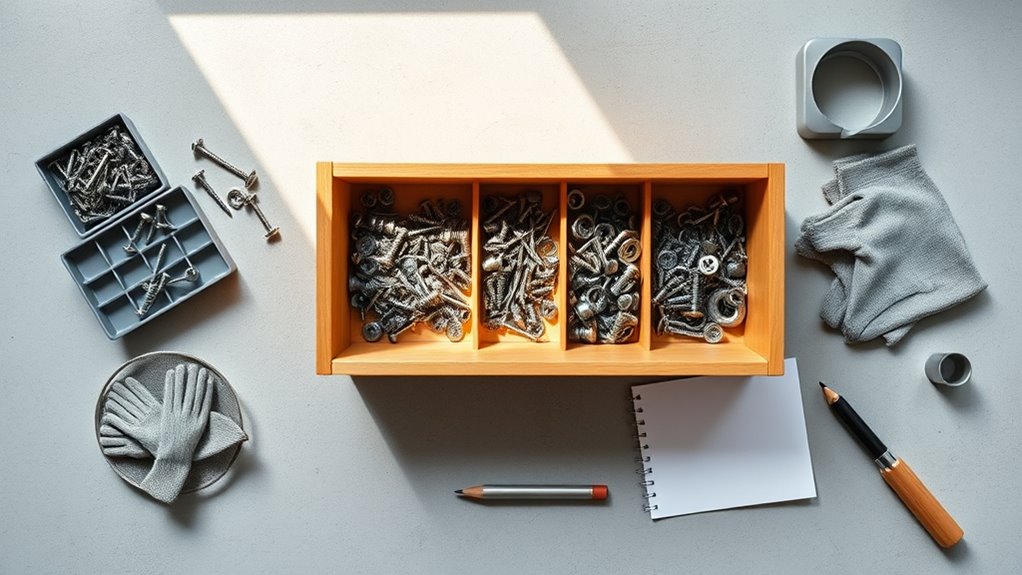
Keep small fasteners contained in sturdy, labeled jars or metal tins. You’ll also separate damaged pieces and note finishes for reuse or Nail art projects and Fastener manufacturing recycling.
Keep small fasteners in sturdy, labeled jars or tins; separate damaged pieces and note finishes for reuse or crafting.
- Separate by material
- Label jars clearly
- Secure lids tightly
Cost‑Effective Alternatives to Recycling for Small Volumes
Although recycling’s ideal for large batches, you don’t always need curbside programs or scrap yards to handle a few jars of nails and screws—there are low‑cost, practical alternatives that keep these fasteners useful and out of the trash.
You can sort by screws size for DIY kits, donate leftovers, or upcycle into hooks. Use clear nail polish to prevent rust and label jars for easy reuse.
Frequently Asked Questions
Can Bent or Damaged Screws Be Straightened and Reused Safely?
You can sometimes straighten bent screws for reuse, but you’ll assess Fastener straightening risks and Reuse safety first. If threads, shank, or temper are compromised, don’t reuse—discard or recycle and replace with undamaged fasteners.
Do Specialty Fasteners (Secure Tamper‑Proof) Require Special Disposal?
Yes—you’ll need care: specialty fasteners feel small yet pose security risks, so you’ll follow disposal regulations, return manufacturer take‑back programs, or contact local hazardous/municipal waste services to guarantee proper, compliant disposal.
Can Coated Fasteners Leach Toxins in Landfills if Not Recycled?
Yes — you’re risking environmental impact because coated fasteners can leach toxins in landfills as coatings degrade; you should recycle or dispose properly to reduce toxic leaching and protect soil and groundwater from contamination.
Are Galvanized Nails Less Valuable to Scrap Yards Than Plain Steel?
Yes — you’ll often get less for them. Picture a dull, zinced sheen hiding under grit; galvanized coatings can lower scrap yard value because yards may charge cleaning or separate them from cleaner plain steel, reducing your payout.
Do Building Codes Restrict Reusing Certain Fasteners in Structural Repairs?
Yes — you shouldn’t reuse some fasteners in structural repairs; building codes often limit reuse to guarantee fastener durability and meet recycling regulations, so you’ll need inspections or manufacturer guidance before reusing bolts, nails, or anchors.
Conclusion
You’ve got options: most plain steel and brass nails and screws are recyclable, but coatings, mixed batches, and local rules can complicate things. Before tossing them, sort and confirm with your recycling center — about 70% of municipal recycling programs accept scrap metal, so checking first saves effort. For small amounts, reuse or donate to avoid processing fees. Follow the quick checklist in this guide, and you’ll keep valuable metal out of the landfill.